
Your First 5k Running Plan for New Runners

A solid 5k running plan is the single best tool a new runner has for tackling that first 3.1-mile race. Most good plans use a run/walk method, which is a fantastic way to build up your endurance over a few weeks without getting hurt. It’s all about making the goal feel less intimidating and genuinely achievable.
Starting Your Journey to the 5k Finish Line
I get it—that first step can feel like the hardest part. But trust me, signing up for a 5k is a perfect, bite-sized goal for anyone just dipping their toes into running. There’s a reason it’s such a popular distance: it's a real challenge, but it's not so daunting that a total beginner can't conquer it. If you're even thinking about it, you're already on the right track.
The 5k has absolutely blown up in popularity. Between the years 2000 and 2016, participation in 5k races across the US grew by a staggering 740%. What's more, women now make up over 61% of those runners. This boom just shows how many people are discovering the incredible feeling of crossing that finish line. If you're curious, you can explore more about these running trends to see just how big the community has become.
Why Consistency Beats Intensity
This entire guide is built on one simple truth that so many new runners miss: consistency beats intensity every single time. Your goal isn't to transform into a world-class athlete in a week. It’s about building a simple, sustainable habit that actually fits into your life.
The secret sauce here is the tried-and-true run/walk method. By alternating between short running segments and walking breaks, you give your body a chance to adapt properly. Here’s why it works so well:
Build Endurance Safely: This approach lets your heart, lungs, and muscles get stronger gradually, avoiding the shock of too much, too soon.
Prevent Common Injuries: Jumping into long runs right away is a classic rookie mistake that often leads to shin splints or knee pain. The run/walk strategy helps you sidestep those common pitfalls.
Boost Your Confidence: Every workout you finish is a small victory. When you start stringing those wins together, you build the mental toughness you’ll need on race day.
Here's the key takeaway: A good 5k plan isn't about pushing yourself to your absolute limit every time you lace up your shoes. It’s about showing up consistently, listening to what your body is telling you, and actually enjoying the process of getting stronger week by week.
So, forget any pressure you might feel to run non-stop from day one. That’s a surefire way to get frustrated and burn out. This journey is about discovering what you're capable of, celebrating your progress, and crossing that finish line feeling strong, proud, and ready for your next challenge.
Choosing Your Essential Running Gear
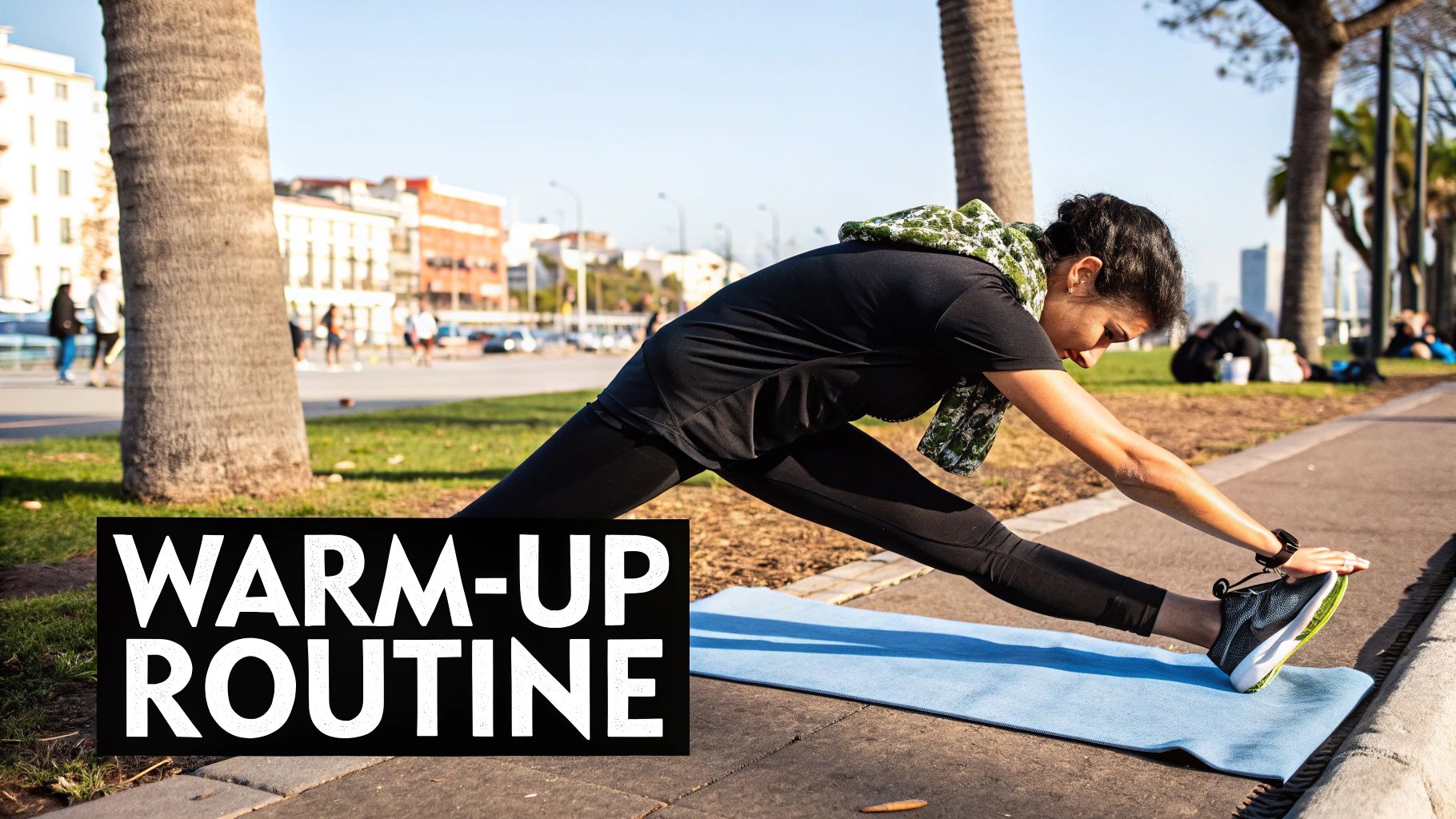
Let's talk about gear. The good news is you don’t need a ton of fancy, expensive stuff to start a 5k running plan. That said, a few key pieces will make a world of difference in your comfort and, more importantly, help you stay injury-free. The right gear feels like it's a part of you, which makes getting out the door that much easier.
If there's one thing to spend a little time and money on, it's your shoes. This is non-negotiable.
The Foundation: Your Feet
I know it’s tempting to just order a cool-looking pair of sneakers from a big online retailer, especially if they're on sale. But trust me, this is a classic rookie mistake that can lead to a whole lot of unnecessary pain. Your feet have their own unique shape and way of moving, and this "gait" dictates the kind of support you need to run comfortably.
Here’s a pro tip that can be a total game-changer: go to a specialty running store. The staff there live and breathe this stuff. They can do a gait analysis—usually for free—where they'll watch you walk or jog for a minute on a treadmill. From there, they can pinpoint your foot mechanics and suggest shoes built for you, whether you need more stability or extra cushioning. This one visit can mean the difference between loving your training and getting sidelined by shin splints or sore knees.
A quick piece of advice from experience: the best shoe isn't the one with the highest ratings online. It's the one that feels so good on your foot that you completely forget it's there.
Dress for Success, Not for Sweat
Okay, shoes are handled. Now, what about clothes? There’s one golden rule here, and it’s a big one: avoid cotton at all costs. Seriously. Cotton is fantastic for lounging on the couch, but for running, it’s a nightmare. It soaks up sweat like a sponge and just holds that wet, heavy fabric against your skin. This is a fast track to chafing, which is every bit as miserable as it sounds.
Instead, you want to build a small collection of clothes made from moisture-wicking technical fabrics. Think polyester blends or even merino wool. These materials are designed to pull sweat away from your skin so it can evaporate, keeping you much drier and more comfortable.
This applies to everything you wear, from top to bottom:
Socks: Good moisture-wicking socks are your best defense against blisters. Don't overlook them!
Shirts & Shorts: Look for anything labeled "technical" or "performance." It'll feel light and keep you from getting weighed down.
Sports Bras: A properly fitted, supportive sports bra made from wicking fabric is absolutely essential.
You don't need the most expensive brands. Just focus on finding a few solid pieces that work. Think of it as creating a "running uniform." Having your go-to kit ready makes it that much easier to get dressed and tackle each session in your 5k running plan.
Your 8-Week Beginner 5K Training Schedule
This is where the rubber meets the road. I'm going to lay out a clear, week-by-week schedule that takes all the guesswork out of training for your first 5K.
This 5K running plan is built around three running days a week. We'll use a run/walk interval approach, which I've found is far more effective and encouraging for new runners than just trying to run nonstop from day one. The goal is to build your endurance steadily, letting your confidence grow right alongside your fitness.
You’ll have three key workout days each week, with the other days dedicated to rest or some light, optional activity. It’s a balanced approach that works.
Seeing your plan laid out can make all the difference. It turns a vague goal into a concrete schedule you can follow.
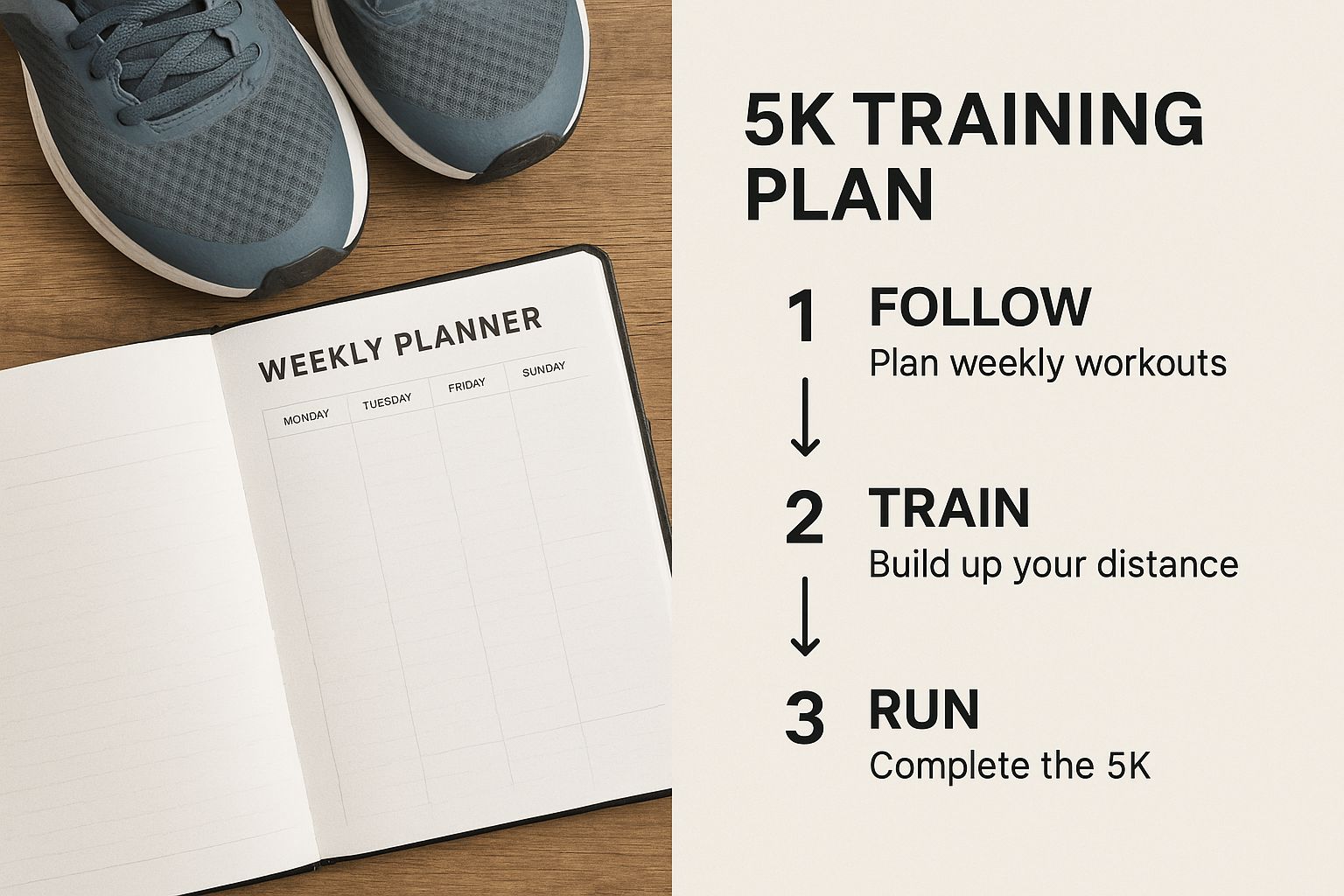
Putting your training plan somewhere visible—like next to your running shoes or on the fridge—is a great mental trick. It keeps your commitment front and center.
The Run/Walk Method: Your Secret Weapon
The real magic behind this plan is alternating between jogging and walking. This isn't about being "slow"—it's about being smart. By breaking up your runs with walk breaks, you can cover more distance with less fatigue and, most importantly, a much lower risk of injury. This is a game-changer when you're just starting out.
Every workout should start with a brisk five-minute warm-up walk to get your blood flowing and prep your muscles. You'll also cap off each session with a five-minute cool-down walk to bring your heart rate down gradually.
Here's the full eight-week schedule. Just remember, the times listed in the table are for your main workout after you’ve done your warm-up.
8-Week Beginner 5K Training Plan Overview
This table breaks down exactly what you'll be doing for your three key workouts each week. Notice how you gradually increase the running time while decreasing the walking time. It's a very manageable progression.
Week | Day 1 Workout (Run/Walk Intervals) | Day 2 Workout (Run/Walk Intervals) | Day 3 Workout (Run/Walk Intervals) |
|---|---|---|---|
1 | Run 1 min, Walk 90 sec (repeat 8x) | Run 1 min, Walk 90 sec (repeat 8x) | Run 1 min, Walk 90 sec (repeat 8x) |
2 | Run 2 min, Walk 2 min (repeat 5x) | Run 2 min, Walk 2 min (repeat 5x) | Run 2 min, Walk 2 min (repeat 5x) |
3 | Run 3 min, Walk 2 min (repeat 4x) | Run 3 min, Walk 2 min (repeat 4x) | Run 3 min, Walk 2 min (repeat 4x) |
4 | Run 5 min, Walk 3 min (repeat 3x) | Run 5 min, Walk 3 min (repeat 3x) | Run 5 min, Walk 3 min (repeat 3x) |
5 | Run 8 min, Walk 4 min, Run 8 min | Run 8 min, Walk 4 min, Run 8 min | Run 10 min, Walk 3 min, Run 8 min |
6 | Run 12 min, Walk 3 min, Run 8 min | Run 12 min, Walk 3 min, Run 8 min | Run 15 min, Walk 2 min, Run 5 min |
7 | Run 20 min, no walking | Run 22 min, no walking | Run 22 min, no walking |
8 | Run 25 min, no walking | Run 28 min, no walking | Run 30 min, no walking |
As you move through the weeks, you'll see your stamina improve firsthand. That feeling when you run for 20 minutes straight in Week 7 for the first time is something you won't forget!
Why Rest And Cross-Training Matter So Much
You might look at that schedule and wonder why there are only three running days. That's by design. Your muscles don't actually get stronger during the run; they rebuild and strengthen during the recovery periods afterward.
Your rest days are just as important as your training days. Skipping them is one of the fastest routes to burnout and injury. Think of rest as an active and essential part of your training.
So, what should you do on your "off" days? You have a couple of great options:
Active Recovery: This just means doing some light activity. Think a gentle walk, some stretching, or foam rolling. The idea is to move your body without causing any real stress.
Cross-Training: This involves doing a different type of cardio that's easier on your joints. Things like swimming, cycling, or using an elliptical machine are perfect.
Cross-training is fantastic because it works your cardiovascular system without the high-impact pounding of running. Even one or two days of it can seriously boost your overall fitness.
For instance, a 30-minute session on a stationary bike will improve your aerobic capacity, which translates directly to better running endurance. This variety not only keeps training from getting stale but also builds a more well-rounded athletic base, making you a stronger, more resilient runner.
And remember, this is your journey. If a week feels especially tough, don't be afraid to repeat it. The most important skill you can develop as a runner is learning to listen to your body.
Fueling Your Body and Mastering Recovery
Let's talk about what happens when you're not running. Honestly, your progress in a 5K running plan is built just as much on rest days as it is on the road. The food you eat and the recovery you get are the secret ingredients that transform all that effort into actual fitness.
Think of it like this: your runs are the work order, but your nutrition and recovery habits are the crew that shows up to build you back stronger than before.
It all starts with what you eat before you even lace up your shoes. You need fuel, but the last thing you want is a stitch in your side halfway through a run.
Smart Pre-Run Fueling
The goal for a pre-run snack is simple: quick, easily digestible carbs that give you immediate energy. We’re not talking about a full meal here. Just a small bite about 30 to 60 minutes before you head out the door is perfect.
Here are a few tried-and-true options that most runners swear by:
A small banana: There's a reason people call it nature's power bar. It's loaded with carbs and potassium.
A small granola bar: Just check the label and pick one that's lower in fiber and fat, as those can sometimes cause digestive issues on the move.
A handful of pretzels: Simple, salty, and super easy on the stomach.
These give your muscles the quick energy they need without weighing you down. What you eat after the run, though, serves a totally different—and just as important—purpose.
A golden rule from my own experience: keep your pre-run fuel simple and familiar. Never, ever try a new food right before a run, especially not on race day. Stick with what you know your body handles well.
Once you’ve finished your cool-down walk, your body is screaming for one thing: repair. Your muscles have burned through their energy stores (called glycogen) and are full of tiny micro-tears that need to be fixed. This is where your post-run snack or meal becomes critical.
Try to eat something within 30 to 60 minutes of finishing your workout. The ideal recovery fuel is a combination of carbohydrates to restock your energy and protein to rebuild your muscles. A 3:1 or 4:1 ratio of carbs to protein is a great target. It could be as simple as a glass of chocolate milk (a classic for a reason!) or some Greek yogurt topped with berries.
Hydration and Essential Recovery Practices
Staying hydrated isn't just about chugging water during your run; it's an all-day job. Even mild dehydration can tank your performance and make you feel sluggish.
Here’s a simple trick I use: check your urine color. If it’s pale yellow, you're on the right track. I find keeping a water bottle on my desk all day makes sipping consistently a no-brainer.
Finally, please don't skip the post-run stretch. Just five minutes of static stretching can make a huge difference in your flexibility and help ease muscle soreness. Focus on the big muscle groups you just used:
Hamstrings: Sit down, extend one leg, and gently lean forward over it.
Quadriceps: Stand up and hold onto something for balance. Grab one foot and pull your heel toward your glutes.
Calves: Stand facing a wall, step one foot back, and push your heel toward the floor until you feel a good stretch.
And the ultimate recovery tool? Sleep. It’s not negotiable. When you’re in a deep sleep, your body releases growth hormone, which is absolutely essential for repairing muscle and adapting to your training. Aiming for 7-9 hours of quality sleep is probably the single best thing you can do to prevent injuries and be ready for your next run. It’s your true secret weapon.
Navigating Common Running Hurdles
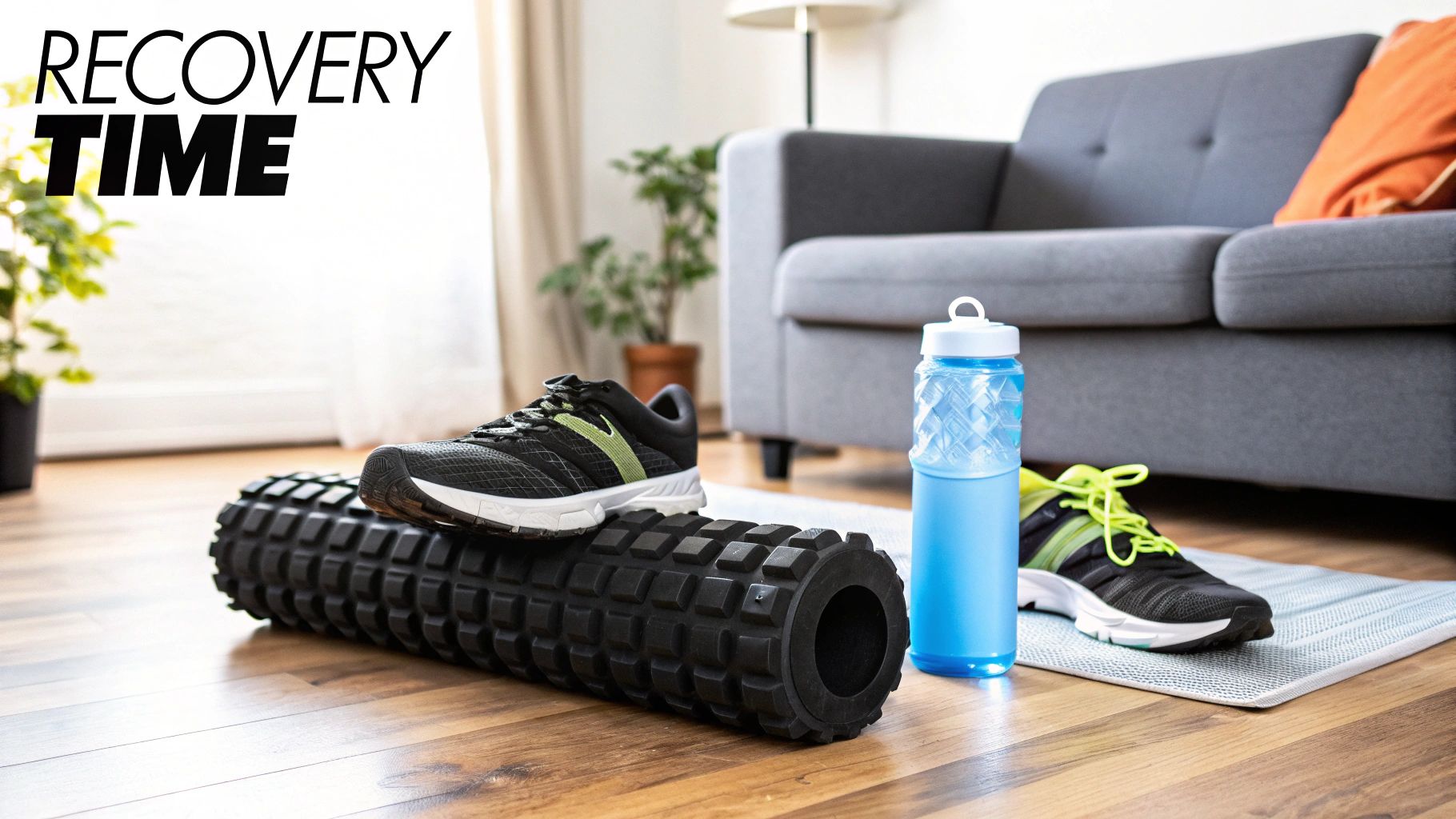
Sooner or later, every single runner—from the person lacing up for the very first time to the veteran with a wall of marathon medals—hits a few bumps in the road. It’s just part of the journey. The real trick isn't avoiding them entirely, but knowing how to handle them so you can keep making progress on your 5k running plan.
I like to think of these challenges as pop quizzes. They test your resolve and patience, but once you figure them out, you come back a smarter and more resilient runner. Let’s get into some of the most common issues you're likely to face.
Tackling Physical Discomforts
One of the first things that blindsides new runners is the dreaded side stitch. It’s that sharp, stabbing pain in your side that shows up uninvited and can completely derail your run. Usually, it's caused by something simple, like breathing too shallowly or having a snack too close to your workout.
Here’s a trick that works for me: when you feel a stitch coming on, immediately slow to a walk. Concentrate on taking deep, full breaths from your belly. Then, try to exhale forcefully as the foot opposite the stitch hits the ground. It sounds weird, but this little technique can often make the cramp disappear in a minute or two.
Shin splints are another classic beginner complaint—that nagging, throbbing ache along the front of your shins. This is almost always a sign that you've done too much, too soon. The best cure is prevention, which means getting fitted for proper, supportive shoes and, most importantly, respecting the gradual progression of your training plan. If they do pop up, ice and rest are your new best friends.
Learning to tell the difference between discomfort and pain is probably the most critical skill a runner can develop. Discomfort is just your body adapting to new stress. Real pain is a red flag telling you to stop, right now. Pushing through genuine pain is how a small problem turns into a long-term injury.
Winning the Mental Game
Let’s be honest, some days the biggest battle isn't with your body at all—it’s with your brain. That initial excitement for your 5k running plan can fade, especially when your warm, cozy couch is calling your name.
This is when you need a few mental strategies in your back pocket. Building a solid support system is a fantastic place to start.
Find a Running Buddy: It’s so much harder to skip a run when you know someone is waiting for you. You keep each other honest.
Build a Killer Playlist: The right music can be a game-changer for your energy and mood. Create a playlist filled with songs that make you feel like you can run through a brick wall.
Remember Your "Why": Take a moment to think about why you started this in the first place. Was it for your health? To prove you could do it? To find a healthy way to de-stress? Reconnecting with that core motivation is incredibly powerful.
And remember, you’re not alone in this. The 5K is the most popular race distance in the world for a reason. With average finish times hovering around 40 minutes for women and 34 minutes for men, it’s an achievable goal for regular people. In fact, if you discover more about these global running statistics, you'll see that average paces have actually slowed a bit in recent years, which just means more and more beginners are bravely joining the running community.
Ultimately, getting past these hurdles is all about listening to your body, being kind to yourself, and celebrating those small wins. Every challenge you overcome is just one more step that gets you closer to that finish line.
Your 5k Running Plan Questions Answered
Even with the best training plan laid out in front of you, you're going to have questions. That's completely normal, especially when you're just starting out. Let's tackle some of the most common things new runners wonder about, so you have the confidence to handle whatever your training throws at you.
Think of this as your personal FAQ for those little "what if" moments. Knowing how to handle these common bumps in the road makes the entire journey feel a lot less intimidating.
What Happens If I Miss a Workout?
First, don’t panic. Life gets in the way sometimes—a busy day at work, a sick kid, or maybe your body is just screaming for an extra rest day. It happens to every single runner. The most important thing is to shake off that "all or nothing" feeling that tells you one missed run means the whole plan is ruined.
If you just miss one workout, simply jump back into your schedule on your next training day. Forget about the missed run. Whatever you do, don't try to squeeze two runs into one day to "catch up." That’s a surefire recipe for burnout or injury.
Now, if you miss a few days in a row or find that an entire week felt like a real struggle, it’s a smart move to just repeat that week. This plan is a map, not a set of concrete rules carved in stone.
The real goal here is consistency over perfection. It's so much better to listen to your body and repeat a week to build a stronger base than to push through, feel defeated, and risk getting hurt. This is your race, your pace.
Is Strength Training Really Necessary for a 5k?
Look, can you cross a 5k finish line without ever doing a squat? Absolutely. But if you want to feel stronger, run more efficiently, and—most importantly—stave off those nagging injuries, then yes, strength training is a game-changer. Think of it as building a more durable frame to support your running engine.
You don’t need a fancy gym membership or a ton of equipment. Simple bodyweight exercises are incredibly effective. Just twice a week, try to work in some of these:
Squats
Lunges
Planks
Glute Bridges
When you strengthen your core, hips, and legs, you create a stable foundation for every stride. This makes you a more resilient and efficient runner, something you'll be incredibly thankful for as you get closer to race day.
What Should I Do on Race Day?
Race day is the big payoff! It’s a celebration of all the hard work you’ve put in. The key to enjoying it is to keep everything simple and stick with what’s familiar. Get to the race venue early. This gives you plenty of time to pick up your bib, use the bathroom, and soak in the atmosphere without feeling stressed or rushed.
The number one rookie mistake is letting the adrenaline take over and starting out way too fast. Be very intentional about holding back in that first mile. It will feel slow, but you'll be glad you saved that energy for the end.
Stick to your routine. Don't try anything new. Wear the shoes and clothes you’ve been training in, and eat the same pre-run snack that you know works for you. Your goal is to finish feeling strong and proud. Enjoy the incredible energy from the crowd and savor that victory lap!
At RealOminousAthlete, we believe the right gear and the right mindset can help you conquer any goal. Our performance apparel is designed to support you every step of the way, from your first training run to the finish line. Find your new favorite running kit.


Comments