
Your Guide to the 10 Team Playoff Bracket

At first glance, a 10 team playoff bracket looks a little lopsided. That's intentional. The design rewards the top teams for a strong regular season, giving the top six seeds a first-round bye. The remaining four teams—seeds 7 through 10—have to battle it out in a play-in round just to stay alive.
This initial round quickly narrows the field down to eight teams, setting up a more traditional quarterfinal. It’s a smart and fair way to handle an awkward number of competitors.
Cracking the Code of the 10 Team Bracket
So, why would you even use a 10-team format? It’s the perfect middle ground for leagues and tournaments that don't fit neatly into an 8 or 16-team structure. Think fantasy football leagues, office pools, or smaller local competitions. It strikes a great balance, rewarding the regular-season champs while giving every team that makes the cut a legitimate shot at the title.
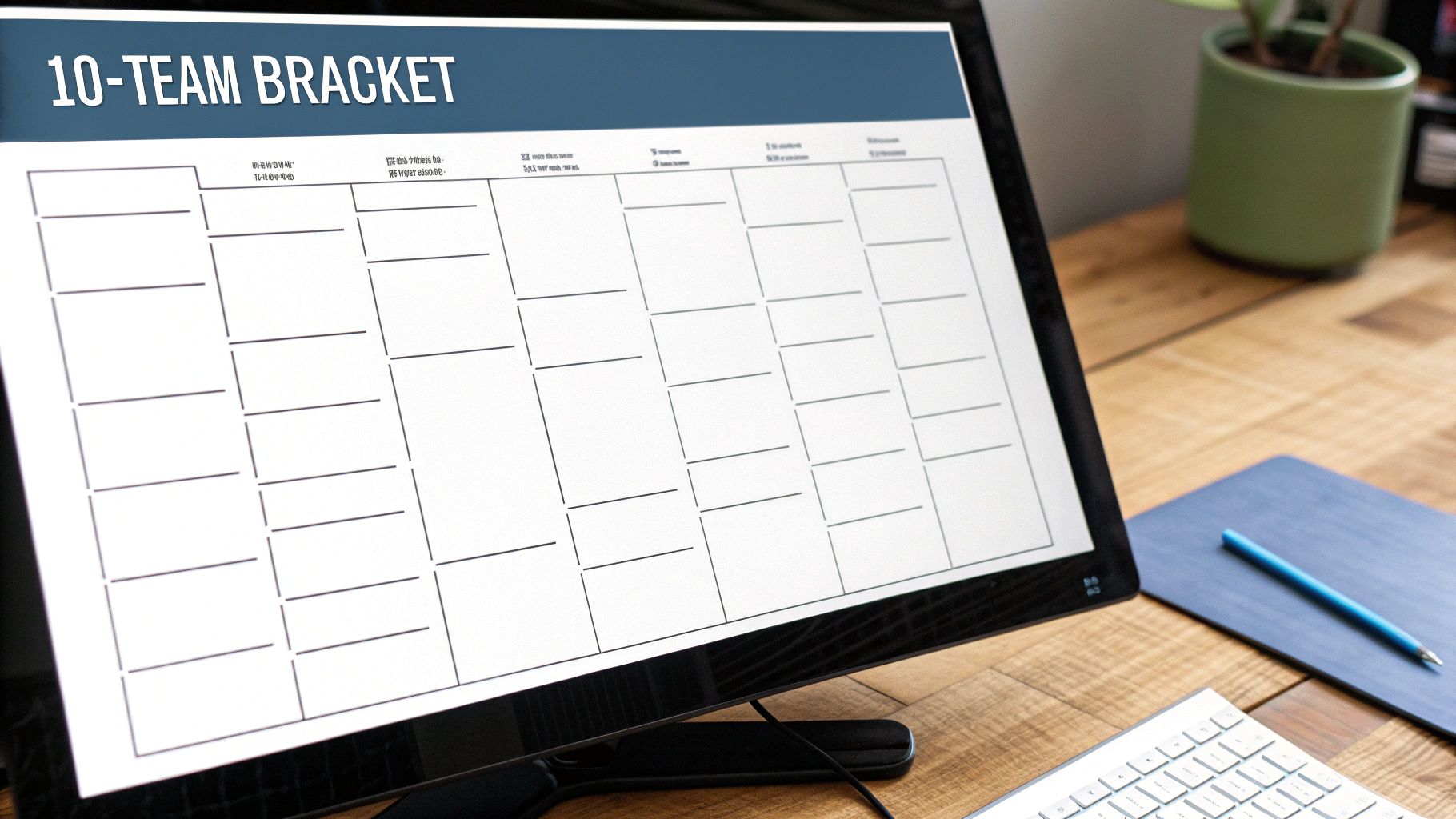
The entire system hinges on two things: byes and play-in games.
Handing byes to seeds #1 through #6 is a huge advantage. Those teams get to rest up and automatically jump ahead to the quarterfinals. It’s a powerful incentive to finish the season strong.
Meanwhile, the play-in round becomes a high-stakes affair for the lower-seeded teams. They have to earn their spot in the main bracket, which makes for some incredibly tense and exciting opening matchups. It’s a structure that maintains competitive integrity, and it's a model that has even been considered by major sports leagues looking to expand their own playoffs.
To put it in perspective, a 10-team field boosts playoff participation by 150% over a 4-team format but keeps the field more exclusive than a 12-team model. You can dig deeper into the history and mechanics of expanded playoff formats to see how different leagues have tackled this problem.
10 Team Bracket At-a-Glance
To help you visualize how it all comes together, this table breaks down the core components of the bracket.
This structure ensures that the top seeds are rewarded, while the lower seeds are given a chance to prove they belong, creating a dynamic and engaging tournament from start to finish.
Seeding Your Teams for a Truly Competitive Bracket
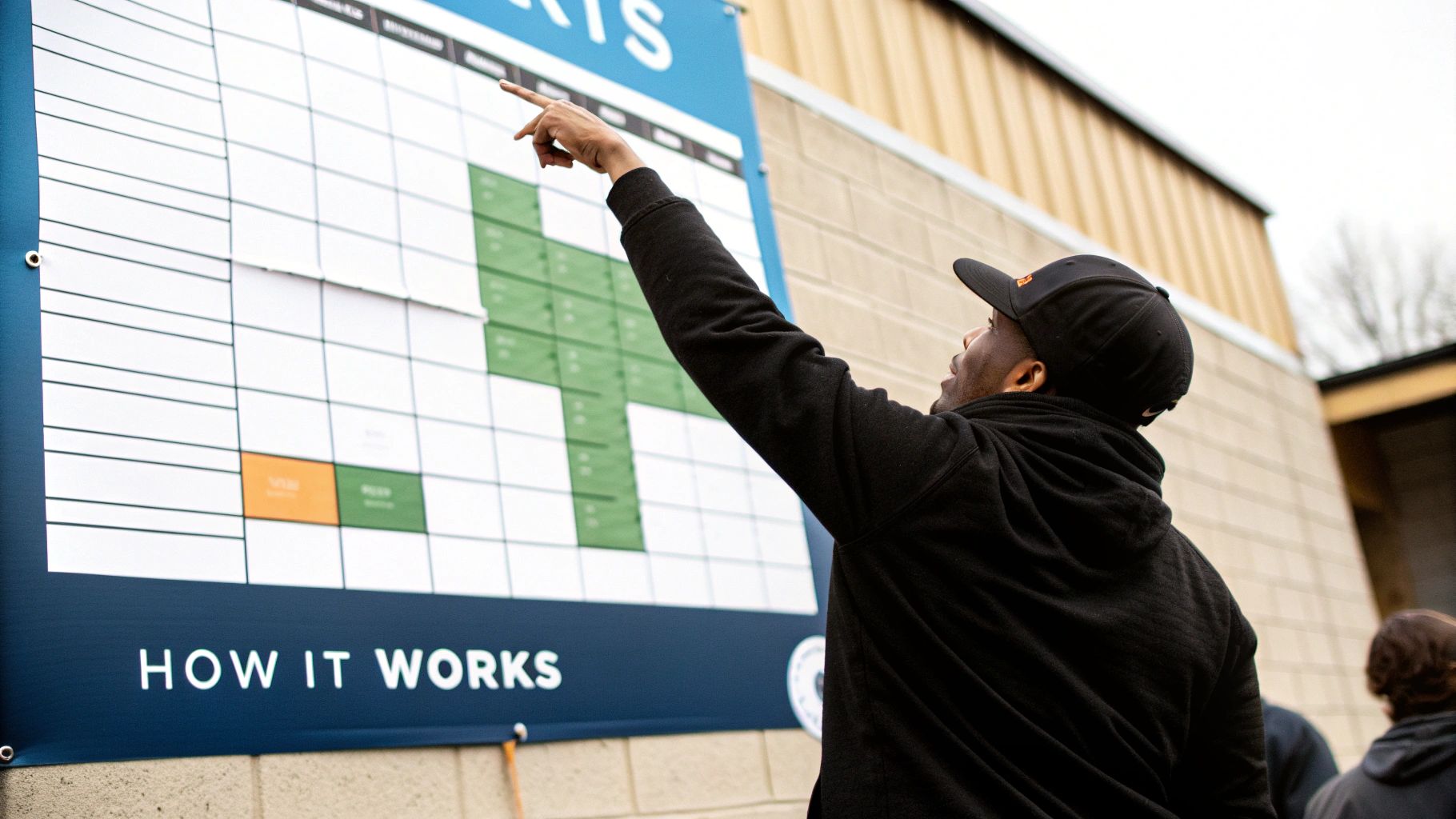
Let's be honest: a playoff bracket is only as good as its seeding. Get this part right, and you’ve laid the foundation for a legitimate, exciting tournament. Get it wrong, and you risk drama and accusations of unfairness before the first matchup even kicks off.
Proper seeding isn't just about ranking teams from 1 to 10. It’s about creating a system that everyone agrees on—one that genuinely rewards the hard work of the regular season and maintains competitive integrity. The whole point is to give your top teams, especially seeds #1 and #2, a clear and earned advantage on their path to the championship.
How to Seed Your Teams Fairly
The simplest and most respected method is to use the final regular-season standings. The team with the best record gets the #1 seed, the next best gets #2, and you just work your way down the list.
But what if two teams are tied? It happens all the time. This is where having clear, pre-established tie-breaking rules becomes absolutely essential. You need to decide on these before the season starts.
Here are the most common tiebreakers I’ve seen work well:
Head-to-Head Record: Simple and effective. If Team A and Team B are tied, but Team A beat Team B during the season, Team A gets the higher seed.
Total Points Scored: This is a big one in fantasy leagues. The team that put up more points over the season often gets the nod, as it reflects overall strength.
Divisional Record: If you run a league with divisions, a team’s record against their direct rivals can be a great way to break a tie.
For a one-off tournament or a really casual league, you could always do a blind draw. It's random and can be fun, but you lose that crucial element of rewarding the teams that proved themselves over the long haul.
The golden rule of seeding is simple: make the regular season matter. A playoff advantage should be earned, not given. This principle is what gives every single week of the season weight and importance.
Why Rewarding Your Top Seeds Matters
A well-designed 10 team playoff bracket naturally rewards the best teams by giving them a bye. You see this same concept in professional sports. For example, the expanded College Football Playoff gives its top teams a first-round bye as a direct reward for their regular-season dominance. You can read more about the history of playoff structures to see how this idea has evolved.
In a 10-team format, this principle is key. The top six seeds get to skip the initial play-in round, resting up and scouting their future opponents. Meanwhile, seeds 7, 8, 9, and 10 have to battle it out in a high-stakes opening round just for the chance to advance. That built-in advantage is what makes striving for a top seed so incredibly important.
Building the Bracket and Assigning Byes
Once your teams are seeded, the fun part begins: actually building the 10-team playoff bracket. This isn't your standard, perfectly balanced bracket. Its asymmetrical design is what makes it work, rewarding the best teams while still giving every qualifier a shot.
The most important feature here is the bye. Seeds #1 through #6 get to skip the first round entirely, automatically advancing to the quarterfinals. Think of it as their reward for a great regular season—they get extra rest and more time to scout their potential opponents.
The Opening Play-In Round
While the top six teams are resting up, the bottom four have to fight their way in. This initial play-in round is designed to do one thing: trim the field from ten teams down to a much more manageable eight. Once you have eight teams, you've got a standard, clean quarterfinal.
The matchups are pretty straightforward and are set to give the slightly better seed an advantage:
The two winners move on, and the two losers go home. It’s a high-stakes way to kick things off, injecting immediate drama into the tournament from the very first games.
A 10-team bracket really just a clever way to turn an awkward number of teams into a standard 8-team tournament. The play-in round is the engine that makes it all work, creating a clean single-elimination path from the quarterfinals to the championship.
This visual shows exactly how the tournament flows, from those initial play-in games right through to the final.
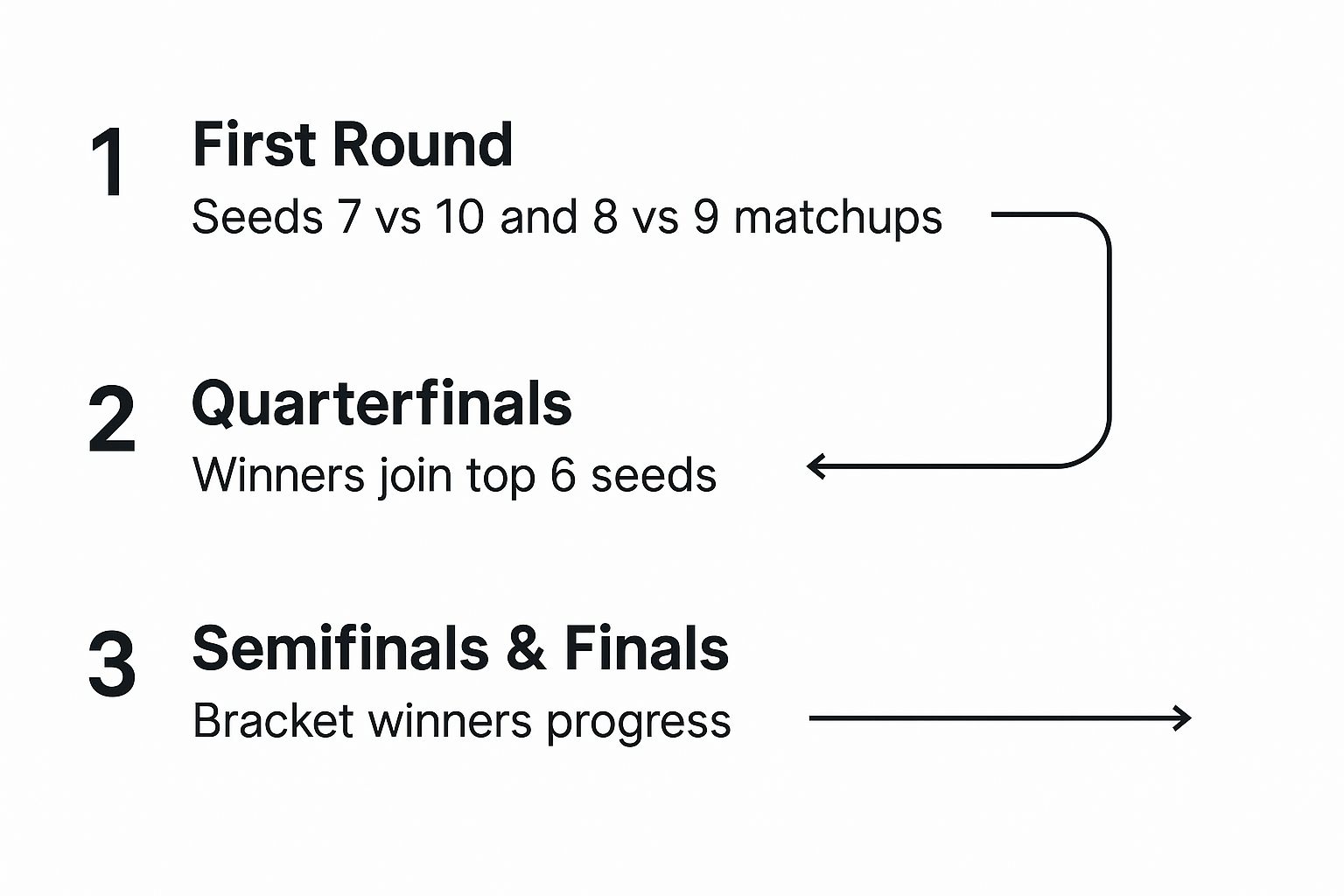
As you can see, the bracket follows a logical path. The play-in winners are funneled directly into matchups against the top-seeded teams who were waiting with a bye.
Setting the Quarterfinal Matchups
After those play-in games are wrapped up, your quarterfinal field is set. It's crucial to remember that the winners of the play-in round do not get re-seeded. Their journey through the bracket is already mapped out.
This structure ensures that the #1 seed is rewarded for their season-long dominance by facing the lowest-seeded team to advance from the play-in round. Sticking to this standard model is the best way to maintain competitive fairness and avoid any arguments about the matchups. It’s a proven system that just works.
Running Your Tournament Round by Round

Alright, your bracket is set and the matchups are locked in. Now the fun really begins. Running the tournament itself is all about keeping things clear and moving forward, whether you're using slick bracket software or a giant poster board on the wall.
The first bit of action involves those initial play-in games. Once they're done, you've got to advance the winners correctly. The team that wins the #7 vs. #10 game gets to face the #2 seed. Meanwhile, the winner of the #8 vs. #9 showdown earns a tough match against the top-seeded #1 team. This fixed path is what makes a 10 team playoff bracket fair and predictable.
One of the biggest mistakes I see people make is re-seeding the teams after every round. Don't do it! In a standard single-elimination tournament, the path is set from the beginning. This is how you protect the advantage the top seeds earned during the season.
This structure is designed to reward the best teams. The data backs it up, too. When you look at how expanded playoffs work, you see just how much byes and predetermined matchups matter. Forcing lower seeds to play extra games puts them at a major disadvantage against a rested, top-tier opponent. Just look at college football powerhouses like Alabama, which has an impressive 64% win rate across 14 playoff games. You can learn more about how playoff structures impact team performance and see just how valuable that first-round bye really is.
Managing Game Progression
As soon as a game ends, update the bracket. Instantly. This is crucial for keeping everyone in the loop and invested in the tournament. Nothing builds excitement and kills confusion like a clear, visual chart showing who's moving on.
Of course, you should always plan for a little chaos. No matter how well you organize things, you’ll eventually run into a forfeit or a scheduling headache.
Forfeits: It's an anticlimactic way to win, but the rules are the rules. The team that shows up advances automatically, keeping the bracket on schedule.
Scheduling Conflicts: Try to be flexible, but you also need to be firm. Set a hard deadline for when each round's games must be completed to prevent one delay from holding up the entire event.
Honestly, good communication is your most powerful tool here. A simple group chat or an email chain ensures everyone gets updates at the same time. When people know the latest results and any schedule changes, the whole experience becomes smoother and more fun for everyone involved.
Making Your Tournament an Annual Event
A solid 10-team playoff bracket is just the starting point. If you want people clearing their calendars and coming back year after year, you need to turn your tournament into a memorable event. It’s about creating an experience, not just a competition.
Don't wait for the first game to get things started. Kick off the excitement early with a simple bracket reveal. Send out an email or post in a group chat announcing the seeds, the matchups, and what everyone's playing for. This is where the friendly trash talk begins and everyone gets invested right from the jump.
Building Buzz and Managing the Event
Let's be honest, prizes are a great motivator. You don't have to break the bank, but the prize should match the vibe of your league. For some groups, a custom-engraved trophy and a full year of bragging rights is the ultimate goal. For others, a winner-take-all cash pot adds that extra competitive spark.
Here are a few prize structures I've seen work well:
Winner-Take-All: Simple, high-stakes, and gives everyone a single target to aim for.
Tiered Payouts: Spreads the love by rewarding the top 2 or 3 teams. This can keep more people fighting for a spot on the podium until the very end.
Trophy and Bragging Rights: The classic choice for office pools or leagues among friends, where the community and the glory are what really matter.
To keep that energy high throughout the tournament, you should definitely lean on modern tools. Live bracket apps like RunYourPool are fantastic for this. They handle the updates automatically, send out notifications, and let everyone track the action in real-time on their phones. It’s a huge step up from texting blurry photos of a bracket drawn on a poster board.
A great tournament experience is built on anticipation and clear communication. The more informed and engaged your participants are, the more likely they are to come back for another round next season.
Ultimately, turning your playoff into a can't-miss annual tradition is about building a community. When you focus on the entire experience—the buildup, the communication, the shared moments—you create something people genuinely look forward to, win or lose.
Answering Your Top 10-Team Bracket Questions
Even with the best bracket in hand, you're bound to have questions. A 10-team playoff has a unique, almost lopsided feel at first glance, but there's a good reason for every part of its design. It's all about creating a fair and competitive path to a champion.
Let's walk through the most common sticking points so you can run your tournament like a seasoned pro.
Why Do Six Teams Get a Bye in the First Round?
This is, without a doubt, the number one question I get. Giving six teams a free pass into the quarterfinals seems strange, but it's the critical feature that makes a 10-team bracket work smoothly. The goal is to whittle the field down from an awkward number like 10 to a perfect, power-of-two number—in this case, eight.
Giving byes to the top six seeds achieves two key things:
It properly rewards the regular season. Earning a top-six finish means something significant. You get to rest and scout your potential opponent while they battle it out in a must-win game.
It creates a high-stakes "play-in" round. The bottom four teams (#7, #8, #9, and #10) have to fight for their playoff lives right away. This trims the field and guarantees only the strongest teams advance to the quarterfinals.
Honestly, this setup is the most accepted and fairest way to handle the math. You're effectively turning a messy 10-team playoff into a clean 8-team tournament from the second round onward.
Remember, the whole point of seeding is to reward performance. Your #1 seed worked all season for that top spot, and the bracket should give them the most favorable path forward. This structure does exactly that.
Can I Run This as a Double-Elimination Tournament?
You can, but I'd think twice before you do. While a double-elimination format gives every team a second life, it's a massive headache to organize for a 10-team field. You'll need a completely separate loser's bracket and will practically double the number of games.
For most office pools, fantasy leagues, or weekend tournaments, the logistics just aren't worth it. The single-elimination 10 team playoff bracket is much cleaner, building excitement with its clear, do-or-die progression.
Is It Really Fair for the #1 Seed to Play the Lowest Winner?
Yes, it’s not only fair—it’s the entire principle behind a seeded tournament. Your #1 seed earned the reward of facing what should be the weakest opponent remaining after the first round.
In our bracket, the winner of the #8 vs. #9 game is the lowest possible seed to advance out of the play-in round. It only makes sense that they move on to face the highest-ranked team waiting for them: the #1 seed. This maintains the integrity of the tournament and ensures the regular season standings truly matter.


Comments