
What to Wear Hiking: 8 Essential Items for 2025

Unlocking Trail Comfort: Your Ultimate Hiking Apparel Blueprint
Stepping onto a trail is an invitation to adventure, but showing up in the wrong attire can turn a beautiful day into a lesson in discomfort. The age-old question, 'what to wear hiking?', isn't just about fashion; it's a matter of safety, performance, and maximizing your enjoyment outdoors. The difference between a memorable trek and a miserable one often comes down to your clothing choices. Cotton might feel comfortable at the trailhead, but once you start sweating or the weather turns, it becomes a liability. It retains moisture, chills you to the bone, and can cause painful chafing.
This guide moves beyond generic advice to provide a comprehensive blueprint for your trail wardrobe. We will break down the essential pieces of hiking apparel, from moisture-wicking base layers to protective outerwear. You will learn not just what to wear, but why specific materials and designs are crucial for performance.
More importantly, we will detail how to assemble these items into a versatile layering system. This approach allows you to adapt to any condition, from sun-drenched desert paths to misty alpine ridges. Get ready to build an effective hiking outfit that works for you, so you can focus on the view ahead, not on what you're wearing.
1. The Foundation: Moisture-Wicking Base Layer Shirts
The single most important piece of clothing when deciding what to wear hiking is your base layer. This is the shirt that sits directly against your skin, and its primary job is moisture management. Unlike a standard cotton t-shirt that soaks up sweat and clings to you, a technical base layer is engineered to pull, or "wick," perspiration away from your body. This wicking action disperses moisture across the fabric's surface, allowing it to evaporate quickly and keeping you dry.
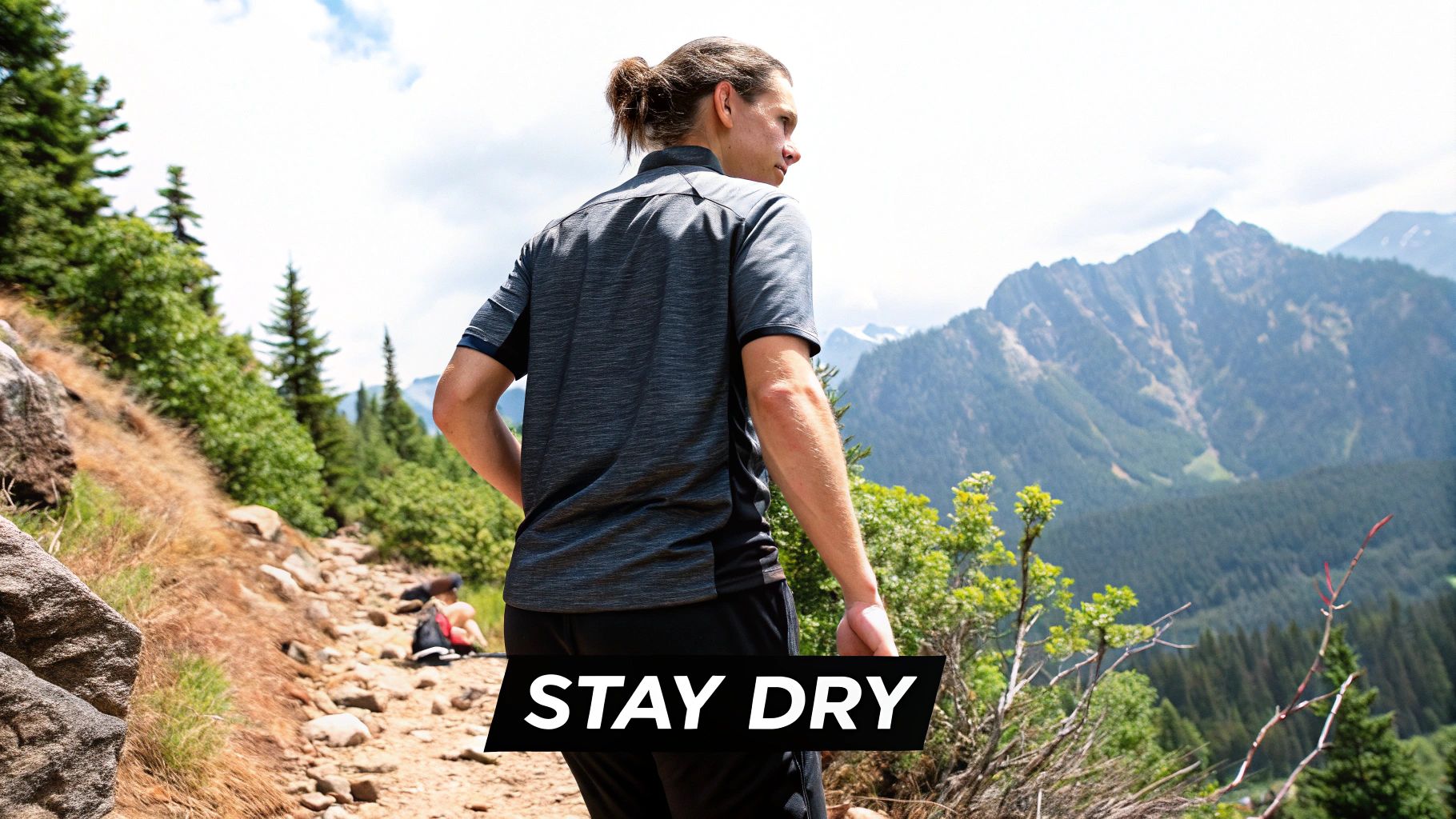
This process is critical for regulating your core temperature. On a strenuous uphill climb, it prevents you from becoming drenched in sweat and overheating. When you stop for a break and the cool wind hits, a dry base layer prevents the rapid chill that can lead to discomfort or even hypothermia. This foundational piece is your first line of defense against the elements, regardless of the season.
### When and Why to Use a Technical Base Layer
A moisture-wicking base layer is a non-negotiable item for every hike, from a short summer trail to a multi-day winter expedition. The intensity and weather will dictate the material and style, but the function remains essential.
For Hot Weather & High Exertion: A lightweight, short-sleeve synthetic shirt like the Patagonia Capilene Cool Daily or the Under Armour HeatGear series excels at rapidly pulling sweat away to keep you cool.
For Multi-Day & Cold Weather Treks: Merino wool, found in options like the Smartwool Merino 150 or REI Co-op Merino Wool Base Layers, is the gold standard. It provides excellent temperature regulation and is naturally antimicrobial, meaning it resists odor even after days of wear.
### Actionable Tips for Your Base Layer
Avoid Cotton at All Costs: There's a reason experienced hikers call cotton "death cloth." It absorbs massive amounts of water, loses all insulating properties when wet, and takes a very long time to dry, creating a dangerous situation in changing weather.
Consider Sun and Bug Protection: In exposed or buggy environments, opt for a long-sleeved, collared, or even hooded base layer. The lightweight fabric will still keep you cool while providing a physical barrier against UV rays and insects.
Pack a Spare for Overnights: Always bring at least one extra base layer on overnight trips. Changing into a clean, dry shirt at camp is a huge morale booster and ensures you start the next day comfortably.
2. Hiking Pants or Shorts
Just as important as your shirt, the right legwear is crucial for comfort and protection on the trail. While athletic shorts or jeans might seem adequate, purpose-built hiking pants or shorts offer a significant upgrade in performance. They are crafted from durable, quick-drying synthetic materials like nylon and spandex blends that provide freedom of movement while protecting your legs from abrasive brush, harsh sun, and persistent insects. Unlike rigid denim, these fabrics are designed to stretch and move with you.
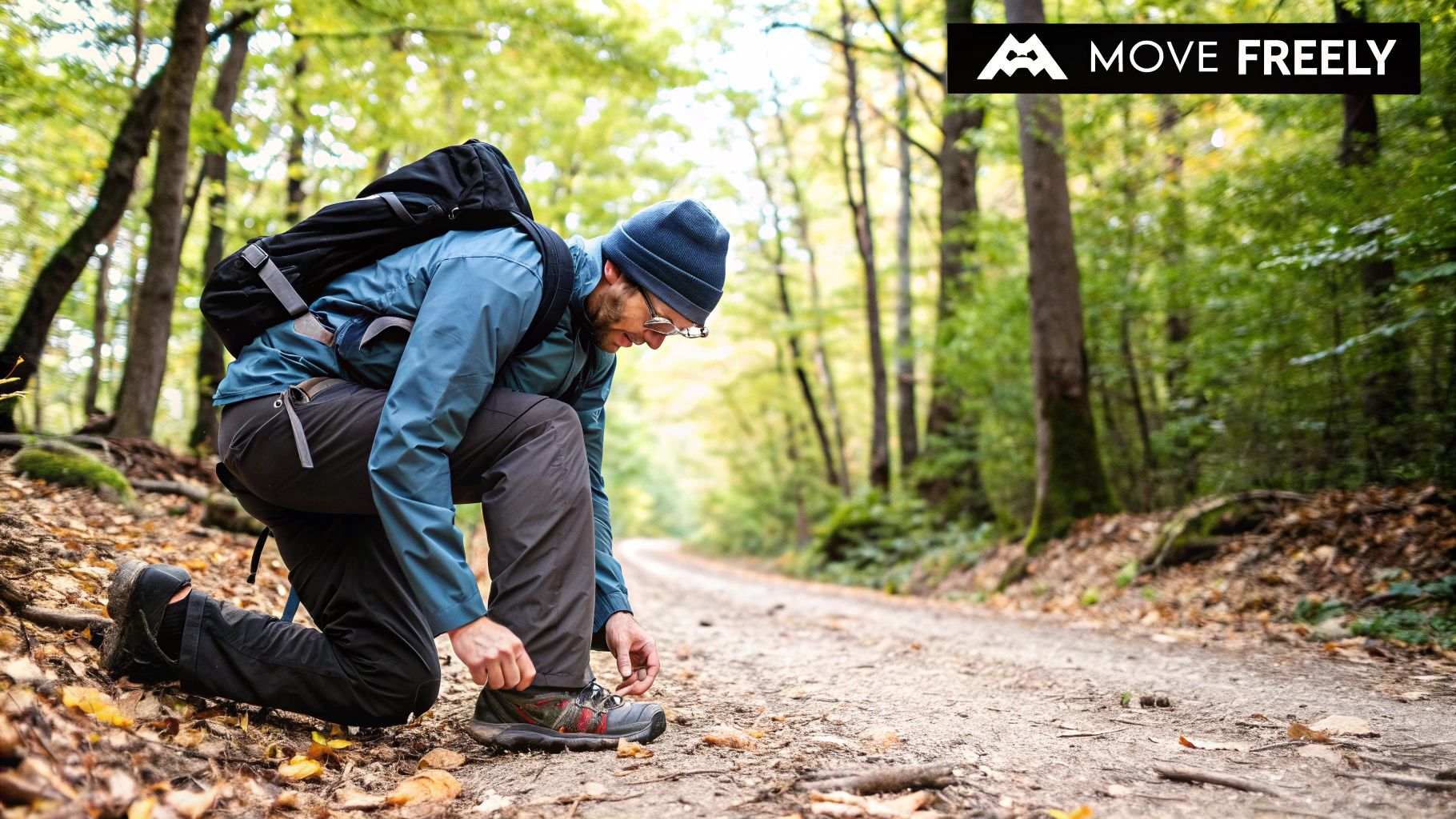
This intentional design directly impacts your hiking experience. The abrasion resistance prevents tears when scrambling over rocks, while the quick-dry nature means a sudden rain shower or creek crossing won't leave you soaked and uncomfortable for hours. Features like a gusseted crotch and articulated knees are not just marketing terms; they provide the unrestricted range of motion needed for high steps and steep ascents, preventing chafing and binding. This piece of gear is your primary shield for your lower body.
### When and Why to Use Hiking-Specific Legwear
Dedicated hiking pants or shorts are recommended for any trail that involves varied terrain, changing weather, or potential exposure to sun and brush. The choice between pants and shorts depends on conditions, but opting for technical legwear over casual alternatives is always a smart move.
For Versatility & Unpredictable Weather: Convertible pants, like the popular Columbia Silver Ridge series, are a fantastic all-in-one solution. They allow you to zip off the lower legs to create shorts when the day heats up, giving you two options in one piece of clothing.
For Technical Terrain & Durability: For rugged trails and scrambling, look for robust options known for their stretch and toughness, such as the prAna Stretch Zion or the Arc'teryx Gamma LT. Their superior construction withstands serious wear and tear.
### Actionable Tips for Your Legwear
Prioritize Fit and Articulation: When trying on pants, perform a high-knee lift and a deep squat. The pants should not pull down or restrict your movement. Look for models specifically mentioning a "gusseted crotch" and "articulated knees" for maximum comfort.
Test Pockets with Your Pack: Before committing to a pair, check if you can easily access the key pockets while wearing your backpack, especially the hip belt. Inaccessible pockets are a common frustration on the trail.
Choose Convertible or Roll-Up Features: If you are unsure about the weather, convertible pants are ideal. Alternatively, many pants like the Outdoor Research Ferrosi have ankle adjustments or are lightweight enough to roll up securely, offering a good compromise.
3. Hiking Boots or Trail Shoes
Proper footwear is the literal foundation of a successful hike, serving as the critical link between your body and the trail. Your choice of hiking boots or trail shoes directly impacts your comfort, stability, and safety. This essential piece of gear is designed to provide robust traction on unpredictable surfaces, offer crucial support for your ankles and arches, and protect your feet from rocks, roots, and moisture. Unlike standard athletic sneakers, dedicated hiking footwear features aggressive tread patterns, durable materials, and specific construction to handle the rigors of the outdoors.
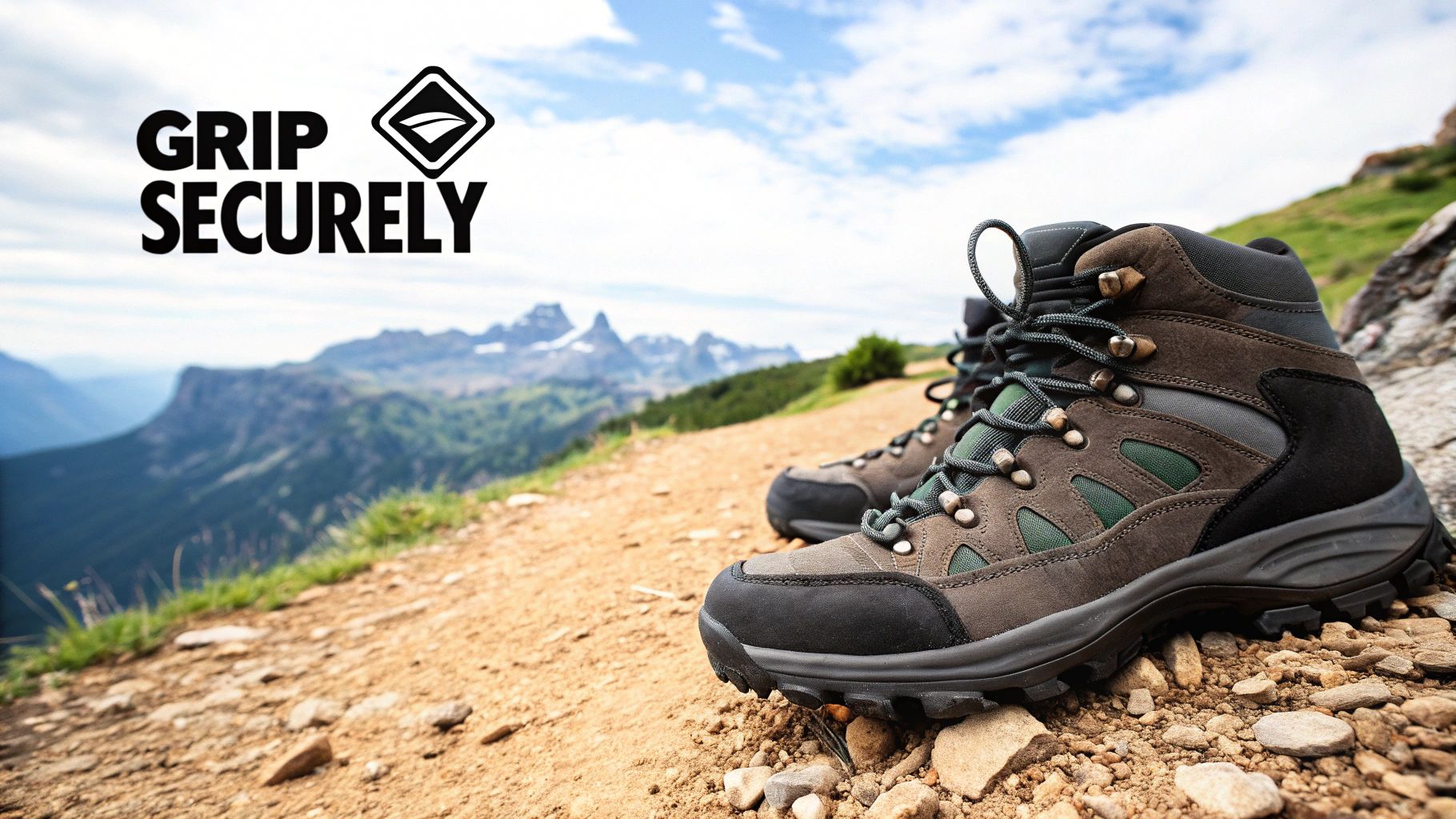
The right shoe choice prevents common ailments like blisters, twisted ankles, and sore feet, allowing you to focus on the experience rather than discomfort. From lightweight trail runners for fast-and-light adventures to heavy-duty boots for carrying significant weight over rugged terrain, the technology in modern footwear is specialized. Features like waterproof membranes (e.g., GORE-TEX) and advanced sole compounds from brands like Vibram ensure your feet stay dry and firmly planted, no matter what the trail throws at you.
### When and Why to Use Dedicated Hiking Footwear
Proper hiking footwear is necessary for nearly every trail, as even well-maintained paths can have loose gravel, mud, or unexpected obstacles. The choice between a boot and a shoe depends on the trail's difficulty, your pack weight, and personal preference.
For Fast Day Hikes & Light Loads: Trail running shoes like the Hoka Speedgoat or approach shoes like the La Sportiva TX4 offer a lightweight, flexible, and highly breathable option perfect for covering ground quickly on less technical terrain.
For All-Around & Multi-Day Hiking: A mid-weight, waterproof hiking boot like the Merrell Moab 3 or Salomon X Ultra 4 GTX provides an excellent balance of support, protection, and comfort for varied conditions and moderate pack loads.
For Heavy Backpacking & Rough Terrain: Sturdy, high-cut boots such as the Danner Mountain Light offer maximum ankle support and durability, which is critical when carrying a heavy pack or navigating off-trail environments.
### Actionable Tips for Your Footwear
Break Them In: Never wear brand-new boots on a long hike. Wear them around your house, on short walks, and on local trails to allow them to mold to your feet and identify any potential hot spots before you're miles from the trailhead.
Get Fitted in the Afternoon: Shop for footwear at the end of the day when your feet are naturally swollen. This ensures you get a proper fit that won't become painfully tight after a few hours of hiking. Bring the socks you plan to hike in to the store.
Match Footwear to Your Pack Weight: The heavier your pack, the more support you need. For light daypacks, trail runners are often sufficient. For multi-day packs over 30 lbs, a structured boot with ankle support is a much safer choice to prevent injury.
Know When to Replace Them: Inspect your footwear regularly. If the tread is significantly worn down, the midsole feels compressed and lacks cushioning, or the upper is failing, it's time for a new pair. Worn-out boots lose their traction and support, increasing your risk of slips and falls.
4. Insulating Mid-Layer (Fleece or Down Jacket)
The insulating mid-layer is your primary source of warmth, designed to be worn over your base layer. Its main job is to trap the body heat your base layer helps conserve, creating a pocket of warm air that insulates you from cold conditions. This critical piece of hiking attire is what you'll add or remove most frequently to adapt to changing temperatures and exertion levels. It must be both warm and breathable, allowing excess heat and moisture from your base layer to escape so you don’t get clammy.
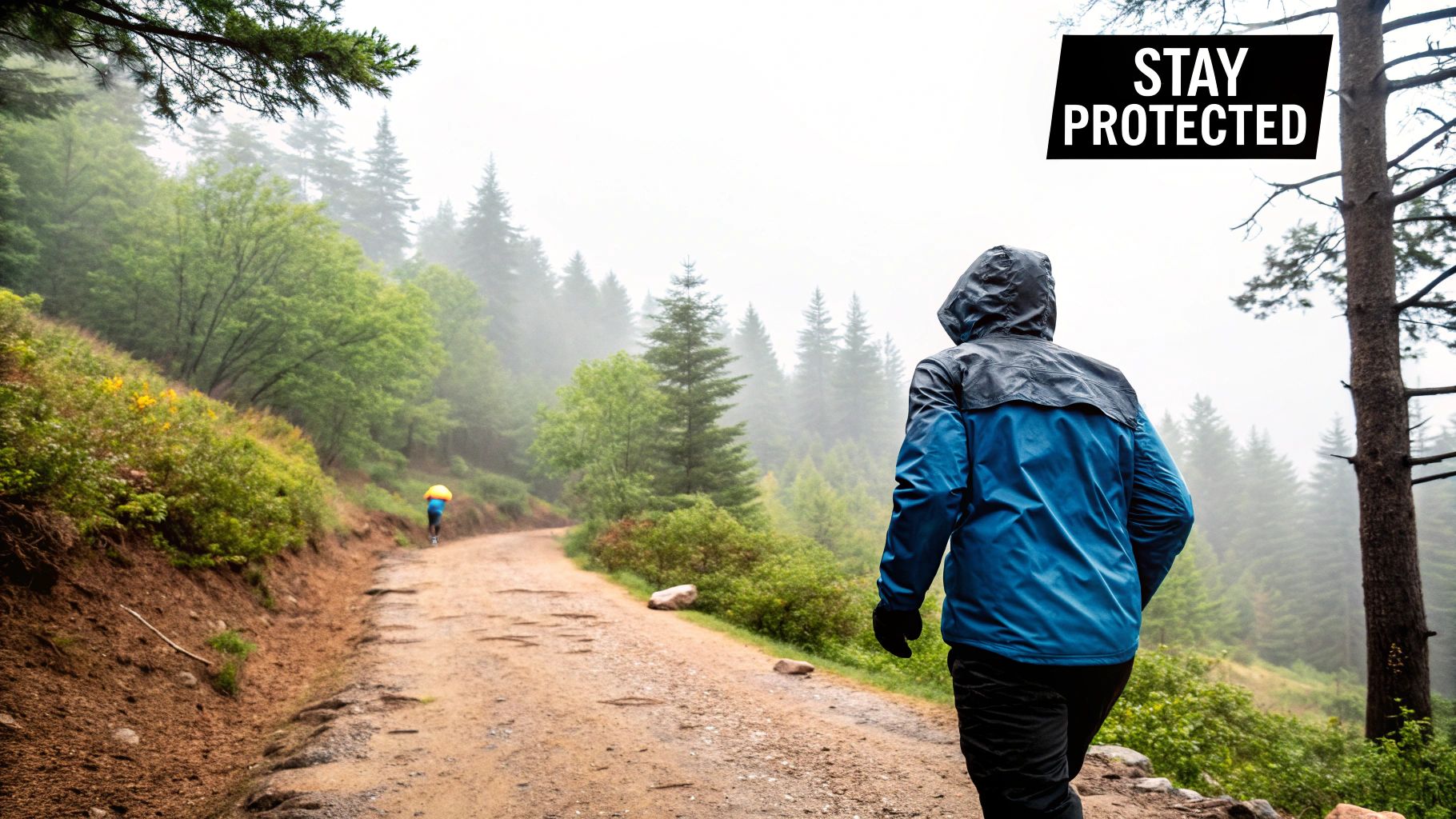
Whether it’s a classic fleece, a puffy down jacket, or a modern synthetic insulated piece, the mid-layer is your personal thermostat. During a strenuous, cold-weather ascent, you might hike with it in your pack. Once you reach a windy summit or stop for a break, you'll put it on to prevent a rapid cooldown. This adaptability makes it an essential part of any layering system, ensuring you stay comfortable and safe as you move through different environments and elevations.
### When and Why to Use an Insulating Mid-Layer
A packable insulating layer should be in your backpack for nearly every hike, except perhaps the hottest and most humid summer days at low elevation. Temperature drops significantly with elevation gain and as day turns to night, making a mid-layer crucial for safety and comfort.
For Versatility and Durability: A fleece jacket like The North Face Denali is a workhorse. It’s highly breathable, durable, and performs well even when damp, making it ideal for high-output activities in cool, dry conditions.
For High Warmth-to-Weight Ratio in Dry Cold: A down jacket, such as the Patagonia Down Sweater or the REI Co-op 650 Down Jacket, offers unbeatable warmth for its weight and compresses down incredibly small in your pack. It is the top choice for very cold, dry climates.
For Performance in Damp or Wet Conditions: Synthetic insulation, found in jackets like the popular Arc'teryx Atom LT, mimics the properties of down but retains its insulating power when wet. This makes it a superior choice for hiking in areas known for rain, mist, or high humidity.
### Actionable Tips for Your Mid-Layer
Prioritize Synthetic Insulation for Wet Climates: If you frequently hike in regions like the Pacific Northwest or the UK, choose synthetic insulation. Down clumps and loses nearly all its loft and warmth when it gets wet, whereas synthetics will keep you warm even if they get damp.
Always Pack It, Even on Warm Days: Don't let a sunny forecast fool you. A 2,000-foot gain in elevation can cause a temperature drop of 10°F or more. A lightweight mid-layer is essential for unexpected weather changes or if a hike takes longer than planned.
Consider a Vest for Core Warmth: An insulated vest is an excellent option for cool-weather, high-exertion hiking. It keeps your core warm where it matters most while leaving your arms free for maximum ventilation and range of motion, preventing you from overheating.
Check the Fit for Layering: Your mid-layer must fit comfortably over your base layer without being restrictive, but it should also be trim enough to fit neatly under your outer shell or rain jacket. Test your entire layering system at home before hitting the trail.
5. The Final Shield: Waterproof Rain Jacket (Shell Layer)
The outermost piece of your layering system, the rain jacket or "hard shell," is your primary defense against wind and rain. This garment acts as an impermeable barrier, preventing precipitation from soaking your insulating layers, which is crucial for staying warm and safe. Modern rain jackets achieve this with advanced waterproof-breathable membranes, such as the famous Gore-Tex or proprietary alternatives, which block liquid water from the outside while allowing water vapor (sweat) to escape from the inside.
This dual function is what makes a technical shell an indispensable part of what to wear hiking. It stops you from getting wet from rain, but it also helps prevent you from getting wet from your own sweat by allowing that moisture to vent. This layer protects the entire system underneath, ensuring your base and mid-layers can do their jobs effectively, keeping you comfortable and protected when the weather turns unexpectedly.
### When and Why to Use a Shell Layer
A rain jacket is an essential safety item that should be in your pack for nearly every hike, regardless of a sunny forecast. Mountain weather is notoriously fickle, and a sudden storm can roll in without warning. It's your emergency shield against getting wet and cold.
For Unpredictable & Wet Conditions: In regions known for rain like the Pacific Northwest or for any trip with precipitation in the forecast, a durable, fully-featured jacket is a must. Options like the Arc'teryx Beta AR or Patagonia Torrentshell 3L offer robust protection.
For "Just-in-Case" & Ultralight Setups: On fair-weather days or when minimizing weight is the top priority, a minimalist emergency shell like the Outdoor Research Helium or Marmot PreCip Eco provides a critical safety net without the bulk.
### Actionable Tips for Your Rain Jacket
Prioritize Ventilation: Hiking uphill in the rain generates immense heat and sweat. Look for jackets with "pit zips" (zippers under the armpits) to dump heat quickly without having to take the jacket off. This is a critical feature for comfort.
Check the Hood and Fit: Ensure your jacket's hood is adjustable and provides good peripheral vision. If you plan on activities like climbing or mountaineering, confirm the hood can fit over a helmet. Also, size the jacket so it fits comfortably over your thickest insulating layer.
Maintain the DWR Coating: The factory-applied Durable Water Repellent (DWR) finish makes water bead up and roll off. Over time, this wears off. You can easily restore it at home with a technical wash and re-proofing spray, which is vital for maintaining breathability.
6. Moisture-Wicking Hiking Socks
Often overlooked, the socks you choose are just as critical as your hiking boots for foot health and overall comfort on the trail. Specialized hiking socks are engineered to do far more than just cover your feet; they are a technical system designed to manage moisture, prevent blisters, and provide targeted cushioning. They achieve this by using advanced materials like merino wool or synthetic blends that wick sweat away from your skin, keeping your feet dry and comfortable.
This moisture management is the key to preventing blisters, which are often caused by friction on damp skin. Unlike cotton socks that trap sweat, hiking socks disperse it to the outside of the sock where it can evaporate. Furthermore, they are constructed with strategic padding in high-impact zones like the heel and ball of the foot, reducing fatigue and absorbing shock with every step. Seamless toe construction eliminates a common friction point, making them a vital part of what to wear hiking.
### When and Why to Use Hiking Socks
A pair of quality hiking socks is essential for every single hike, regardless of length or difficulty. Your feet are your primary mode of transportation, and protecting them is paramount. The specific weight and height will change with the conditions, but the core function is always necessary.
For Day Hikes & Warm Weather: Lightweight merino wool or synthetic blend socks like the Balega Hidden Comfort or Darn Tough Hiker Quarter Cushion provide excellent breathability and moisture-wicking without excess warmth.
For Backpacking & Colder Conditions: Midweight to heavyweight socks, such as Smartwool PhD Outdoor or Farm to Feet Damascus, offer superior cushioning for carrying heavy packs and added insulation for cold temperatures. Their wool composition also naturally resists odor build-up on multi-day trips.
### Actionable Tips for Your Hiking Socks
Never Wear Cotton Socks: Just like with base layers, cotton is the worst choice for your feet. It soaks up sweat, loses its shape, and creates the perfect environment for painful blisters to form. Always opt for merino wool or a synthetic blend.
Match Sock Height to Your Footwear: Ensure your socks are tall enough to rise above the cuff of your boots or shoes. This prevents the boot collar from rubbing directly against your skin, a common cause of chafing.
Bring at Least One Extra Pair: On any hike, especially multi-day treks, a spare pair of socks is non-negotiable. Swapping to a dry, clean pair midday or at camp can rejuvenate tired feet and prevent skin issues.
7. Sun Hat with Brim
An often-underestimated but critical piece of gear, a proper hiking hat serves as your personal, portable shade on the trail. Its primary role is to shield your face, neck, and ears from prolonged exposure to harmful UV radiation, a major risk factor even on overcast days. Unlike a simple baseball cap, a technical hiking hat is designed with performance in mind, incorporating features that manage sweat, enhance comfort, and provide reliable protection against the sun's intensity at high altitudes or in exposed environments.
This piece of your hiking attire does more than just prevent sunburn. It helps regulate your temperature by keeping direct sun off your head, reduces glare to prevent eye strain and headaches, and can even shed light rain. A well-designed hat with a wide brim, like those from Tilley Endurables or Sunday Afternoons, creates a microclimate of shade that makes a significant difference in comfort and endurance during a long day on the trail.
### When and Why to Use a Sun Hat
A sun hat is a vital component of your hiking kit whenever you anticipate sun exposure, which is nearly every hike outside of dense, completely shaded forests. Its importance increases dramatically in certain conditions, making it an indispensable part of what to wear hiking.
For Exposed & High-Altitude Trails: In alpine zones, deserts, or ridgelines where shade is non-existent, a wide-brimmed hat is mandatory. The sun's UV intensity increases with altitude. The Outdoor Research Seattle Sombrero or a Tilley Endurables TH5 Hemp Hat provide maximum coverage.
For Hot & Humid Climates: A hat with ample ventilation and a moisture-wicking sweatband is key. A lightweight option like the Sunday Afternoons Sun Seeker Hat or a classic Patagonia P-6 Logo Trucker Hat with a mesh back helps keep you cool and dry.
### Actionable Tips for Your Sun Hat
Prioritize a UPF 50+ Rating: Look for hats with a certified Ultraviolet Protection Factor (UPF) of 50+. This rating indicates the fabric blocks over 98% of UVA and UVB rays, offering far superior protection than a standard, non-rated cap.
Ensure a Secure Fit for Wind: Choose a hat with an adjustable chin strap or a secure cinch system. This prevents your hat from flying off your head during a gust of wind on an exposed ridge, which is a common and frustrating occurrence.
Check the Underside of the Brim: A dark-colored fabric under the brim, often found on high-quality hats, significantly reduces glare reflected from surfaces like water, rock, or snow, protecting your eyes and improving visibility.
Consider Packability: For trips where space is tight, look for hats made from crushable or foldable materials that can be stuffed into a pack without losing their shape.
8. Technical Hiking Underwear
While often overlooked, your choice of underwear is a crucial component of your overall hiking clothing system. Technical hiking underwear acts as your true base layer, sitting closest to your skin in a high-friction, high-sweat zone. Its core function is to manage moisture effectively, pulling sweat away from your skin to prevent the dampness and discomfort that leads to chafing. Unlike everyday cotton underwear, which traps moisture and becomes abrasive, technical options are made from synthetic materials or merino wool that dry quickly and move with your body.
This moisture management is essential for preventing painful skin irritation on long hikes. By keeping the area dry, you significantly reduce the risk of chafing between your thighs or in other sensitive areas. This small detail can make a massive difference in your comfort level, turning a potentially miserable experience into a pleasant one and allowing you to focus on the trail ahead, not on your discomfort.
### When and Why to Use Technical Underwear
Technical underwear is a smart choice for any hike lasting more than an hour, especially in warm conditions or during periods of high exertion. The longer the hike, the more critical this piece of gear becomes.
For Day Hikes & Hot Weather: Synthetic options like the ExOfficio Give-N-Go 2.0 Boxer Briefs or Patagonia Capilene Daily Briefs are fantastic. They are lightweight, breathe exceptionally well, and dry in a flash, making them ideal for preventing sweat buildup.
For Multi-Day & Odor-Conscious Treks: Merino wool underwear, such as the Smartwool Merino 150 or Icebreaker Anatomica series, is unparalleled. It offers the same great moisture-wicking and temperature regulation as merino base layers but with the added benefit of being naturally antimicrobial, which drastically reduces odor buildup over several days of wear.
### Actionable Tips for Your Hiking Underwear
Test Fit to Prevent Chafing: Before a long trip, wear your chosen underwear with your hiking pants or shorts on a shorter walk to ensure there are no uncomfortable seams or bunching. Consider boxer brief styles with longer inseams to provide a protective barrier against thigh-on-thigh friction.
Again, No Cotton: This rule is absolute, especially here. Wet cotton underwear is a direct recipe for raw, painful chafing. It holds moisture against your most sensitive skin, creating the perfect environment for irritation.
Pack Extras for Overnights: For multi-day trips, pack at least one extra pair. Being able to wash one pair and let it dry while you wear another, or simply changing into a clean pair at camp, is a simple luxury that greatly enhances hygiene and morale on the trail.
Essential Gear Comparison for Hiking Apparel
Item | Implementation Complexity 🔄 | Resource Requirements ⚡ | Expected Outcomes 📊 | Ideal Use Cases 💡 | Key Advantages ⭐ |
|---|---|---|---|---|---|
Moisture-Wicking Base Layer Shirts | Moderate: fabric tech and seam design | Moderate: synthetic/merino fabrics | Keeps skin dry, prevents odor, sun protection | All-day hiking, multi-day trips | Effective moisture management, odor control, lightweight |
Hiking Pants or Shorts | Moderate-High: durable materials, tailoring | Moderate-High: technical fabrics, reinforcements | Durable, protects legs, quick-dry | Varied terrain hiking, brush/exposure protection | Mobility, durability, functional pockets |
Hiking Boots or Trail Shoes | High: sole tech, support features | High: quality leather/synthetics, membranes | Superior traction, foot protection | All terrains, long hikes, rough conditions | Traction, support, waterproofing |
Insulating Mid-Layer (Fleece or Down Jacket) | Moderate: insulation type affects design | Moderate-High: down/synthetic materials | Warmth with breathability, packability | Cold conditions, layering systems | High warmth-to-weight ratio, versatile |
Waterproof Rain Jacket (Shell Layer) | High: membrane tech, seam sealing | High: waterproof breathable fabrics | Full rain/wind protection, breathability | Wet weather, emergency protection | Weatherproof, breathable, durable |
Moisture-Wicking Hiking Socks | Low-Moderate: fabric tech, construction | Low-Moderate: merino/synthetic blends | Prevents blisters, manages moisture | Day hikes to multi-day, blister prevention | Comfort, moisture control, odor resistance |
Sun Hat with Brim | Low: simple design with functional features | Low: UPF fabric, ventilation | UV protection, sweat management | Sunny environments, long exposure | Sun and heat protection, lightweight |
Technical Hiking Underwear | Moderate: seam construction, odor control | Moderate: synthetic/merino fabrics | Prevents chafing, controls sweat & odor | Long hikes, multi-day trips | Comfort, quick-dry, odor resistance |
Dressing for Success: Assembling Your All-Condition Hiking Wardrobe
You’ve journeyed through the essential components of a complete hiking apparel system, from the ground up. We’ve covered everything from technical base layers that manage sweat to the protective outer shell that shields you from the elements. But the most crucial lesson isn't about any single item; it's about how these pieces work together as a dynamic, adaptable whole. Understanding what to wear hiking is fundamentally about mastering the art of layering.
The core principle is simple yet powerful: a moisture-wicking base layer, an insulating mid-layer, and a protective shell layer form the foundation of your trail comfort and safety. This three-part system, supported by specialized hiking pants, socks, footwear, and sun protection, transforms your clothing from a simple outfit into high-performance gear. It’s a modular approach that empowers you to respond instantly to changing conditions, whether you're shedding your fleece during a strenuous uphill climb or pulling on a rain jacket as a storm rolls in over the ridge.
Key Takeaways for Your Next Adventure
Let’s distill this down to the most actionable insights that will have the biggest impact on your hiking experience:
Layering is Non-Negotiable: Embrace the base, mid, and shell layer strategy. This isn't just for extreme expeditions; it’s the smartest way to dress for any hike, from a short local loop to a multi-day trek. It gives you precise control over your personal microclimate.
Fabric is Everything: The golden rule is "no cotton." Your primary focus should be on synthetic materials like polyester and nylon or natural performance fibers like merino wool. These fabrics actively manage moisture, which is the key to preventing chafing, blisters, and dangerous heat loss.
Invest Strategically: You don't need to buy an entire wardrobe overnight. Prioritize your investments. Start with the two items that have the most direct impact on your safety and comfort: a pair of well-fitting, broken-in hiking boots or trail runners and a truly waterproof, breathable rain jacket.
Putting Knowledge into Action
Your journey to mastering hiking apparel begins now. Before your next trip, perform a "gear audit." Lay out what you currently use and compare it against the principles we've discussed. Identify the weakest link in your system. Is it an old cotton t-shirt? Worn-out socks? A jacket that claims to be waterproof but soaks through in a light drizzle?
Replacing that one piece is your first step. By methodically upgrading your gear, you invest not just in clothing but in your ability to push further, stay out longer, and enjoy every moment without being distracted by discomfort. You're investing in safety, confidence, and the freedom to fully immerse yourself in the natural world. Knowing what to wear hiking means you can stop worrying about the weather and start focusing on the view.
The trail is waiting. Armed with this knowledge, you are now prepared to assemble a clothing system that works for you, in any weather, on any terrain. Gear up, check the forecast, and step onto the path with the confidence of a seasoned adventurer.
At RealOminousAthlete, we build gear for those who demand performance and refuse to let their apparel be a limiting factor. Our collection is engineered with the technical fabrics and functional design you need to build a reliable layering system for the trail and beyond. Explore our performance-driven apparel at RealOminousAthlete and find the gear that will power your next adventure.


Comments