
What To Wear Cycling: 7 Essentials for Your 2025 Rides
- Epic Brilliance
- Jun 22, 2025
- 12 min read

Pedal in Comfort: Your Essential Guide to Cycling Apparel
Cycling offers an incredible sense of freedom, but that feeling can quickly fade if you're wearing the wrong gear. Discomfort, chafing, and improper temperature regulation are common issues that can turn a great ride into a grind. The key isn't just about looking the part; it's about performance, safety, and endurance. Understanding what to wear cycling is the first step toward unlocking more enjoyable and efficient miles, whether you're a seasoned athlete or just starting out.
This guide moves beyond generic advice to provide a detailed roundup of the seven non-negotiable items every cyclist should own. We'll explore why each piece is critical, how its specific features translate to a better experience on the bike, and when to use it. From a moisture-wicking base layer to a protective helmet, this curated list will ensure you're perfectly equipped for everything from a quick commute to an epic century ride, helping you pedal in complete comfort and confidence.
1. Moisture-Wicking Base Layer
The foundation of any effective cycling outfit, regardless of the weather, is a high-quality moisture-wicking base layer. This is not just another shirt; it's a technical garment designed to sit directly against your skin. Its primary job is to pull, or "wick," sweat away from your body and move it to the outer surface of the fabric, where it can evaporate. This process, known as capillary action, is crucial for regulating your body temperature. By keeping your skin dry, a base layer helps you stay cool in the heat and prevents the dangerous chill that can set in when you stop moving in cold weather.
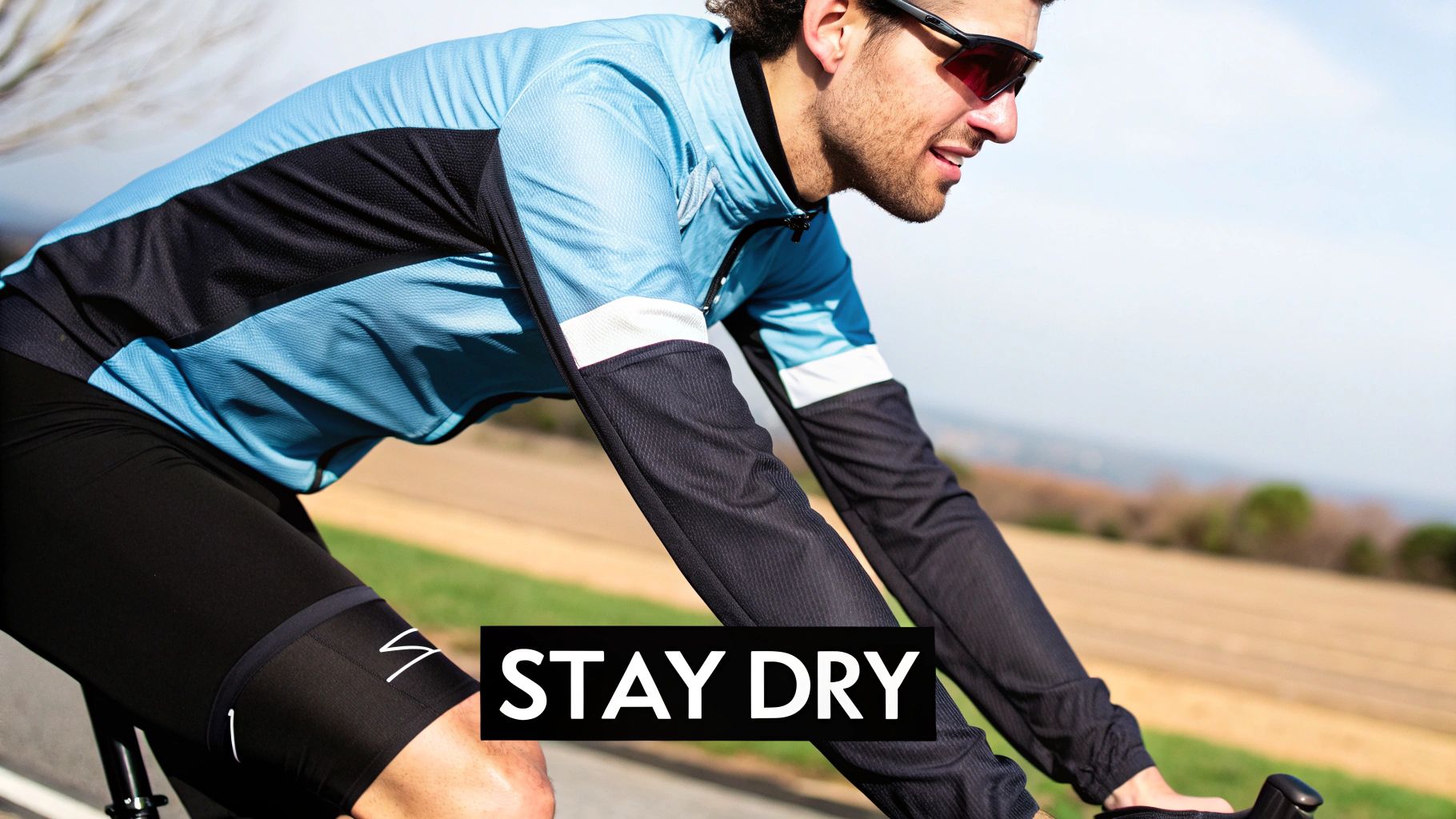
This piece of gear is fundamental to understanding what to wear cycling because it directly impacts comfort and performance. Professional riders in multi-stage tours often rely on merino wool base layers for their superior temperature regulation and natural odor resistance over long days. Similarly, a daily commuter can use a synthetic base layer to stay comfortable during a brisk morning ride and arrive at work dry.
Actionable Tips for Choosing a Base Layer
To get the most out of this essential item, consider the material and fit. The right choice depends on your specific cycling needs.
Choose Your Material Wisely: * Merino Wool: Ideal for multi-day bike-packing trips or cooler conditions. It's naturally antimicrobial, meaning it resists odor build-up, and it continues to insulate even when damp. Brands like Smartwool and Icebreaker are leaders here. * Synthetic Fabrics: Polyester or polypropylene blends (like Patagonia's Capilene) excel at wicking moisture very quickly, making them perfect for high-intensity training rides or hot weather. They also dry faster than wool.
Ensure a Proper Fit: Your base layer should be snug, like a second skin, but not restrictive. A loose fit creates air gaps and prevents the fabric from effectively wicking moisture away from your body.
2. Padded Cycling Shorts (Chamois)
Often considered the most critical piece of cycling-specific apparel, padded shorts are the solution to saddle discomfort on rides of any length. These shorts contain a sewn-in cushion, known as a chamois (pronounced "sham-ee"), designed to relieve pressure on sensitive areas and reduce friction. The chamois is engineered with varying densities of foam and gel to support your sit bones, while its seamless, moisture-wicking surface prevents chafing. This technical design is what allows a cyclist to remain comfortable in the saddle for hours on end.
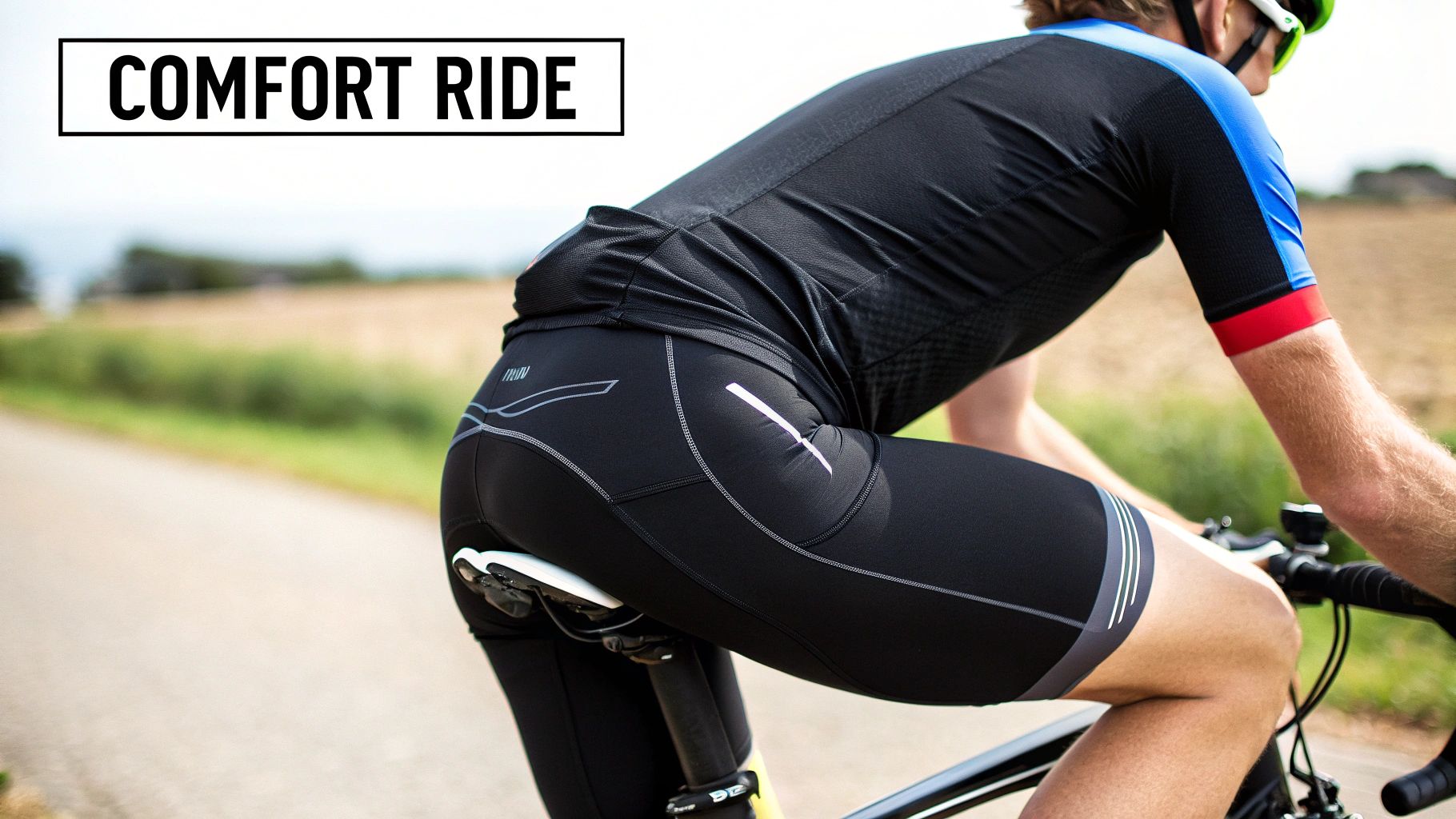
This piece of gear is a non-negotiable part of what to wear cycling for both performance and enjoyment. Tour de France professionals rely on high-tech chamois to endure 200km stages day after day, while a weekend warrior attempting their first century ride will find them essential for preventing saddle sores. Even a spin class enthusiast can benefit from the added comfort, allowing them to focus on their workout rather than discomfort.
Actionable Tips for Choosing and Using Cycling Shorts
To maximize comfort and prevent issues, it's crucial to select the right shorts and wear them correctly.
Go Commando: This is the golden rule of cycling shorts. They are designed to be worn without underwear. The seams on underwear can trap moisture and cause significant chafing and friction against the seamless chamois, defeating its purpose.
Consider Bibs Over Shorts: While regular shorts work well, many serious cyclists prefer bib shorts. These use suspender-like straps instead of a traditional waistband, eliminating pressure on your abdomen and ensuring the shorts and chamois stay perfectly in place without sagging. Brands like Assos and Castelli are pioneers in bib short technology.
Apply Chamois Cream for Long Rides: For rides lasting over an hour or two, applying a thin layer of chamois cream directly to your skin or the pad can dramatically reduce friction and prevent irritation.
3. Cycling Jersey with Rear Pockets
Moving beyond a simple shirt, a dedicated cycling jersey is a specialized garment designed for performance and convenience on the bike. Its primary features are a close, aerodynamic fit and, most distinctively, a set of three deep pockets on the lower back. These pockets are a game-changer, allowing you to carry essentials like energy gels, a phone, keys, and a small repair kit without needing a backpack, which can cause a sweaty back and shift uncomfortably. The technical, breathable fabrics used also work in tandem with your base layer to manage moisture and regulate temperature effectively.
This piece of equipment is central to understanding what to wear cycling because it solves the unique storage problem riders face. For example, a road cyclist on a long training ride can easily access nutrition from these pockets without stopping. Likewise, a touring cyclist might store a map or snacks for quick retrieval, keeping their main panniers reserved for larger items. The design’s utility is why brands like Rapha and Castelli have perfected it for everyone from professional racers to weekend enthusiasts.
Actionable Tips for Choosing a Cycling Jersey
To select the right jersey, focus on fit, features, and visibility to match your riding style and conditions.
Prioritize a Cycling-Specific Fit: A jersey should be snug to minimize wind resistance but not so tight that it restricts breathing. It will typically be cut shorter in the front and longer in the back to provide full coverage when you are bent over in the riding position.
Use Pockets Strategically: * Balance the Load: Place heavier or bulkier items, like a multi-tool or phone, in the center pocket. This keeps the load stable and prevents the jersey from sagging unevenly to one side. * Easy Access: Keep frequently used items like energy gels or snacks in the side pockets for easier access while riding.
Maximize Visibility and Ventilation: Opt for bright colors or jerseys with reflective elements to enhance your visibility to motorists. Also, consider a full-length front zipper, which provides a significant advantage for ventilation on long, hot climbs.
4. Cycling Helmet
A cycling helmet is the single most important piece of safety equipment you will ever own, making it a non-negotiable part of what to wear cycling. Modern helmets are marvels of engineering, designed to absorb and dissipate impact forces to protect your brain during a crash. Beyond pure protection, they are lightweight, highly ventilated to keep you cool, and often aerodynamically shaped to reduce drag. This blend of safety, comfort, and performance is essential for every ride.
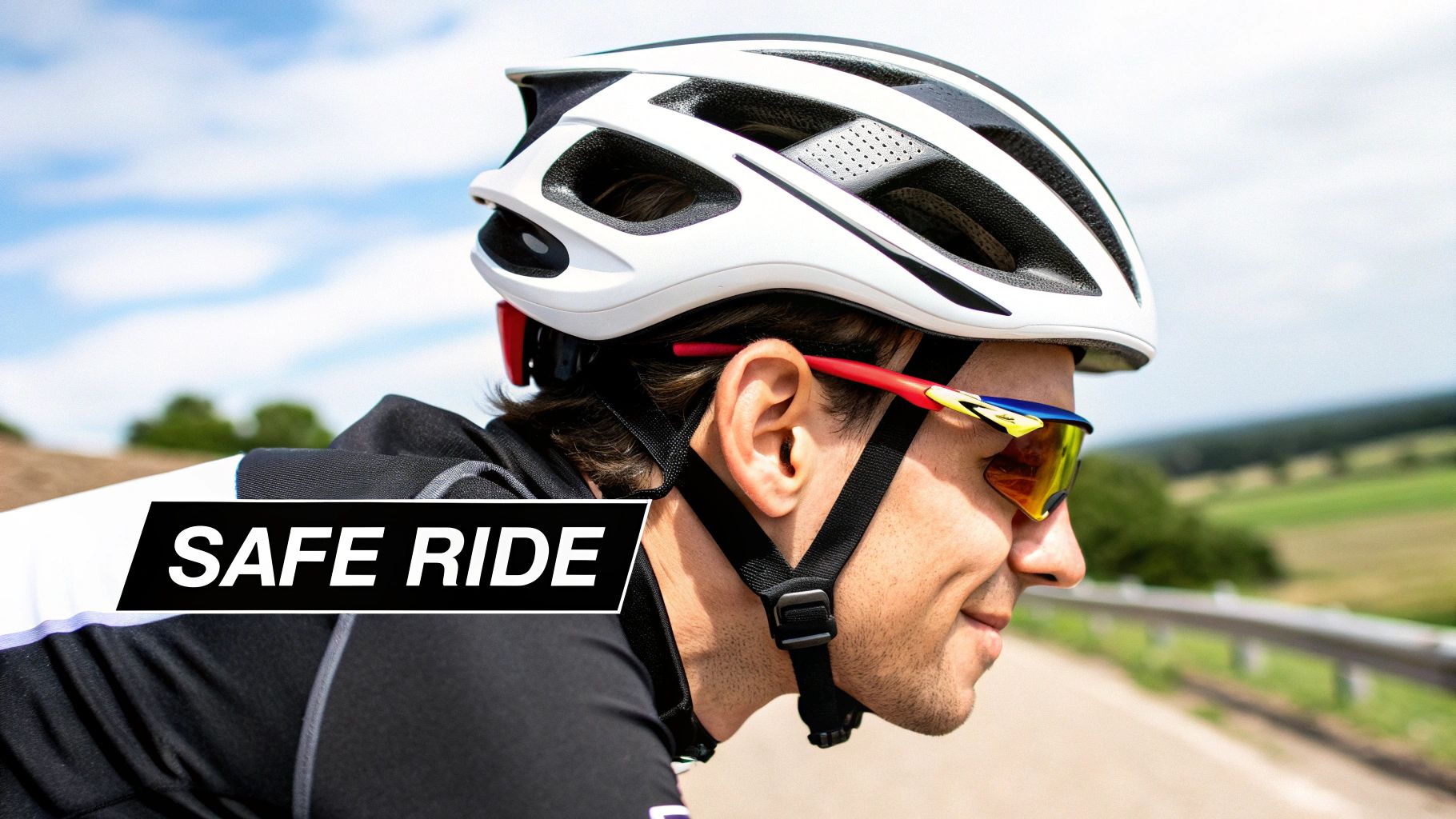
This piece of gear is fundamental for cyclists of all levels. A city commuter relies on it for protection in unpredictable urban traffic, while a mountain biker needs it to guard against falls on technical singletrack. Even professional road cyclists, who prioritize speed, use advanced aerodynamic helmets that provide critical protection without sacrificing performance, proving a helmet's universal importance.
Actionable Tips for Choosing a Helmet
To maximize safety and comfort, selecting the right helmet and ensuring it fits correctly is crucial. Your choice can significantly enhance your protection and overall riding experience.
Prioritize a Perfect Fit: A helmet must be snug and level on your head. A common rule is the "two-finger rule": there should be about a two-finger gap between your eyebrows and the bottom of the helmet. The side straps should form a 'Y' just below your earlobes, and the chin strap should be tight enough that you can only fit one finger between it and your chin.
Invest in Modern Technology: Look for helmets with MIPS (Multi-directional Impact Protection System) or similar rotational-impact technologies. These systems allow the helmet to slide relative to the head, reducing harmful rotational forces during an angled impact. Brands like Giro and POC are pioneers in this area.
Know When to Replace It: Helmets have a limited lifespan. You should replace your helmet immediately after any crash or significant impact, even if no damage is visible. Additionally, the protective foam degrades over time due to UV exposure and general wear, so it's recommended to replace it every 3-5 years.
5. Cycling Gloves
Often overlooked by beginners, cycling gloves are a crucial piece of gear that significantly enhances comfort, control, and safety on the bike. These are not your average winter gloves; they are specifically engineered with padding on the palm to absorb road vibrations and reduce pressure on the ulnar nerve. This protection helps prevent the numbness and tingling in your hands, a common issue known as "cyclist's palsy," that can occur on longer rides. They also provide a more secure grip on the handlebars, especially when your hands get sweaty, and offer vital protection against abrasions in the unfortunate event of a fall.
This piece of equipment is essential to understanding what to wear cycling because it's a primary contact point between you and your bike. A long-distance road cyclist relies on gel-padded gloves to prevent nerve compression over hundreds of miles. Likewise, a mountain biker depends on the reinforced grip of full-finger gloves to maintain control on technical, bumpy descents. Even a daily commuter benefits from the added comfort and hand protection during their ride.
Actionable Tips for Choosing Cycling Gloves
Selecting the right gloves involves considering the type of riding you do, the fit, and the padding design. The correct pair will feel like an extension of your hands.
Choose Your Style: * Fingerless (Mitts): Ideal for road cycling and warm-weather riding. They offer excellent padding and protection while allowing for maximum dexterity and a better feel on brake levers and shifters. * Full-Finger: The standard for mountain biking, offering extra protection from branches and scrapes. They are also great for cooler weather conditions. Brands like Giro and Pearl Izumi offer excellent options in both styles.
Prioritize a Snug Fit: Gloves should fit snugly without restricting blood flow or movement. Too much loose material can bunch up and cause blisters, while gloves that are too tight can worsen numbness. Make sure you can comfortably make a fist.
Evaluate the Padding: Check the placement of the gel or foam padding. It should align with the pressure points on your palm to provide effective cushioning. Some riders prefer minimal padding for a better bar feel, while others want maximum cushioning for long-haul comfort.
6. Cycling Shoes with Cleats
Upgrading to cycling-specific shoes and clipless pedals is one of the most significant performance enhancements you can make. These are not just stiff-soled sneakers; they are a system designed to securely attach your feet to the pedals via a small attachment called a cleat. This direct connection ensures that your power is transferred efficiently through the entire 360-degree pedal stroke, not just on the downstroke. By allowing you to pull up as well as push down, you engage more muscle groups, improve your cadence, and gain superior bike control.
This piece of equipment is a game-changer when considering what to wear cycling for performance. You see its benefits in action when professional racers generate explosive power in a sprint or when a mountain biker maintains control while navigating a technical, rocky climb. Even for century riders, the sustained efficiency over 100-plus miles makes the journey far less fatiguing and more enjoyable. The secure connection gives you a feeling of being one with the bike.
Actionable Tips for Using Cycling Shoes and Cleats
To safely and effectively integrate this system into your riding, focus on practice, setup, and choosing the right type for your needs.
Practice Clipping In and Out: Before you hit the road or trail, practice. Lean against a wall and repeatedly clip one foot in and out by twisting your heel outwards. Get comfortable with the motion until it becomes second nature. This will prevent the classic, slow-motion tip-over many new users experience at their first stop sign.
Proper Cleat Alignment is Crucial: Incorrect cleat placement can lead to knee pain and injury. Position the cleat so the ball of your foot is directly over the pedal axle. Most people benefit from a neutral, straight foot position, but your natural alignment may vary. A professional bike fitter can dial this in perfectly.
Start with Low Pedal Tension: Most clipless pedals have an adjustable tension setting. Start with the loosest setting, which makes it much easier to clip out. As you gain confidence, you can gradually increase the tension for a more secure connection during hard efforts. Brands like Shimano and Look offer excellent, user-friendly pedal systems.
7. Weather-Resistant Cycling Jacket
An essential shield against the elements, the weather-resistant cycling jacket is a lightweight, often packable outer layer designed to protect you from wind and rain without causing you to overheat. This garment is a critical piece of any cyclist's wardrobe, providing a vital balance between weather protection, breathability, and on-bike functionality. Its primary role is to block wind and repel precipitation, allowing you to continue riding comfortably when the weather turns unpredictable. This is a key item when deciding what to wear cycling, as it can be the difference between finishing a ride and turning back.
This gear is indispensable for nearly every cyclist. A commuter can quickly pull one on to fend off an unexpected downpour on the way home, while a mountain biker might wear one on a chilly descent to block wind. The famous Castelli Gabba jacket, for instance, revolutionized the market by offering a water-resistant and highly breathable layer perfect for professional racers in harsh conditions. This jacket allows riders to maintain performance without being weighed down by a fully waterproof, non-breathable shell.
Actionable Tips for Choosing a Cycling Jacket
To select the right jacket, focus on its intended use, features, and how it integrates with your other layers. The ideal choice will keep you protected, visible, and comfortable.
Balance Protection with Breathability: * Wind-Resistant: For most cool or blustery days, a wind-resistant jacket (often called a wind shell) is sufficient. These are highly breathable and prevent windchill, making them versatile for a wide range of conditions. * Water-Resistant vs. Waterproof: A water-resistant jacket (like those made with DWR-coated fabrics) will handle light showers and road spray while maintaining excellent breathability. A fully waterproof jacket with taped seams is only necessary for prolonged, heavy rain, as it often sacrifices some breathability. Brands like Rapha and Assos offer excellent options across this spectrum.
Prioritize Cycling-Specific Features: Look for a jacket with a "dropped tail" for extra coverage against road spray, a higher front to prevent bunching in the riding position, and long sleeves. High-visibility colors and reflective details are crucial safety features for riding in low-light or rainy conditions. Many are designed to pack down into a jersey pocket, making them easy to carry.
Cycling Gear Feature Comparison
Item | Implementation Complexity 🔄 | Resource Requirements 💡 | Expected Outcomes 📊 | Ideal Use Cases 💡 | Key Advantages ⭐⚡ |
|---|---|---|---|---|---|
Moisture-Wicking Base Layer | Moderate - technical fabrics, seams | Moderate - quality synthetic/merino wool | Keeps skin dry and comfortable, odor control | Long rides, multi-day touring, high-intensity | Prevents wetness/chafing ⭐, temp regulation⚡ |
Padded Cycling Shorts (Chamois) | Moderate - padding integration, fit critical | Moderate to high - foam/gel padding | Reduces saddle discomfort, muscle support | Long rides 30+ min, competitive and casual rides | Cushions saddle pressure ⭐, muscle compression⚡ |
Cycling Jersey with Rear Pockets | Moderate - multiple pockets, breathability | Moderate - technical fabrics | Easy access to tools/nutrition, aerodynamic | Road cycling, touring, long events | Storage access ⭐, ventilation, aero fit⚡ |
Cycling Helmet | High - safety standards, materials | High - EPS foam, MIPS tech | Head injury protection, comfort | All cycling activities, mandatory use | Critical protection ⭐, ventilation⚡ |
Cycling Gloves | Low to moderate - padding, fit | Low to moderate - materials and padding | Reduces numbness, improves grip, vibration absorption | Long rides, mountain biking, commuting | Grip enhancement ⭐, hand protection⚡ |
Cycling Shoes with Cleats | High - cleat system, stiff soles | High - composite soles, cleat compatibility | Boosts pedaling efficiency, power transfer | Competitive racing, long rides, mountain biking | Power transfer ⭐, bike control⚡ |
Weather-Resistant Cycling Jacket | Moderate - waterproof/breathable balance | Moderate - specialized outer fabrics | Protection from rain/wind, breathability | Commuting, touring, variable weather | Weather protection ⭐, packability⚡ |
Gear Up for a Better Ride
Dressing for a ride is far more than a simple matter of comfort; it's a strategic component that directly influences your performance, safety, and ultimate enjoyment on the bike. As we've detailed, knowing what to wear cycling isn't about having a closet full of gear. Instead, it’s about building a smart, adaptable system with core pieces that work together. From the foundational moisture-wicking base layer that keeps you dry to a protective, weather-resistant jacket that shields you from the elements, each item plays a crucial role.
The most important takeaway is to think of your cycling apparel as a toolkit. A high-quality chamois prevents painful chafing on long rides, while a jersey with pockets keeps your essentials accessible. Cycling gloves improve your grip and absorb vibrations, and a properly fitted helmet is your most critical piece of safety equipment. Mastering this layering system means you are prepared for anything, whether it’s a sudden downpour, an unexpected temperature drop, or an intense climb that leaves you sweating.
Your Next Steps to a Perfect Ride
Your immediate next step should be a simple audit of your current cycling wardrobe.
Identify the Gaps: Which of these seven essential items are you missing? Start with the piece that will make the most immediate impact on your current rides.
Prioritize Fit and Function: When you invest in new gear, prioritize a proper fit over aesthetics. Well-fitting apparel prevents distractions and performs as intended, allowing you to focus on the road ahead.
Experiment with Layering: Before your next big ride, practice layering. Understand how your base layer, jersey, and jacket feel and perform together so you can make quick adjustments on the go.
Ultimately, investing in the right cycling clothing is an investment in yourself. It empowers you to ride longer, push harder, and find more joy in every pedal stroke. You are no longer at the mercy of the weather but in full control of your comfort and performance.
Ready to upgrade your cycling kit with gear engineered for peak performance? Explore the collection at RealOminousAthlete to find technically advanced apparel that merges intelligent design with high-performance materials. Their innovative products are built to help dedicated athletes like you conquer any challenge the road presents.


Comments