
Moisture Wicking Workout Clothes for a Dry, Comfortable Fit

Understanding How Moisture Wicking Really Works
Imagine your skin during a workout. Sweat starts to build, making you feel clammy and uncomfortable. Think of moisture-wicking fabric as your personal sweat management team, working tirelessly to keep you dry. It acts like a tiny, highly efficient pump, pulling sweat away from your skin.
Capillary Action and Fiber Structure
This "pumping action" is driven by a process called capillary action. Picture the fabric as a network of microscopic tubes or straws. These tubes, formed by the spaces between the fibers, draw the sweat up and away from your skin like water climbing a thin glass tube. The finer the fibers, the more powerful the capillary action. This is why microfibers are so effective in moisture-wicking garments; they create a vast network of these tiny channels.
But the structure isn't the only key. The fabric's chemistry plays a crucial role too. Moisture-wicking materials, typically polyester or nylon, are hydrophobic. This means they naturally repel water, like a raincoat shedding rain. This is the opposite of hydrophilic materials like cotton, which absorb water like a sponge. This hydrophobic nature helps propel the sweat outwards, preventing the fabric from becoming saturated. The key difference here is that wicking moves moisture, while absorption simply soaks it up.
The Evaporation Process
Once the sweat is drawn away from your skin, it spreads across the fabric’s outer surface. Think of a wet spot on a towel; it dries faster when spread thin. Similarly, spreading the sweat across a larger area on the fabric’s surface allows it to evaporate more quickly. This accelerated evaporation is what keeps moisture-wicking clothes feeling drier than traditional cotton workout gear, which tends to soak up sweat and stay wet.
This quick drying also helps regulate your body temperature, preventing overheating during intense activity. The benefits are so clear that the market for moisture-wicking fabrics is booming. Between 2024 and 2025, it grew from $2.82 billion to $3.01 billion globally, a 6.7% jump! Discover more insights into market growth.
From sweat production to evaporation, this entire process happens continuously, keeping you dry and comfortable throughout your workout. Understanding how this works helps you choose the right gear to optimize your performance and comfort.
Synthetic Vs. Natural: The Great Fabric Debate
The world of moisture-wicking workout clothes is no longer a simple "natural vs. synthetic" face-off. It's a nuanced landscape where different fabrics offer unique strengths. Think of it like assembling a team for a specific project – you need the right mix of skills for optimal performance. Let’s explore how popular options like polyester, nylon, and merino wool manage moisture, and discover why blends often provide the best results.
Decoding the Fabric Landscape
Polyester, a synthetic staple, is renowned for its durability and quick-drying nature. Imagine it as the reliable engine of your workout gear, efficiently pulling sweat away from your skin. However, it can sometimes hold onto odors. Nylon, another synthetic contender, shares polyester's sweat-wicking prowess but adds even greater durability. It's like polyester's tougher sibling, ready to tackle the most intense training sessions.
On the natural side, we have merino wool. Unlike the itchy wool sweaters of the past, merino is surprisingly soft and naturally resists odors. Picture a comfortable, breathable shield that keeps you dry and fresh, even during long workouts. The trade-off? Merino wool can be pricier than synthetics and might not dry as quickly.
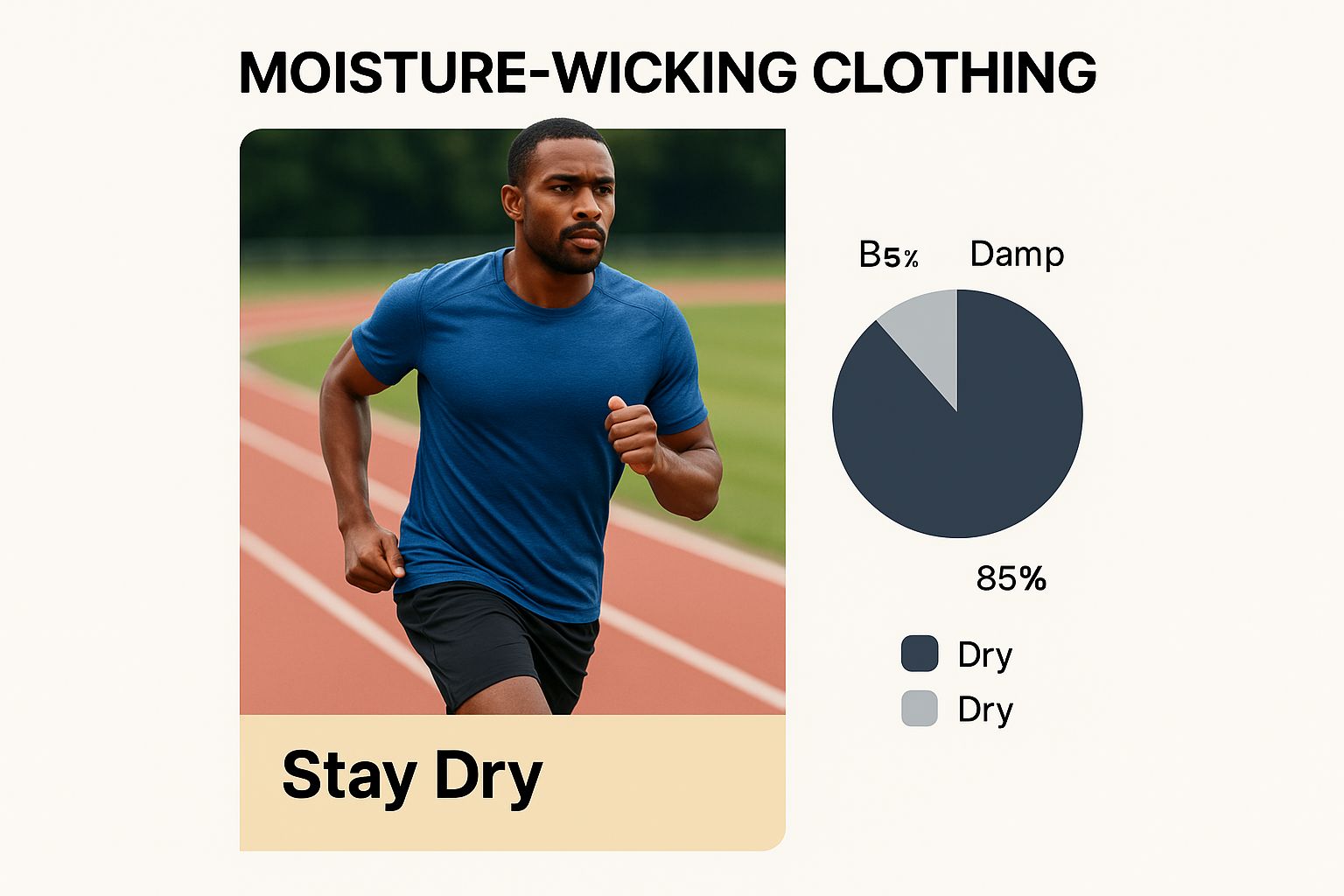
The infographic above shows a jogger comfortably exercising in moisture-wicking clothing, emphasizing the "Stay Dry" benefit. This visual highlights how the right fabric can significantly impact comfort and performance during activity.
The Power of Blends
Here’s where the real innovation happens – blended fabrics. By combining the best of different materials, manufacturers create workout clothes that optimize performance, comfort, and lifespan. Think of it like combining ingredients in a recipe – each one contributes to the final flavor profile.
For instance, a polyester-spandex blend merges the moisture-wicking power of polyester with the stretch of spandex. This creates a garment that moves with you while keeping you dry. Similarly, a merino-nylon blend offers the softness and odor resistance of merino with the added toughness of nylon.
To illustrate the differences between these fabrics and their blends, let's take a look at a comparison table. This table will provide a quick overview of the key performance metrics for each fabric type, helping you understand the advantages and disadvantages of each.
Fabric Performance Comparison for Moisture Wicking Detailed comparison of synthetic and natural moisture wicking fabrics across key performance metrics
Fabric Type | Moisture Wicking Speed | Durability | Odor Resistance | Cost | Best Use Case |
|---|---|---|---|---|---|
Polyester | High | High | Low | Low | Running, gym workouts |
Nylon | High | Very High | Low | Medium | High-impact activities, hiking |
Merino Wool | Medium | Medium | High | High | Hiking, cycling, cold weather activities |
Polyester-Spandex Blend | High | Medium | Low | Low | Yoga, Pilates, general fitness |
Merino-Nylon Blend | Medium | High | Medium | High | Backpacking, multi-day adventures |
As you can see, each fabric type has its own set of strengths and weaknesses. While synthetics excel at moisture wicking and durability, merino wool shines in comfort and odor resistance. Blends offer a compromise, combining the best of both worlds. This allows athletes to fine-tune their clothing choices to their activity and environment. So, the next time you’re shopping for workout gear, consider the fabric’s unique properties and choose the blend that best fits your needs.
Matching Your Workout to Your Fabric Choice
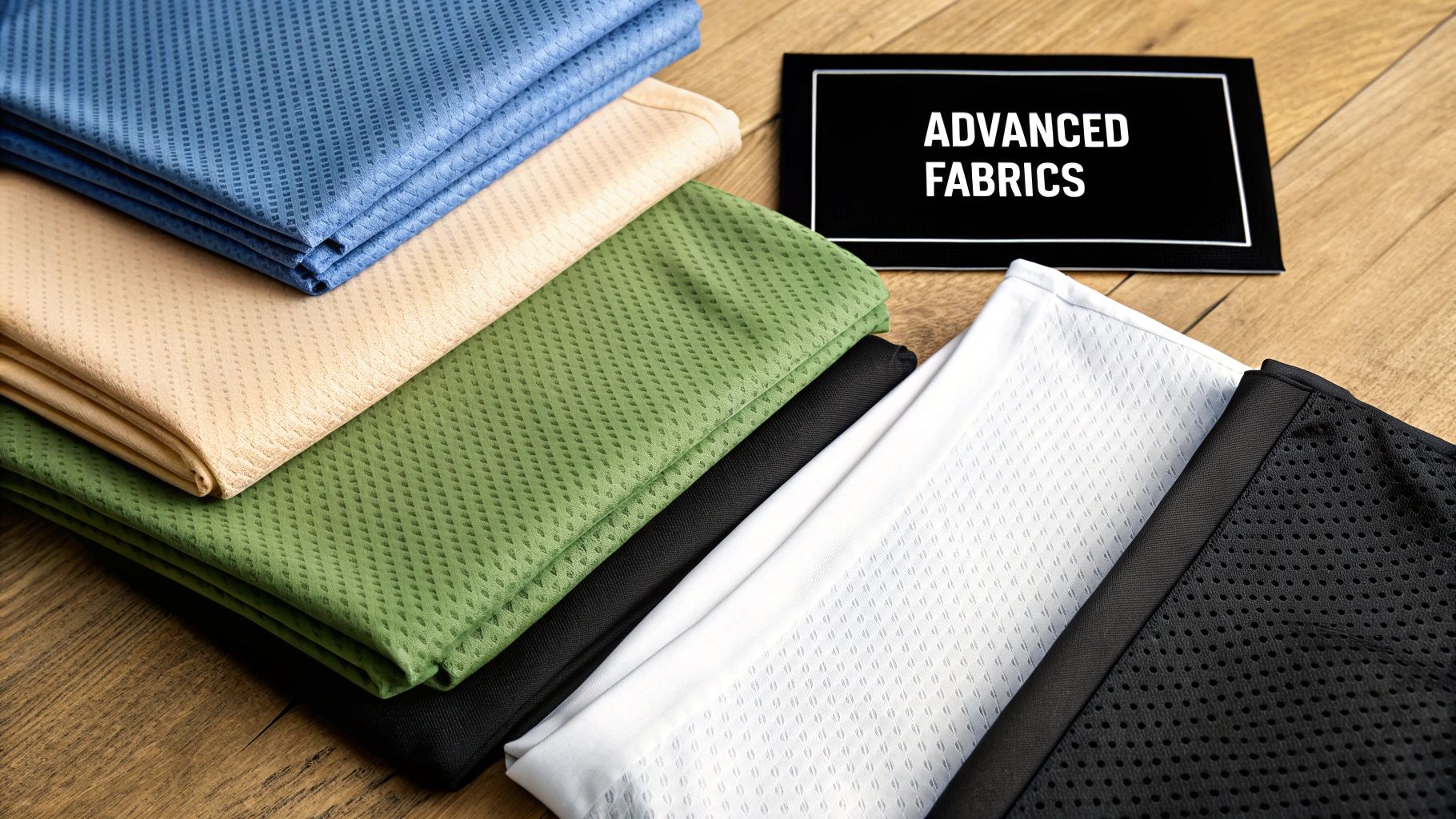
Think about the variety in your workouts. A relaxing yoga session produces far less sweat than a heart-pounding HIIT class, right? This means your moisture-wicking workout clothes need to be just as adaptable. Let's explore how your workout, the environment, and even the season can influence your best fabric choices.
Intensity and Duration: Finding the Right Balance
Imagine a sprinter lined up next to a marathon runner. Their needs are vastly different. The sprinter, exploding with intense, short bursts of energy, needs a fabric that wicks sweat away fast. Something lightweight and synthetic, like polyester, is ideal. The marathon runner, on the other hand, needs comfort and endurance. A blend, like polyester and merino wool, might be a better choice, balancing moisture management with long-lasting odor control.
This same logic applies across the board. A weightlifter benefits from the quick-drying nature of nylon during short, intense sets. A yoga practitioner, however, might prefer the soft, breathable feel of a polyester-spandex blend that moves with them.
From Studio to Trail: Adapting to the Environment
Where you work out matters, too. Indoor workouts in a climate-controlled gym have different demands than outdoor adventures. Picture yourself in a heated yoga studio. A lightweight, breathable fabric is key to avoid overheating. Now, imagine that chilly morning run. Layering becomes crucial. A moisture-wicking base layer under a wind-resistant shell keeps you comfy and protected.
Seasons also influence your choices. In summer, lightweight and breathable fabrics are your friends. In winter, adding a thermal layer with moisture-wicking properties keeps you warm and dry. The goal is to maintain a comfortable body temperature, no matter the weather.
Real-World Examples: Learning from Experience
Let’s look at some practical examples. Runners often gravitate toward lightweight shorts and shirts made from quick-drying synthetics. Weightlifters might prefer moisture-wicking tank tops and compression shorts for support. Yoga enthusiasts often choose breathable, flexible leggings and tops. Outdoor athletes appreciate the versatility of moisture-wicking base layers that adapt to changing conditions.
In this diverse fitness world, moisture-wicking fabrics are a major factor in what people buy. In fact, the global workout clothes market is expected to reach $344.4 billion by 2035, growing at a CAGR of 5.6% from its $181.3 billion valuation in 2023. Find further market insights here. By understanding how different fabrics perform, you can choose the best moisture-wicking workout clothes to maximize your performance and comfort.
Beyond Moisture: The Hidden Benefits You're Getting
Moisture-wicking is essential, sure. But the advantages of top-notch workout gear go way beyond simply staying dry. Think of it like this: a high-performance car needs a powerful engine (moisture-wicking), but it's the climate control, comfortable seats, and smooth ride that truly elevate the driving experience. The same applies to your workout clothes. Moisture-wicking is the base, but the extra benefits make all the difference.
Temperature Regulation and Comfort
Imagine a scorching summer run in a heavy, sweat-soaked cotton t-shirt. Uncomfortable, right? Now picture that same run in a moisture-wicking shirt. The fabric pulls sweat away from your skin, letting your body regulate its temperature naturally. This keeps you cool, preventing overheating and allowing you to push your limits.
This temperature control is a game-changer in colder weather, too. By wicking away moisture, these fabrics prevent chills, keeping you warm and dry even when the temperature drops. This versatility makes moisture-wicking clothes perfect for year-round training. As a bonus, the reduced friction from damp fabric means less chafing, a common workout woe.
Enhanced Performance and Confidence
Comfort isn't just physical; it's mental, too. Feeling dry and comfortable lets you focus on your workout, not on distractions. This improved focus can lead to a more productive and enjoyable training session.
Plus, wearing performance apparel can give you a confidence boost. This psychological edge is just as important as the physical benefits. The right gear can make you feel empowered and ready to conquer your fitness goals. This combination of physical ease and mental strength can significantly enhance your overall workout. For instance, moisture-wicking compression gear can also improve blood circulation, which aids in muscle recovery.
Speaking of gear, the gym apparel market is booming! Driven by the increasing interest in fitness and performance wear, the global market was valued at $111.03 billion in 2025. It's projected to hit $192.45 billion by 2034, a CAGR of 6.58%. Explore further insights into this dynamic market. This growth underscores the demand for workout clothes that go above and beyond basic functionality, with moisture-wicking technology at the forefront.
Shopping Smart: What to Look For and What to Avoid
Stepping into the world of moisture-wicking workout clothes can feel a bit like entering a jungle. So many options! So many promises! How do you separate the truly great gear from the marketing hype? This section will give you the tools to shop confidently, understand those confusing labels, and build a workout wardrobe that performs without emptying your wallet.
Decoding the Labels: Seeing Through the Hype
Ever notice how every piece of workout clothing seems to be labeled "performance" or "high-tech"? Let's face it, these words don't tell us much. The real key is the fabric composition. Remember our earlier discussion about polyester, nylon, and merino wool? These are your star players. Often, blends provide the best balance. Think of a polyester-spandex blend: you get the moisture-wicking power of polyester combined with the stretch and flexibility of spandex.
Look for specifics like antimicrobial treatments or UV protection. These features add real value, especially if you're exercising outdoors. But be skeptical of vague claims. If a label boasts "enhanced performance" without explaining how, proceed with caution.
Fabric Quality and Construction: The Feel Test
The touch and feel of a fabric can reveal a lot. High-quality moisture-wicking material should feel smooth, almost slick, definitely not rough or heavy. Examine the seams. Flatlock seams are your friend. They lie flat against your skin, minimizing chafing and maximizing comfort. Check for reinforced stitching in high-stress areas like the crotch and underarms – a sign of durability. These small details add up to big differences in how your workout clothes perform and how long they last.
Consider the weight of the fabric. Lighter fabrics are usually ideal for intense workouts, while heavier options might be better suited for colder conditions. How does the fabric drape? Does it feel restrictive, or does it move freely with your body?
Fit Considerations: Finding Your Perfect Match
Moisture-wicking apparel often fits differently than your everyday cotton clothes. A snug fit – but not skin-tight – is usually recommended for optimal performance. This close contact allows the fabric to effectively pull sweat away from your skin. Too tight, however, can restrict your movement and comfort. Experiment with different sizes and styles to find the right balance for your body and your chosen activity.
A yoga enthusiast, for example, might prefer a looser fit for maximum flexibility, while a runner might opt for a more streamlined fit to reduce wind resistance. Think about your needs and choose accordingly.
Price vs. Performance: Getting the Best Value
Moisture-wicking workout clothes span a wide price spectrum. While higher prices sometimes (but not always) indicate higher quality, you can definitely find great options at every price point. Prioritize the features that matter most to you. A runner might value quick-drying fabric above all else, while someone who practices yoga might prioritize breathability.
Don't be swayed by brand names alone. Compare features, read reviews, and consider your budget. Look for sales and discounts, particularly during seasonal changes. Building a workout wardrobe you love is a journey. By focusing on fabric, construction, fit, and price, you'll make smart choices that support your fitness goals.
To help you navigate your shopping journey, we've put together a handy guide:
Moisture Wicking Workout Clothes Buying Guide
This table highlights key features to consider when purchasing moisture-wicking workout clothes across different price ranges. It's designed to give you a quick overview of what to look for and what to avoid at each price point.
Price Range | Key Features | Expected Performance | Best Brands | What to Avoid |
|---|---|---|---|---|
Budget | Basic polyester blends, simple construction | Adequate moisture-wicking, may not be as durable | Starter brands, store brands | Thin, see-through fabrics, rough seams |
Mid-Range | Higher quality polyester and nylon blends, flatlock seams, some performance features (e.g., antimicrobial) | Good moisture-wicking and durability, comfortable fit | Well-known athletic brands | Limited color options, fewer technical features |
High-End | Premium fabrics (e.g., merino wool blends), advanced construction techniques, specialized performance features (e.g., UV protection, targeted compression) | Superior moisture-wicking, excellent durability, enhanced comfort and performance | Specialty performance brands, luxury athletic brands | Overpaying for features you don't need |
As you can see, each price range offers different benefits and trade-offs. By understanding your needs and budget, you can find the perfect moisture-wicking gear for you. Don't be afraid to experiment and try different brands and fabrics until you find what works best for your individual workout style.
Keeping Your Gear Performing Like New
Imagine your favorite moisture-wicking workout clothes as a high-performance sports car. You wouldn't neglect its maintenance, right? The same principle applies to your workout wardrobe. Proper care is crucial for optimal performance and longevity. Let's dive into the essential secrets for keeping your gear in top shape.
Washing and Drying: The Foundation of Care
Think of sweat as the fuel that powers your workout, but leaving your clothes damp afterward is like letting that fuel turn stale. Bacteria thrive in moist environments, leading to those unwanted odors. A simple rinse immediately after your workout, or at least airing them out thoroughly, can make a big difference.
When it's time for a full wash, ditch the harsh detergents and fabric softeners. These can coat the fibers, effectively clogging the very system designed to wick away moisture. Instead, opt for a mild detergent designed for activewear, or even a sports-specific wash. These specialized cleansers are formulated to break down sweat and body oils without compromising the fabric's technical properties.
High heat is the nemesis of moisture-wicking materials. Just like a scorching sun can damage a car's paint, the dryer's heat can damage the delicate fibers of your workout clothes, shrinking them and diminishing their performance. Air drying is the way to go. Lay them flat or hang them, ideally away from direct sunlight to prevent fading.
Troubleshooting: Addressing Common Issues
Even with the best care, sometimes issues pop up. Lingering odors can be a nuisance. If your clothes still smell after washing, a simple soak in a solution of white vinegar and water before laundering can work wonders. Vinegar is a natural odor neutralizer that won't harm the fabric.
Another common issue is a decrease in wicking ability over time. If your clothes start feeling damp and heavy during workouts, it's often a sign of detergent buildup. Imagine it like a clogged drain – the moisture can't escape. Washing them with a sport-specific detergent or adding a small amount of baking soda can help strip away that residue and restore the wicking properties.
Extending the Lifespan: Making Your Investment Last
You’ve invested in quality workout gear; now let's make it last. Avoid over-washing. Unless your clothes are visibly soiled, airing them out after a lighter workout is often enough. This minimizes wear and tear, extending the life of the fabric.
Proper storage is also key. Avoid damp or humid areas. Fold your clothes neatly or hang them loosely to prevent wrinkles and maintain their shape. Regularly inspect your gear for any signs of wear and tear. A small hole or tear can often be easily repaired with a needle and thread or fabric glue. Knowing when to replace worn items is crucial for maintaining peak performance and hygiene.
By following these simple tips, you can keep your moisture-wicking workout clothes performing at their best, ensuring you stay dry, comfortable, and confident during every workout. Invest in your gear's longevity, and it will reward you with peak performance for years to come.
Ready to upgrade your workout wardrobe? Check out RealOminousAthlete at https://bearcapes.store for products designed to enhance your performance and comfort.
Article created using [Outrank](https://outrank.so)


Comments