
Compression Wear for Recovery Your Ultimate Guide

We've all been there. You crush a tough workout, feeling great, only to be sidelined by deep muscle soreness a day or two later. That ache, often called Delayed Onset Muscle Soreness (DOMS), can feel like a major roadblock to your next training session. But what if you could actively speed up your body's recovery process? That’s exactly where compression wear for recovery comes in.
This isn't just about wearing tight clothes. It’s a smart and practical tool used by athletes at every level—from pros to weekend warriors—to minimize downtime and make rest more effective.
Why Do Athletes Swear by Compression for Faster Recovery?
After you push your limits, your muscles are tired, inflamed, and swimming in metabolic waste products like lactic acid. That's what causes that all-to-familiar soreness. While rest is non-negotiable, compression gear acts like an active partner in your recovery. Think of it as giving your body's natural cleanup crew a powerful assist.
By applying steady, graduated pressure to key muscle groups, these garments do two crucial things. First, they help stabilize the muscle tissue, reducing the tiny vibrations and micro-trauma that lead to damage and fatigue. More importantly, this pressure gives your circulation a significant boost. It makes it easier for your cardiovascular system to flush out those waste products and, at the same time, deliver a fresh supply of oxygen-rich blood to your exhausted muscles. This is the magic behind repairing muscle fibers and taming inflammation.
The Science-Backed Edge in Fitness
The idea of using compression isn't just hype; it has solid roots in medicine and has been adopted by the athletic world for its proven benefits. We're not just talking about feeling better—we're talking about a measurable advantage that helps you get back to peak performance, faster. You can see this shift in the numbers, with the global compression garments market expected to climb from around USD 1,991.7 million to over USD 3,316.3 million in the next few years. If you're curious, you can explore the full market analysis and trends to see just how quickly this technology is growing. This boom signals a clear move toward proactive, smarter recovery methods.
In essence, compression wear gives your circulatory system a helping hand. It improves the efficiency of your body's own recovery mechanisms by guiding swelling away from overworked tissues and promoting faster repair.
Compression Wear Benefits at a Glance
So, what does this all mean for your post-workout routine? Simply put, adding compression gear offers a few key advantages that directly tackle common recovery hurdles. This helps you train harder, more often, and with better results.
Here’s a quick summary of the main ways compression supports your recovery goals.
Benefit | How It Helps Your Recovery |
|---|---|
Reduced Muscle Soreness | Minimizes DOMS by helping to clear out metabolic waste faster. |
Decreased Swelling | Applies pressure to reduce fluid buildup and inflammation in tissues. |
Enhanced Blood Flow | Improves circulation, delivering more oxygen and nutrients to repairing muscles. |
Improved Muscle Stabilization | Reduces micro-trauma by limiting unnecessary muscle movement post-exercise. |
Each of these benefits works together to create a more efficient healing environment, helping you bounce back stronger and ready for whatever you take on next.
How Compression Gear Speeds Up Healing
Think of compression wear as giving your tired muscles a gentle, productive hug. After you've pushed yourself, your muscles are inflamed and swimming in metabolic waste products like lactic acid. That’s the stuff that makes you feel so sore the next day. Compression gear applies precise, targeted pressure to help your body’s natural cleanup crew work faster and more efficiently.
This isn't just about squeezing your limbs. The best recovery gear uses what’s called graduated compression. It's designed to be tightest at the points farthest from your heart—like your ankles or wrists—and gradually loosens as it moves up toward your core. This clever design creates a pressure gradient that helps your veins push that old, waste-filled blood back toward your heart, making way for the good stuff.
This infographic breaks down how that pressure directly impacts circulation, which is the cornerstone of great recovery.
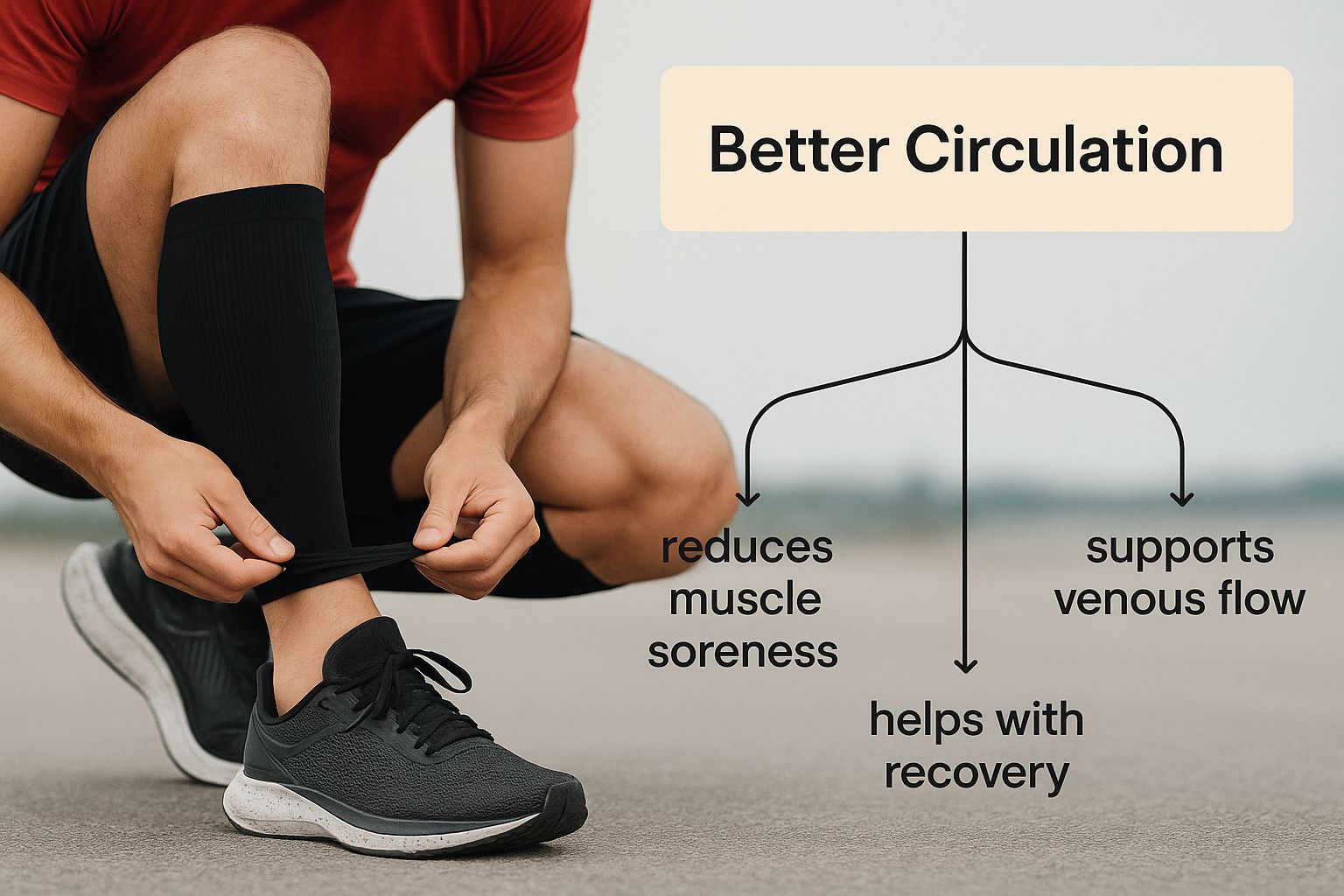
By getting the circulatory system moving more effectively, compression wear helps rush fresh, oxygenated blood back to your muscles. And that’s what fuels the repair process.
Reducing Muscle Soreness and Vibration
Every time your foot hits the pavement or you land a jump, your muscles vibrate. These tiny oscillations create micro-trauma, which leads to fatigue and soreness. Compression gear acts like a supportive second skin, holding your muscles firmly in place to cut down on that damaging vibration. This is a big reason why you feel less tired both during a workout and long after you’ve finished.
By limiting this initial damage and then speeding up waste removal, compression gear is a fantastic weapon against Delayed Onset Muscle Soreness (DOMS). Instead of wincing for days, the aches are less intense, and you can get back to your routine much sooner. It's no surprise that athletes and everyday fitness lovers are catching on. The compression wear and shapewear market recently hit an estimated USD 5.14 billion and is still climbing. For a closer look at the numbers, you can explore a deeper analysis of the compression market trends.
Key Insight: Compression gear doesn't magically heal you. It simply enhances your body's own incredible circulatory system, creating the perfect environment for it to repair itself much more efficiently.
Minimizing Post-Exercise Swelling
Swelling is a normal part of your body's response to the stress of a workout. But when it gets out of hand, it can seriously hinder recovery by limiting your movement and causing a lot of discomfort. The external pressure from a compression garment gives that excess fluid nowhere to go, preventing it from pooling in your muscle tissue.
This controlled pressure is a game-changer for recovery in two key ways:
It controls inflammation: By managing the initial inflammatory response, it prevents the excessive swelling that can make soreness last longer.
It boosts lymphatic drainage: The pressure helps your lymphatic system—the body's built-in waste disposal network—flush out fluids and cellular junk more effectively.
By keeping swelling under control, compression gear does more than just reduce pain. It helps you maintain your range of motion in the hours and days after a tough session. That makes it an essential tool for anyone serious about optimizing their rest and minimizing downtime.
How to Choose the Right Compression Gear
Walking into the world of compression gear can feel a bit like staring at a wall of running shoes—so many options, where do you even start? The secret is to think less about the gear itself and more about what you need it to do. It's really about matching the gear to your specific activity and recovery goals.
Think of it this way: after a long run, it’s your calves and feet that are screaming for help. That’s where compression socks or calf sleeves become your best friends, targeting those specific lower-leg muscles that took a beating. On the other hand, if you just crushed a heavy leg day with squats and deadlifts, you’ll want support for the whole system. That's a job for full-length tights that cover everything from your glutes down to your ankles.
Understanding Gear Types and Their Purpose
Different pieces of compression gear are engineered to support specific muscle groups. Picking the right one means getting the pressure exactly where you need it most, which is what makes recovery so effective.
Socks and Calf Sleeves: A must-have for runners, hikers, or anyone who’s on their feet all day. They are brilliant for fighting off that heavy, swollen feeling in your lower legs.
Tights and Shorts: These are your go-to for total leg recovery. Think cycling, intense sports like basketball, or the aftermath of a serious leg day. Tights give you that full-coverage support, while shorts are great for zeroing in on your quads, hamstrings, and glutes.
Arm Sleeves: If your sport involves a ton of repetitive arm motion—like tennis, golf, or baseball—these are a game-changer. They're also fantastic for helping your arms bounce back after a big upper-body workout.
Simply identifying which muscles feel the most worked will point you directly to the right piece of gear and make your recovery that much smoother.
Decoding Materials and Pressure Ratings
Alright, so you’ve figured out what type of gear you need. Now it’s time to get into the nitty-gritty: the fabric and the fit. You'll want a material that’s breathable and pulls sweat away from your skin, especially if you plan on wearing it for more than an hour or two. Blends of nylon and spandex (often listed as Lycra) are usually the sweet spot, giving you both durability and that crucial stretch.
But the single most important factor for effective recovery is the pressure level, which is measured in millimeters of mercury (mmHg). For athletic recovery, you’re generally looking for a range of 15-30 mmHg. This provides enough of a squeeze to get your blood moving without cutting off circulation.
This brings us to the final, and most critical, point: getting the size right. A garment that's too loose is basically just expensive fabric—it won't do anything. But one that's too tight can actually work against you and become uncomfortable or even risky. Always, always use the manufacturer's sizing chart and take the time to measure yourself properly. The fit should feel snug and supportive, never painful. Seriously, this one step makes all the difference.
When and How to Make Your Recovery Count
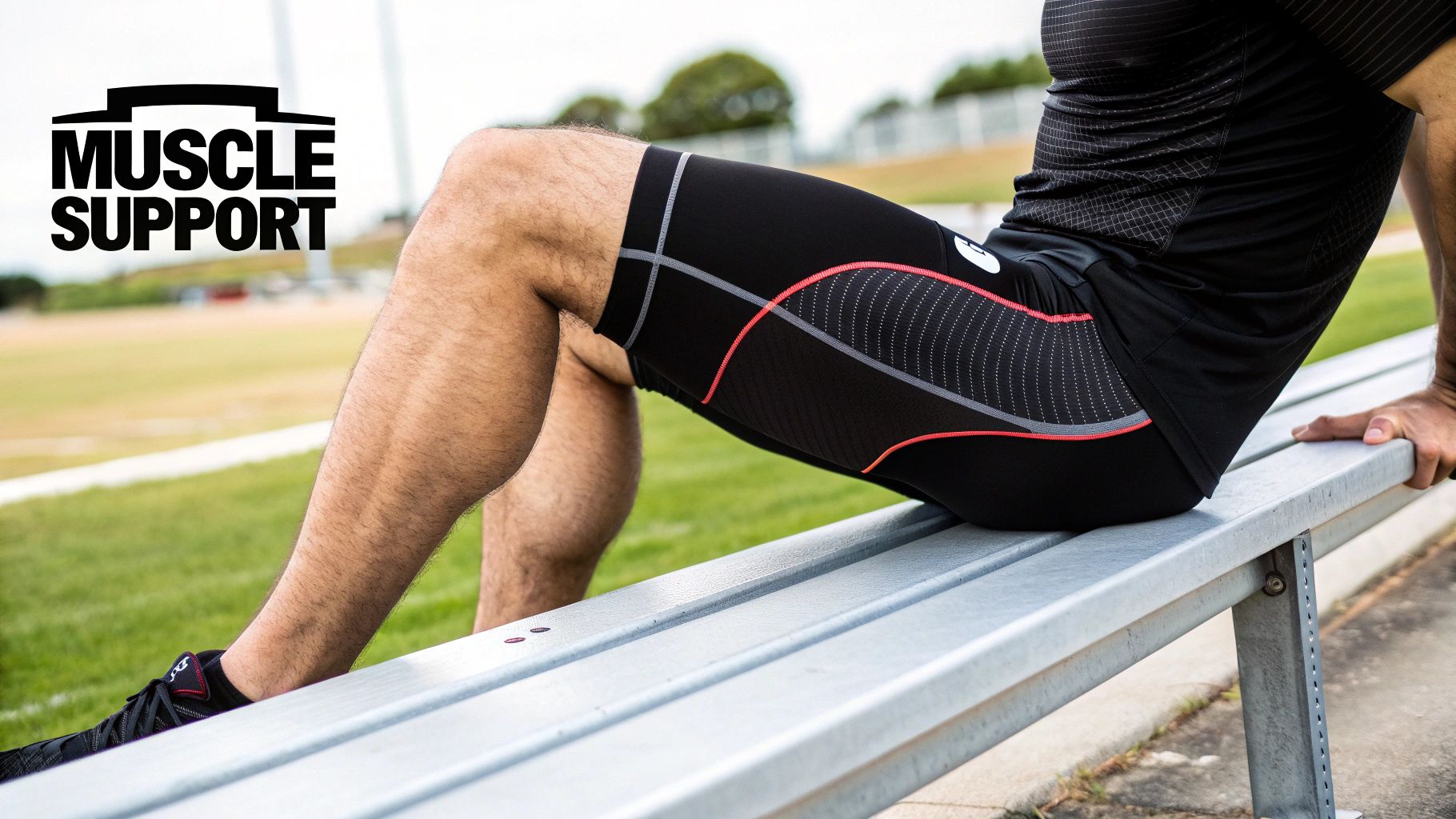
Owning the right gear is one thing, but knowing exactly when and how to use it is what really unlocks its potential. When it comes to compression wear for recovery, timing is just about everything.
For most people, the golden window to slip on your compression gear is right after you finish your workout. This is the moment your muscles are starting to feel the burn and inflammation is kicking in. By applying that gentle, targeted pressure immediately, you give your circulatory system a major boost.
Try to get your compression gear on within an hour of your cool-down. Think of it as giving your body’s natural cleanup crew a head start, helping to manage that initial swelling and flush out all the metabolic junk that builds up during intense exercise. It’s your first line of defense against next-day soreness.
So, how long do you keep it on? For most post-workout recovery, wearing the gear for 2 to 4 hours is usually enough to feel a real difference. After something particularly brutal, like a marathon or a tournament, some athletes find that wearing their garments longer—even overnight—provides the sustained support their body needs.
Common Mistakes That Can Sabotage Your Recovery
Even the best compression gear won't do you any good if you're not using it correctly. In fact, you can even make things worse. Steer clear of these common pitfalls to make sure you’re helping, not hurting, your recovery.
The number one mistake? Wearing the wrong size. If your gear is too loose, you’re getting zero therapeutic benefit. It’s just expensive fabric. But if it’s too tight, you risk constricting blood flow, which is the exact opposite of what you want. Always, always follow the manufacturer's sizing chart and take the time to measure yourself properly.
A good fit feels snug and supportive. You should notice the pressure, but it should never cause pain, numbness, or that pins-and-needles feeling. If it hurts, it’s not working—it's just too tight.
Another classic error is improper care. The magic of compression wear lies in its elastic fibers. Tossing your gear in a hot wash or a high-heat dryer will absolutely destroy that elasticity, turning your performance-grade equipment into a plain old pair of leggings. Stick to cold water washes and always let it air dry.
Matching Your Compression to Your Sport
Different sports beat up different parts of your body, so your recovery game plan should reflect that.
For Marathon Runners: Your lower legs just went through a war. Knee-high compression socks or calf sleeves should be your best friend. Plan to wear them for at least 3-4 hours after you cross the finish line to help manage the serious swelling and soreness that settles in your feet, ankles, and calves.
For CrossFitters: Your workouts are an all-out, full-body assault. After a WOD heavy on squats, box jumps, and Olympic lifts, full-length tights are a fantastic choice. They give your quads, hamstrings, and glutes the comprehensive support they’re screaming for.
For Weekend Warriors: After a tough hike or an intense game of pickup basketball, focus on the areas that are talking to you the most. Calf sleeves or arm sleeves can deliver targeted relief right where you need it, making them a practical and super-effective option without needing a full-body getup.
More Than a Workout Tool: The Medical Roots of Compression
Long before athletes were pulling on compression tights for recovery, doctors were prescribing them for healing. The very same technology that helps you bounce back from a killer workout has its origins firmly planted in the medical world, where it's used to manage serious conditions and guide recovery after surgery.
Think about it—after an operation, the body's natural response is to swell. Compression garments are a go-to tool for surgeons to gently control that swelling, support tissues as they heal, and help everything conform to its new shape. This isn't just a wellness trend; it's a clinically proven method for predictable, guided healing.
Managing Chronic Conditions and Everyday Aches
Beyond the operating room, compression therapy is a lifeline for people managing chronic health issues. It's often a non-negotiable part of daily life for those with certain lymphatic and venous conditions.
Lymphedema Management: For anyone with lymphedema—a condition that causes uncomfortable fluid buildup—compression is essential. The steady, external pressure is the key to preventing fluid from pooling in the limbs and encouraging proper lymphatic drainage.
Preventing DVT: Ever been told to wear special socks on a long flight? That's compression at work. The gentle squeeze helps prevent Deep Vein Thrombosis (DVT), a dangerous type of blood clot that can form in the legs when you're stuck sitting for hours. It literally keeps your blood moving when you can't.
The credibility of compression wear extends far beyond the gym. Its widespread use in clinical settings for serious health issues is a testament to the powerful, science-backed impact of targeted pressure on the body's circulatory system.
A Wellness Tool for Demanding Lifestyles
The benefits don't stop there. This same principle helps people in professions that keep them on their feet (or in a chair) all day long. Nurses, retail workers, teachers, and even office workers are discovering that compression socks and stockings are a secret weapon against the leg fatigue, aches, and swelling that build up over a long shift.
This broad adoption across medicine, sports, and daily life is what’s driving incredible growth. The global market for compression garments is on track to hit around USD 5 billion, pushed by demand in post-surgical care, athletic recovery, and chronic disease management. You can discover more about the expanding compression market to see the full picture. It all goes to show that compression is far more than a fad—it's a fundamental tool for taking proactive control of your health.
The Future of Smart Recovery Wear
The world of compression wear for recovery is about to get a serious upgrade. We're moving beyond simple, passive pressure and stepping into an era where your gear actively participates in your recovery. Think about clothing that doesn't just squeeze your muscles but actually listens to them and tells you what they need.
This is the incredible promise of smart fabrics. The next generation of compression garments will have tiny, unobtrusive sensors woven right into the material. These aren't just for show; they'll track crucial recovery metrics in real-time, like muscle oxygen levels, inflammation, and even subtle vibrations that indicate muscle fatigue. Imagine your post-run tights sending a report to your phone, highlighting exactly which muscle groups are lagging and need more attention.
Personalized Recovery Through Technology
This data-driven approach will make recovery more precise than ever before. One of the most exciting advancements on the horizon is the use of 3D body scanning technology. Forget grabbing a generic "medium" off the shelf. Soon, you could get a custom-fitted garment created from a hyper-accurate digital map of your own body.
This means the compression will be perfectly graduated and applied exactly where you need it most, boosting the gear's effectiveness tenfold. It completely removes the guesswork from getting the right fit—it will be engineered specifically for your unique anatomy.
The future of recovery isn't just about feeling better; it's about knowing exactly why you're feeling better. Smart wear will provide the data to prove what works, turning recovery from a guessing game into a science.
Beyond just sensors, researchers are also experimenting with advanced materials that are infused with recovery-boosting properties.
Mineral-Infused Fabrics: Some new materials are being designed to absorb your natural body heat and reflect it back as far-infrared energy. The theory is that this can help improve local circulation and speed up cellular repair.
Bioceramic Technology: Similarly, yarns coated with bioceramic particles can have a similar effect, potentially enhancing blood flow and delivering more oxygen to tired, overworked tissues.
These innovations point to a future where our gear is part of a truly integrated health system. Your compression wear won't just be something you put on after a workout. It will become an active, intelligent partner in your performance and wellness, making your recovery smarter, faster, and completely personalized.
Got Questions About Compression? We've Got Answers.
We get it. Diving into the world of compression wear can bring up a few questions. To make sure you're getting the most out of your gear and using it the right way, we've tackled some of the most common ones we hear from athletes just like you.
Can You Wear Compression Gear for Too Long?
Absolutely. More isn't always better when it comes to compression. While keeping your gear on for a few hours after a tough workout is fantastic for recovery, wearing it indefinitely can do more harm than good. The golden rule is simple: listen to your body.
If you start feeling any numbness, sharp pain, tingling, or notice skin irritation, that's your cue to take it off. Compression should feel like supportive pressure, not a restrictive squeeze that cuts off circulation. For most recovery situations, a 2-4 hour window after your workout is the perfect sweet spot.
How Do I Know If the Fit Is Right?
This is probably the single most important question. The right fit is everything. Your compression gear should feel snug and supportive—think of it like a firm, reassuring hug for your muscles. It should apply noticeable pressure, but it should never be painful.
You'll know you've nailed the fit when:
The pressure feels consistent across the entire muscle group, with no weirdly tight spots or saggy areas.
The garment doesn't roll down, slide around, or bunch up when you move.
You don't feel any "pins and needles," numbness, or any restriction in your breathing.
Pro Tip: Don't just guess your size. Brands have different fits, so always, always use the manufacturer's sizing chart. Take a moment to measure yourself. Gear that’s too loose does nothing, and gear that's too tight is not only useless for recovery—it can be downright dangerous.
What's the Difference Between Athletic and Medical-Grade Compression?
The biggest difference comes down to the amount of pressure, which we measure in millimeters of mercury (mmHg).
Athletic compression gear, the kind you’d use for recovery, usually sits in the 15-30 mmHg range. This is the ideal pressure level for boosting blood flow and taming that post-workout muscle soreness without being too intense for general use.
Medical-grade compression is a whole different ballgame. It's much stronger, often starting at 30-40 mmHg and going up from there. Doctors prescribe these garments for serious conditions like deep vein thrombosis (DVT), lymphedema, or managing severe swelling after surgery. They require a precise, professional fitting and shouldn't be used for athletic recovery unless a doctor specifically tells you to.
Ready to feel the difference for yourself? RealOminousAthlete builds products designed to help you bounce back faster and come back stronger. Check out our lineup of premium compression wear and find the gear that will take your recovery to the next level.


Comments