
Cold Weather Workout Clothes: Complete Layering Guide

Why Your Summer Gear Fails When Temperatures Drop
The Body's Cold Weather Response
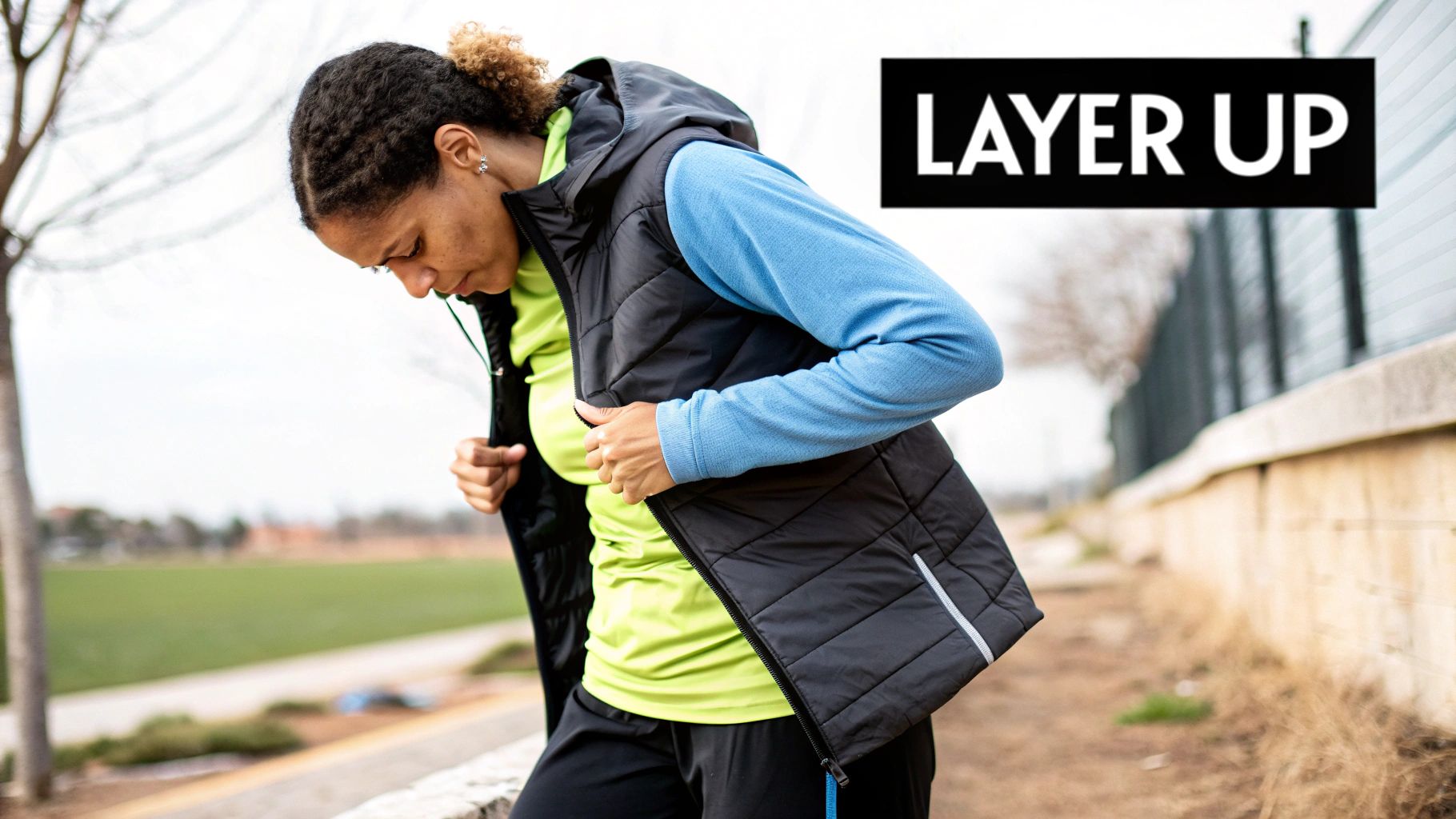
When temperatures fall, your body automatically kicks into a smart survival mode. It prioritizes keeping your vital organs toasty by constricting blood vessels near the skin's surface, a process called vasoconstriction. This redirects warm blood toward your core, which is why your hands, feet, and face are the first to feel the bite of the cold.
Your body also burns a lot more energy just to maintain its core temperature, even before your workout begins. This increased metabolic rate means you're already working harder from the start. Inefficient gear forces your body to waste precious energy fighting the cold instead of fueling your muscles, which leads to early fatigue and a drop in performance.
The Cotton T-Shirt Trap
Your everyday cotton t-shirt is the biggest culprit for discomfort in the cold. Cotton fiber is like a sponge; it's extremely absorbent. While this is acceptable on a hot day, it becomes a dangerous trap in winter. As you exercise and begin to sweat, a cotton shirt soaks up all that moisture and holds it directly against your skin.
Instead of evaporating, this moisture gets cold, actively pulling heat from your core up to 25 times faster than dry air. It creates a personal refrigeration unit against your body, turning a good workout into a shivering, unpleasant experience that can even put you at risk for hypothermia.
Moisture Management: Your Winter Lifeline
This highlights a fundamental mistake many people make: focusing only on insulation. True performance in winter isn't just about trapping heat; it's about managing moisture. The goal of proper cold weather workout clothes is to act as a transport system. High-performance fabrics are engineered not to absorb sweat, but to pull it away from your skin and push it to the garment's outer surface to evaporate.
This process, known as wicking, is your lifeline in the cold. It keeps the layer of air next to your skin dry, and a dry body is a warm body. This growing understanding of fabric performance is reflected in the market. From 2024 to 2025, the global activewear market is expected to grow from $362.17 billion to $388.36 billion, fueled by increased health awareness and the demand for better apparel. Explore the full market analysis here.
Ultimately, summer gear is designed for one thing: to release heat and help you cool down. Winter gear has a more complex job: to release moisture while retaining just the right amount of heat. Failing to understand this difference is why even experienced athletes can get their winter layering wrong. Now, let’s look at the specific materials that make this moisture management possible.
Fabric Technology That Actually Works in Winter
The Great Debate: Synthetics vs. Natural Fibers
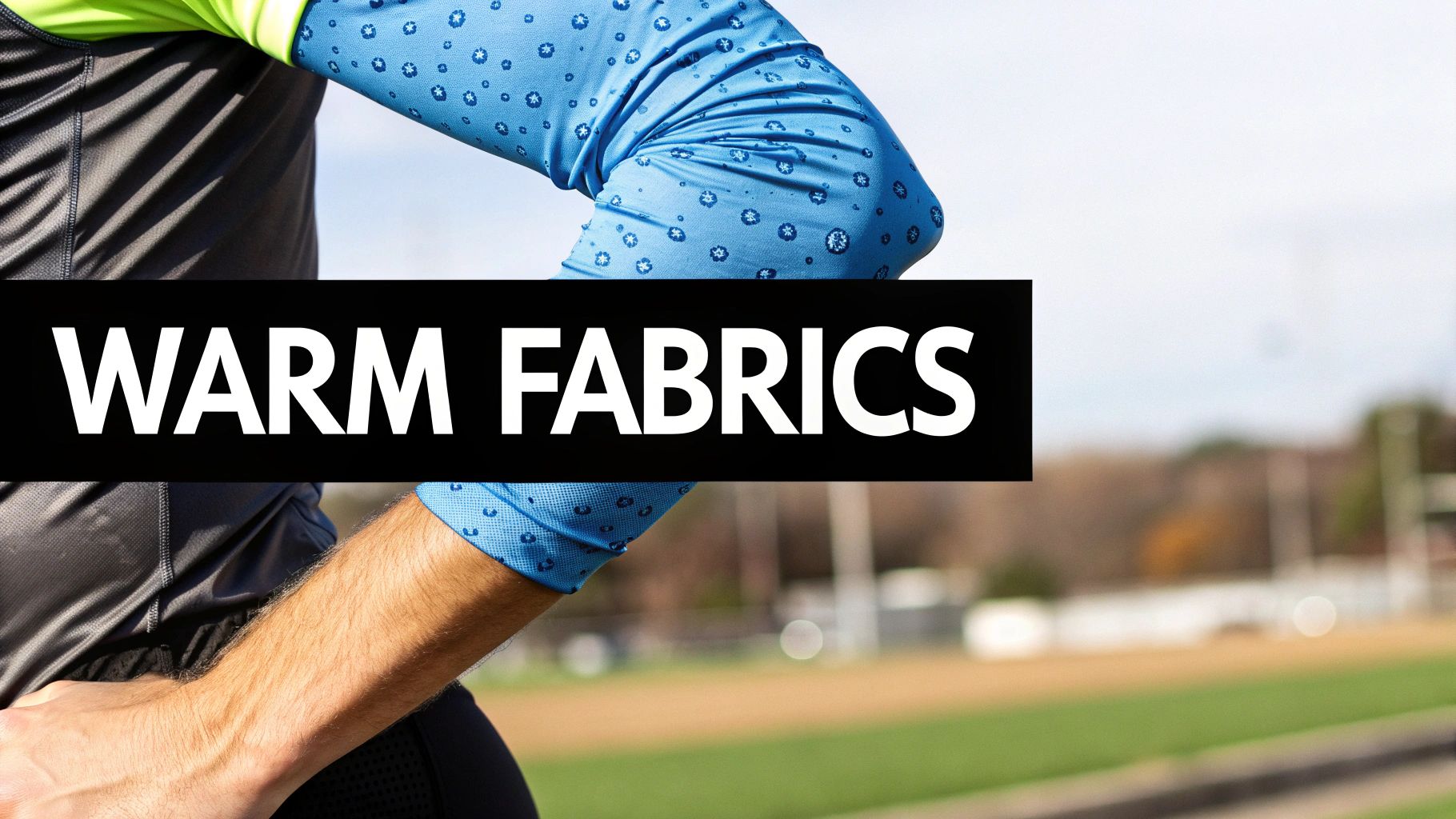
The choice you’ll face most often is between two camps: man-made synthetics and natural merino wool. Each has a completely different strategy for keeping you comfortable. Synthetics like polyester and nylon are masters of moving moisture. These fibers are hydrophobic, a technical way of saying they hate water. Instead of soaking up sweat, they act like countless tiny straws, pulling liquid off your skin and pushing it to the outside of the garment to evaporate. This makes them fantastic for high-sweat activities where getting dry quickly is the top priority.
On the other side of the ring, merino wool performs a different kind of magic. As a natural fiber, it’s hygroscopic, meaning it can absorb a huge amount of moisture vapor—your sweat before it even pools into liquid—without feeling wet. In fact, merino can hold up to 30% of its own weight in moisture while still feeling dry and continuing to insulate. This remarkable quality, plus its natural talent for resisting odors, makes it an incredible choice for long days or multi-day trips where you can’t pack a fresh shirt for each outing.
Of course, there’s a trade-off. Merino is usually more expensive and can be less durable over time compared to synthetics. Synthetics provide a tough, budget-friendly option, but they can develop a funk if they aren’t treated with an antimicrobial finish. The best material for you comes down to your workout intensity, how long you’ll be out, and your personal budget.
Reading Between the Lines: Key Fabric Features
Beyond the base material, a few key terms on a product tag can tell you how a garment will actually perform in the cold. The most critical one is moisture-wicking, which describes the fabric's ability to mechanically pull sweat away from your body. This single action is vital for preventing the dangerous chill that comes from damp clothing.
Next is breathability, which is all about how well a fabric lets water vapor (the gas form of sweat) escape. A breathable garment stops you from feeling clammy and trapped inside a personal greenhouse when you start working hard. Think of it as a one-way door: it lets your body's heat and moisture out but doesn't let the cold wind in. For jackets and outer layers, you might also see DWR (Durable Water Repellent). This is a chemical treatment applied to the fabric's surface that makes water bead up and roll right off, keeping the insulation beneath it from getting soaked in light snow or rain.
To help you compare your options at a glance, we've broken down the performance of the most common materials.
Fabric Performance Comparison for Cold Weather Workouts
A detailed comparison of different fabric types showing moisture-wicking properties, thermal efficiency, durability, and best use cases for various winter activities
Fabric Type | Moisture Management | Thermal Rating | Durability | Best For | Price Range |
|---|---|---|---|---|---|
Synthetics (Polyester, Nylon) | Hydrophobic: Pushes liquid sweat away from the skin for fast evaporation. | Good (Loses warmth when saturated) | High | High-intensity, short-duration activities (e.g., winter running, HIIT) | $-$$ |
Merino Wool | Hygroscopic: Absorbs moisture vapor, can hold 30% of its weight and still feel dry. | Excellent (Insulates even when damp) | Moderate | Long-duration, stop-and-go activities (e.g., hiking, skiing, multi-day trips) | $$-$$$$ |
As the table shows, there's no single "best" fabric—only the best fabric for your specific needs. Synthetics excel at getting you dry fast, while merino excels at keeping you warm even when you're working up a sweat over a long period.
When you’re at the store or browsing online, keep an eye out for these key performance indicators:
Moisture-Wicking: A must-have for any layer that touches your skin.
Quick-Drying: Critical for letting sweat evaporate from the system.
Breathable: Prevents overheating and feeling clammy.
Odor-Resistant: A major perk of wool or specially treated synthetics.
This focus on smarter materials is a big deal. The market for extreme cold weather clothing is on track to be worth $15 billion by 2025, driven largely by new fabric technologies and a growing number of people getting into winter sports. The gear you choose is a piece of that progress. Discover more about the cold weather apparel market and see how far the technology has come.
Mastering the Three-Layer System That Pros Swear By
Instead of just grabbing the bulkiest jacket you own, the smartest way to dress for the cold is with a flexible system. Think of it as creating a personal climate control unit for your body, one you can fine-tune as you move. This proven three-layer method isn’t about wearing more clothes; it’s about wearing the right clothes in the right sequence so each piece can perform its specific job. Nailing this system is the secret to staying comfortable, safe, and focused on your workout.
The Base Layer: Your Second Skin
The entire system starts right against your body. The single most important job of this first layer is to pull sweat away from your skin to keep you dry. This is the foundation of winter comfort because a wet body in the cold is a recipe for a rapid, dangerous chill. A good base layer acts like a second skin, made from moisture-wicking fabrics like merino wool or high-performance synthetics.
For this layer to do its job, the fit must be snug. If the fabric is loose, it can’t make contact with your skin to effectively draw moisture away. You're not looking for uncomfortable compression, just a close fit that allows the material to instantly transport sweat outward, preventing that clammy feeling that leads to a deep-down cold.
The Mid Layer: Your Personal Insulation
With moisture managed, the next step is to trap your body heat. This is the role of the mid layer. Think of this piece as the insulation for your personal furnace. Its main purpose is to create pockets of still air, which your body warms up. The fabric then holds that warm air in place, creating a thermal buffer against the cold.
The best materials for this task offer excellent warmth without being overly bulky, giving you a full range of motion.
Fleece: A workhorse material that is highly breathable and keeps insulating even if it gets a bit damp. It's a great choice for high-effort activities where you might sweat a lot.
Down: Delivers the highest warmth for its weight, but it loses nearly all of its insulating power when wet. Best for very cold, dry conditions.
Synthetic Fill: Designed to mimic the properties of down, but it continues to insulate when damp, making it a fantastic all-around option.
The thickness of your mid layer is your main dial for temperature control. On a cool autumn day, a thin microfleece might be all you need. For deep-winter conditions, you’ll reach for a much loftier, thicker piece.
The Outer Layer: Your Weather Shield
This final layer is your armor against the elements. Wind, snow, and rain are the biggest thieves of body heat, and the outer layer, or shell, protects the bubble of warm air you've created. However, this isn't a job for a simple plastic poncho. The most critical feature of an active outer layer is breathability.
Your shell must block wind and precipitation from getting in while allowing the water vapor (your sweat) from the inner layers to escape. Without this, you’d be working out inside a personal sauna, getting soaked from the inside out. Look for shells with a Durable Water Repellent (DWR) finish and ventilation zippers under the arms (often called pit zips) for an extra level of temperature management.
This graphic shows how each layer has a distinct role, working together as a complete system.
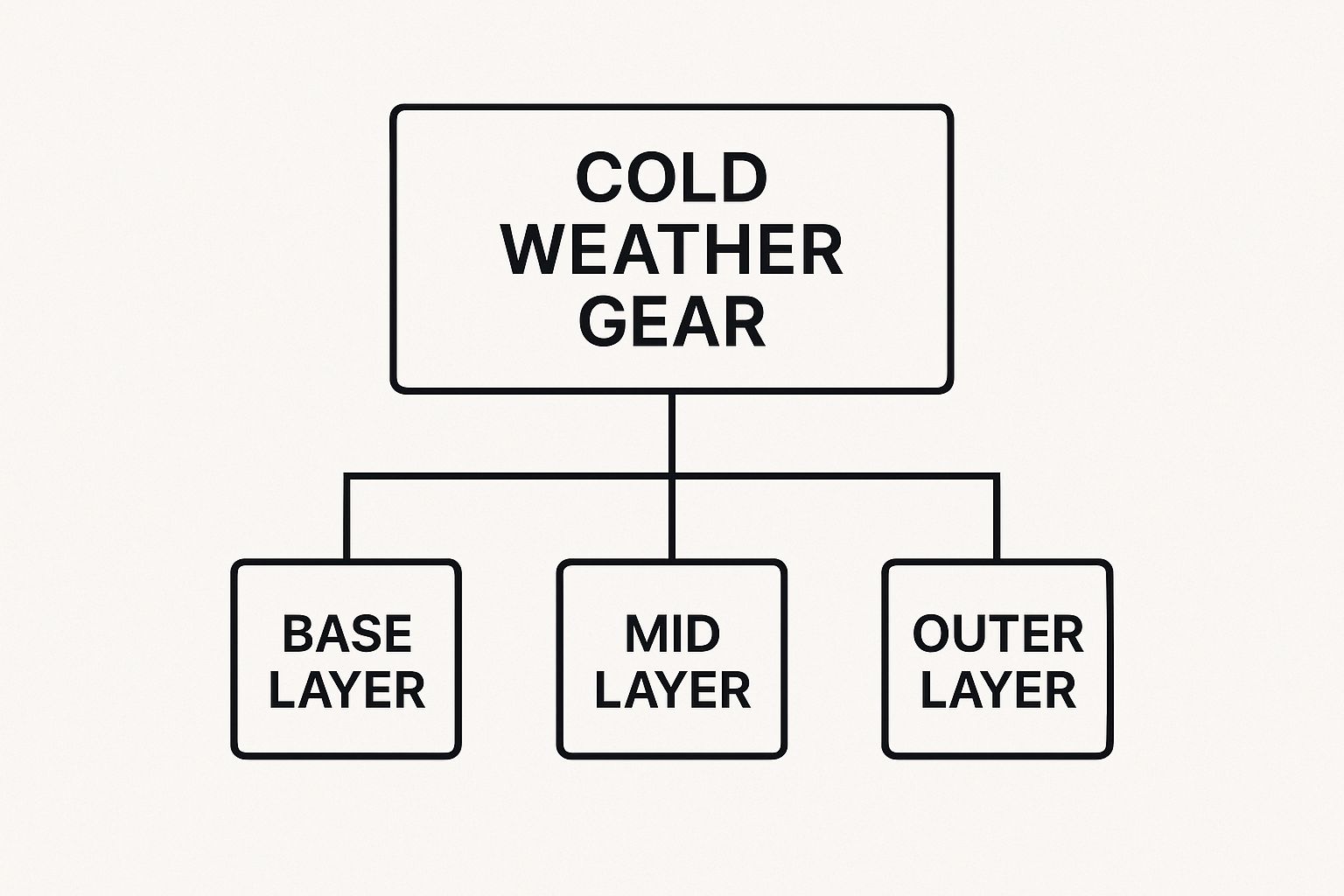
This structure demonstrates that your gear isn’t just a pile of clothing, but a system where each part supports the others to keep you protected and comfortable.
Bringing It All Together: The Art of Adjusting
The real power of the three-layer system is its adaptability. You can mix, match, add, or remove layers to perfectly match the conditions and your effort level. For a high-intensity run on a cold but clear day, you might skip the mid layer and just use a base layer and a windproof shell. For a slow snowshoeing trip, you'll probably want all three.
The most common mistake is starting your workout feeling perfectly cozy. You’ll overheat within minutes. Instead, follow this simple rule: "Be Bold, Start Cold." You should feel a little chilly for the first 5 to 10 minutes of your activity. As your body generates heat, you’ll warm up to a comfortable level, and you can always adjust your layers as you go.
Activity-Specific Gear That Matches Your Winter Workout
For the High-Output Runner or Cyclist
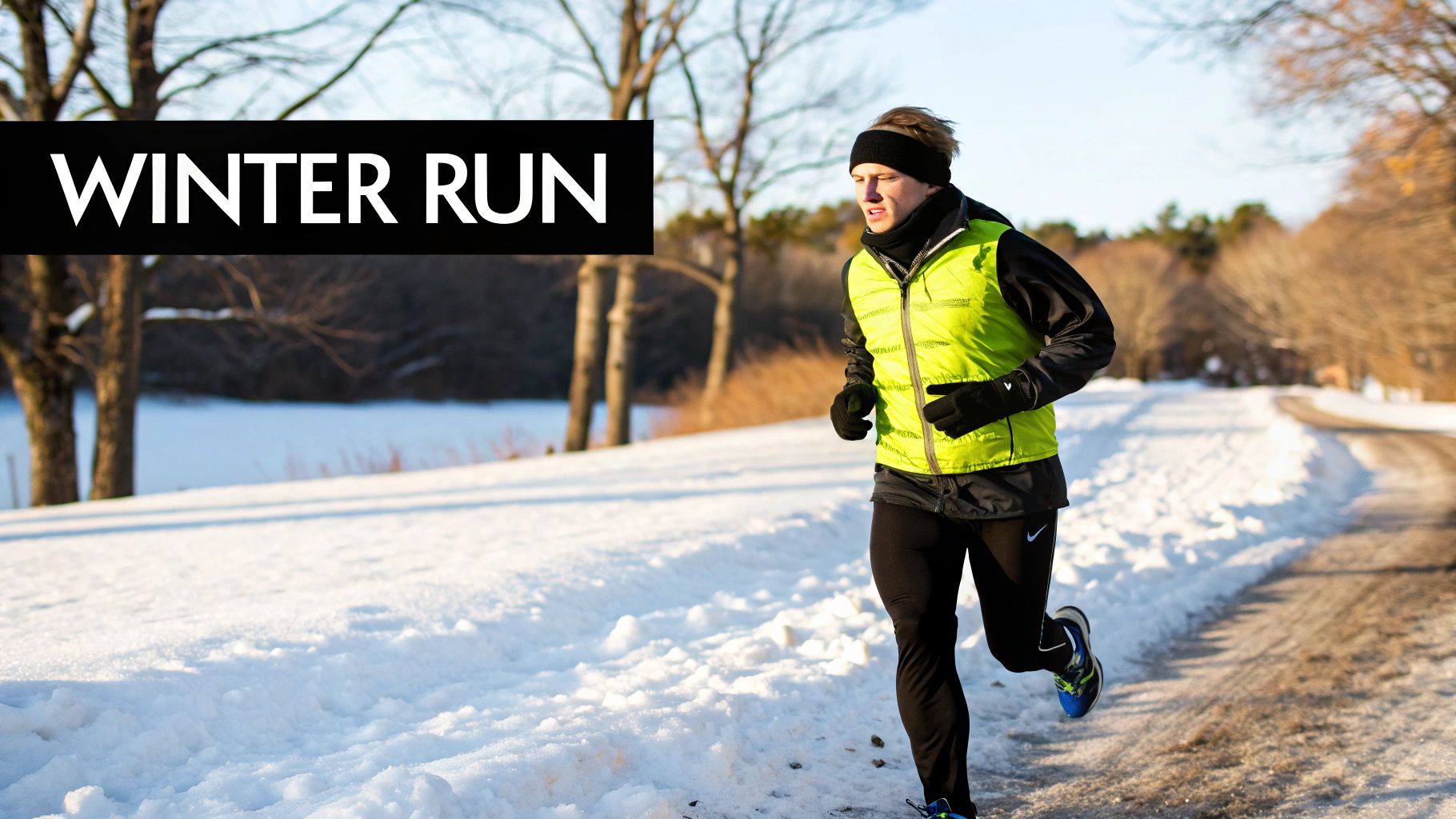
When you’re running or cycling, your body acts like a furnace, generating an impressive amount of heat and sweat. In these scenarios, your biggest opponent isn't the cold air, but the combination of wind and your own trapped moisture. A common mistake is to over-insulate, which leads to overheating and getting soaked in sweat—a recipe for a dangerous chill the second you slow down.
Your gear needs to work like a personal exhaust system, venting heat and moisture effectively. The main priorities are maximum breathability and wind resistance.
Base Layer: A thin synthetic or lightweight merino wool base layer is essential. Its job is to pull sweat away from your skin as quickly as possible.
Mid Layer: Unless the temperature is exceptionally low, you’ll likely skip this layer entirely. If you do need it, choose a very light grid fleece that promotes airflow.
Outer Layer: A lightweight, windproof, and highly breathable shell jacket is the most critical piece. Look for jackets with zippered vents under the arms and on the back to dump excess heat when you're working hard.
For the Winter Hiker and Explorer
Winter hiking often involves a rhythm of intense effort followed by periods of rest—think climbing a steep incline and then stopping to enjoy the view. This stop-and-go pace presents a distinct challenge: you need to manage sweat while moving and hold onto your warmth when you stop. This demands an adaptable layering strategy.
The classic three-layer system is perfect for this. You need a solid base layer to handle moisture and a shell to block wind and snow. The most important part of your kit, however, is your insulating mid layer. You want something that offers substantial warmth but is also easy to pack away, like a puffy jacket with synthetic insulation or a thick fleece. This lets you shed the layer for tough climbs and quickly put it back on during breaks to trap your hard-earned body heat.
For the Outdoor Strength and Flexibility Enthusiast
Workouts like outdoor yoga or bodyweight circuits produce much less metabolic heat than sustained cardio. For these activities, your main goal shifts from venting heat to retaining warmth right from the start, while still allowing for a complete freedom of movement. Bulky clothing that restricts your range of motion simply won’t do when you’re trying to sink into a deep squat or hold a warrior pose.
Your best bet is to find pieces that blend insulation with stretch. Fleece-lined leggings are a fantastic option, giving you warmth without getting in the way. For your upper body, pairing a thermal base layer with an insulated vest is an ideal solution. A vest keeps your core warm—which helps your entire body feel warmer—while leaving your arms totally free to move.
This focus on activity-specific apparel is part of a larger trend. The global winter wear market, valued at approximately USD 370 billion in 2025, is projected to reach USD 520 billion by 2035, fueled by people seeking out gear that truly performs. Explore the trends shaping the winter apparel industry to learn more.
Protecting Your Extremities Like a Winter Warrior
Think of your layered core as the engine keeping you warm. But what about your hands, feet, and head? They're like exposed radiators, quickly losing heat and threatening to derail your workout. Your body has a smart survival mechanism called vasoconstriction, where it pulls warm blood away from your extremities to keep your vital organs safe.
While this keeps your core protected, it leaves your fingers, toes, and ears out in the cold, often forcing you to cut a workout short. This is why the right accessories are not just optional extras. They are crucial parts of your cold weather workout clothes, designed to defend these vulnerable points.
Hand Protection: Dexterity vs. Insulation
When it comes to handwear, you're often faced with a choice: warmth or function? If you're a winter cyclist needing to shift gears or a runner checking a GPS, gloves are your go-to for their excellent dexterity. But for pure, uncompromising warmth, mittens are the clear winners.
By keeping your fingers together, they create a shared pocket of warm air, retaining heat far more effectively than individual finger slots. Don't want to choose? The convertible mitten (or "glomitt") is the perfect middle ground. It works like a fingerless glove for tasks requiring precision, with a mitten flap you can pull over when the temperature really drops.
Head and Neck: Your Personal Thermostat
A huge amount of body heat can be lost through an uncovered head, which makes a hat an essential piece of your winter kit. But a good winter hat does more than just trap heat. One made from wicking materials like fleece or merino wool also pulls sweat away from your skin, helping to regulate your temperature as you work hard.
An even more versatile tool is the neck gaiter. This simple fabric tube is a game-changer, sealing the drafty gap around your jacket collar. You can pull it up over your mouth and nose to warm the air you breathe and shield your face from biting wind. A common problem is foggy glasses caused by your warm breath traveling upwards. A simple trick is to tuck the top of the gaiter under the bridge of your nose, directing your breath downward and keeping your vision clear.
Choosing the right accessories depends heavily on the temperature and how hard you'll be working. This table breaks down what you'll need for different conditions, from a brisk autumn jog to a deep-winter expedition.
Temperature Range | Essential Accessories | Activity Type | Material Recommendations | Key Features |
|---|---|---|---|---|
Mild (40-50°F / 4-10°C) | Light gloves, light hat or headband. | High Output (Running, Cycling) | Synthetics, light merino wool. | Breathable, lightweight, minimal insulation. |
Cool (30-40°F / -1-4°C) | Mid-weight gloves, wicking hat. Neck gaiter is recommended. | High to Moderate Output | Fleece, merino wool blends. | Good moisture-wicking, moderate insulation. |
Cold (15-30°F / -9 to -1°C) | Insulated gloves or mittens, warm hat, neck gaiter. | All Activities | Wool, fleece-lined synthetics. | Wind-resistance, face coverage, solid insulation. |
Very Cold (Below 15°F / -9°C) | Heavy mittens (or liners + mittens), balaclava or warm hat with gaiter. | All Activities | Wool, down, synthetics with windproof shell. | Maximum insulation, wind-blocking, convertible options. |
The key takeaway is to match your accessories not just to the thermometer, but also to your effort level. High-intensity activities generate more heat, so you might need less insulation than someone going for a slow-paced winter hike at the same temperature.
Feet First: Your Foundation for Warmth
Cold, numb feet aren't just a nuisance; they can throw off your balance and ruin your form, raising the risk of injury. The common instinct is to grab the thickest socks you can find, but this often backfires. Overly bulky socks can squeeze your feet, restrict blood flow, and ironically, make them feel even colder.
Remember, your feet contain over 250,000 sweat glands, so managing moisture is just as important as insulation. The real solution is a combination of the right material and the right fit. Always choose moisture-wicking socks made from merino wool or performance synthetics to pull sweat away from your skin.
Crucially, pair them with shoes that give you enough room to wiggle your toes, which promotes healthy circulation. On wet or slushy days, waterproof shoes or shoe covers are a worthy investment.
Getting the Fit Right for Peak Performance
You can invest in the most advanced fabric technology on the market, but it’s all for nothing if your gear doesn’t fit correctly. It’s like putting a high-performance race car engine into a car with misaligned wheels—you’ll never unlock its true potential. The right fit is what allows your cold weather workout clothes to do their job: managing moisture, trapping heat, and moving with you, not against you.
The Layering System Fit: A Different Sizing Game
Buying gear for a layering system isn't like grabbing a t-shirt off the rack. Think of each layer as a team player with a specific role, and the fit determines how well it performs. Your base layer is the foundation, and it needs to fit like a second skin. If it’s baggy, it can't wick moisture effectively. Instead of pulling sweat away, it leaves damp, cold spots against your body.
The mid layer fits over the base, creating an essential pocket of insulating air. It should be roomy enough to trap that air but not so loose that it’s baggy. Finally, the outer shell acts as the protector, fitting over everything else while still giving you the freedom to move. A good test is ensuring you can twist and reach without the jacket hem riding up and exposing your back.
Mobility vs. Insulation: Finding the Sweet Spot
The perfect fit is a balancing act between warmth and movement. If a garment is too tight, it can cut off circulation and squash the loft out of insulation, like in a down jacket, which ironically makes you colder. On the other hand, a fit that's too loose allows cold drafts in and makes your body work overtime to heat up all that extra space.
What's "just right" really depends on what you're doing. The needs are completely different for various activities:
High-intensity running: You'll want a trim, athletic fit to cut down on wind resistance.
Winter hiking: You need more room to move, letting you step over fallen trees or use trekking poles without feeling restricted.
Outdoor yoga: The focus is on maximum stretch, with a fit that won't get in the way during deep poses and stretches.
The Dressing Room Test vs. The Real World
Standing still in front of a mirror won't tell you the whole story. To see if your cold weather workout clothes are truly up to the task, you have to mimic the movements of your activity. Before you commit, put on all the layers you plan to wear together and give them a real-world test drive.
Try these simple moves, whether you're in the store or at home:
Reach for the sky. Does your jacket hem creep up, exposing your lower back to the cold?
Drop into a deep squat. Do your pants feel tight across the knees or restrict your hips?
Twist from side to side. Is there a noticeable pull across your back or shoulders?
These simple tests can expose common fit issues like pinching or restriction that you’d otherwise only discover mid-workout. A perfect fit should feel like a part of you, not a suit of armor. For high-end gear, don't shy away from professional fitting or a small alteration. That minor tweak can pay off with seasons of improved comfort and performance.
Making Your Investment Last Season After Season
Top-tier cold weather workout clothes are a serious investment in your comfort and ability to perform. To protect that investment, proper care is essential. Think of your technical apparel like a finely tuned instrument; its longevity and function depend entirely on how you maintain it after each use.
The Laundry Rules That Protect Your Gear
Your regular laundry detergent can be the unsuspecting foe of performance fabrics. These soaps often contain softeners and optical brighteners that leave behind a residue. This film clogs the microscopic pores that allow your gear to breathe, effectively destroying its moisture-wicking properties.
To preserve your apparel’s technical abilities, you need a specific laundry routine.
Always use a technical gear wash that is designed for performance materials. These specialized cleaners rinse away completely, leaving no residue behind.
Select a gentle, cold-water cycle on your machine to be kind to delicate fibers and seams.
Never use fabric softener or bleach. These products will permanently damage a fabric's ability to manage moisture and can degrade waterproof coatings.
When it comes to drying, heat is your gear’s worst enemy. High temperatures can cause synthetic fibers to melt or shrink and can make waterproof membranes peel away from the fabric. For the best results, tumble dry on the lowest possible heat setting, or simply hang your items to air dry.
Reviving Your Gear’s Weather Shield
Many of your outer layers get their storm-fighting power from a Durable Water Repellent (DWR) finish. This is the coating that causes water to bead up and roll off the surface. This finish naturally wears down over time due to dirt, abrasion, and body oils. You’ll know your DWR is failing when the fabric starts absorbing water instead of shedding it, creating dark, soggy patches—a problem known as “wetting out.”
Restoring this protective barrier is a two-step process. First, always clean the garment with a technical wash. Dirt is a primary culprit in DWR failure, and sometimes a thorough cleaning is all it takes to bring it back to life.
If the fabric still soaks up water after being cleaned, it’s time to re-apply the finish.
You can choose between a spray-on or wash-in DWR product. Spray-on treatments are great because they let you apply a thicker coat to high-wear areas like the shoulders and cuffs.
Follow the product’s application instructions precisely. Most DWR treatments require a short cycle in the dryer on low heat to cure the finish, bonding it to the fabric and restoring its water-shedding performance.
Know When to Repair or Replace
Learning to spot different types of wear and tear will help you decide if a piece of gear can be saved or if it’s time for it to be retired. Problems like a failing DWR finish, a small rip, or a broken zipper are often simple fixes that can extend the life of your apparel.
However, some damage indicates that a garment has reached the end of its functional life. Keep an eye out for insulation that has become permanently flattened and lost its loft, widespread fabric pilling, or delamination, which looks like the waterproof membrane is bubbling or peeling away from the outer fabric. These are clear signs that it’s time to invest in a replacement to stay protected.
By caring for your gear the right way, you ensure it’s ready to perform whenever you are. Equip yourself for success with game-changing apparel from RealOminousAthlete.


Comments