
8 Best Winter Cycling Clothes for Cold Weather Riding (2025)
- Epic Brilliance
- Jun 19, 2025
- 16 min read

Beyond the Freeze: How to Master Winter Cycling Comfort
Don't let dropping temperatures hang your bike up for the season. Winter cycling offers a unique, serene experience, but only when you have the right gear. Conquering the cold isn't about simply adding bulk; it's a science of strategic layering and material selection that balances warmth, breathability, and freedom of movement. Getting this formula wrong means a miserable ride, while getting it right unlocks a full year of cycling enjoyment.
This guide provides a detailed roadmap to the most essential pieces that make up the best winter cycling clothes. We move beyond generic advice to dissect each critical item, from core thermal layers to protective accessories. You will learn the 'why' behind specific materials like softshell fabrics and merino wool, the 'how' of achieving a proper fit for maximum efficiency, and the 'what' of key features that separate truly effective gear from the rest.
Our goal is straightforward: to give you actionable insights and specific recommendations to build a dependable cold-weather cycling wardrobe. Prepare to transform your winter rides from a battle for survival into a comfortable and rewarding adventure. We will cover the eight key items you need to make that happen.
1. Softshell Cycling Jacket
The cornerstone of any serious winter cyclist's wardrobe is the softshell jacket. This piece of technical apparel acts as your primary defense against the cold, wind, and light precipitation. Unlike a rigid hardshell, a softshell is engineered with a pliable, stretch-woven face fabric bonded to a fleecy or brushed interior. This construction makes it one of the most versatile pieces of the best winter cycling clothes, offering a unique blend of weather protection, thermal insulation, and crucial breathability.
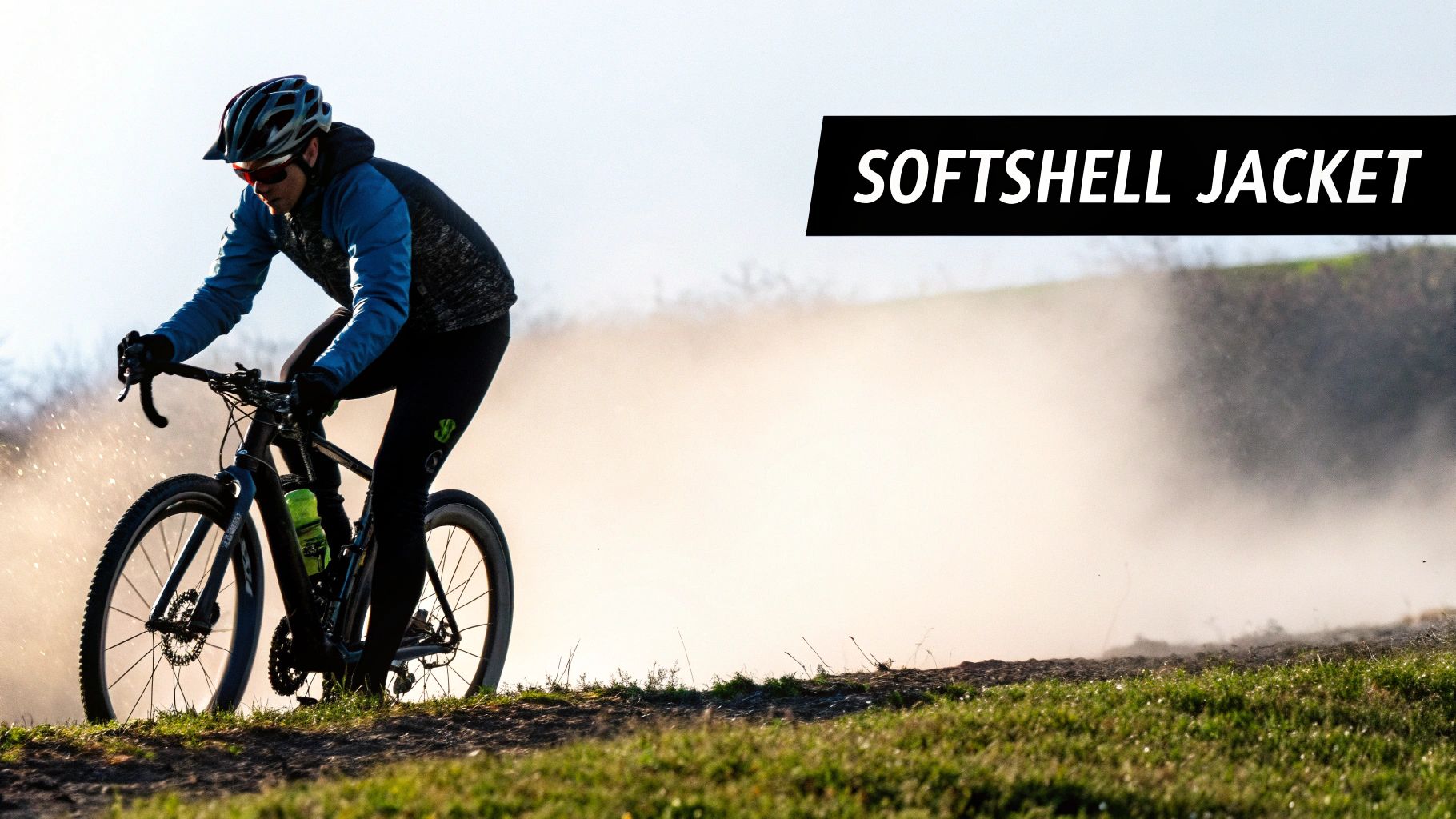
This balance is what makes a softshell so effective. It blocks heat-sapping wind and sheds snow or drizzle, but it also allows water vapor from your sweat to escape. This prevents the dreaded "boil-in-the-bag" effect, where you end up just as wet from sweat as you would have been from rain, leading to a dangerous chill when you stop moving.
Key Features and Implementation
When selecting a softshell, several design elements are non-negotiable for cycling. First, a longer back, often called a "drop tail," is essential to cover your lower back and prevent exposure when you are bent over in a riding position. Secondly, look for articulated sleeves, which are pre-bent at the elbow to match your arms' natural position on the handlebars, preventing fabric from bunching and restricting movement.
High-quality examples include the Castelli Perfetto RoS jacket, a professional-grade option known for its aerodynamic fit and GORE-TEX INFINIUM™ fabric. For commuters and recreational riders, the Pearl Izumi Elite Escape Softshell offers a slightly more relaxed fit with excellent visibility features.
Actionable Tips for Selection
Ventilation is Key: Prioritize jackets with "pit zips" or zippered vents. These allow for rapid heat dumping during intense efforts, giving you precise temperature control without needing to unzip the entire front.
Test the Zippers: You will constantly adjust your main zipper for temperature regulation. Ensure it's a high-quality, one-handed zipper that won’t snag, especially when wearing thick winter gloves.
Fit for Layering: Your softshell should be snug enough to prevent flapping in the wind but have enough room underneath for a base layer and potentially a thin mid-layer on the coldest days. Test the fit in a riding position if possible.
2. Thermal Base Layer (Merino Wool)
The true foundation of any effective winter cycling clothing system is not the outer jacket, but the thermal base layer worn against the skin. While often overlooked, this garment's primary role is to manage moisture and regulate your core temperature. A merino wool base layer excels at this, using natural, fine-gauge fibers to provide exceptional insulation, breathability, and impressive odor resistance. This piece is the engine room of your layering system, working tirelessly to pull sweat away from your body to keep you dry and warm.
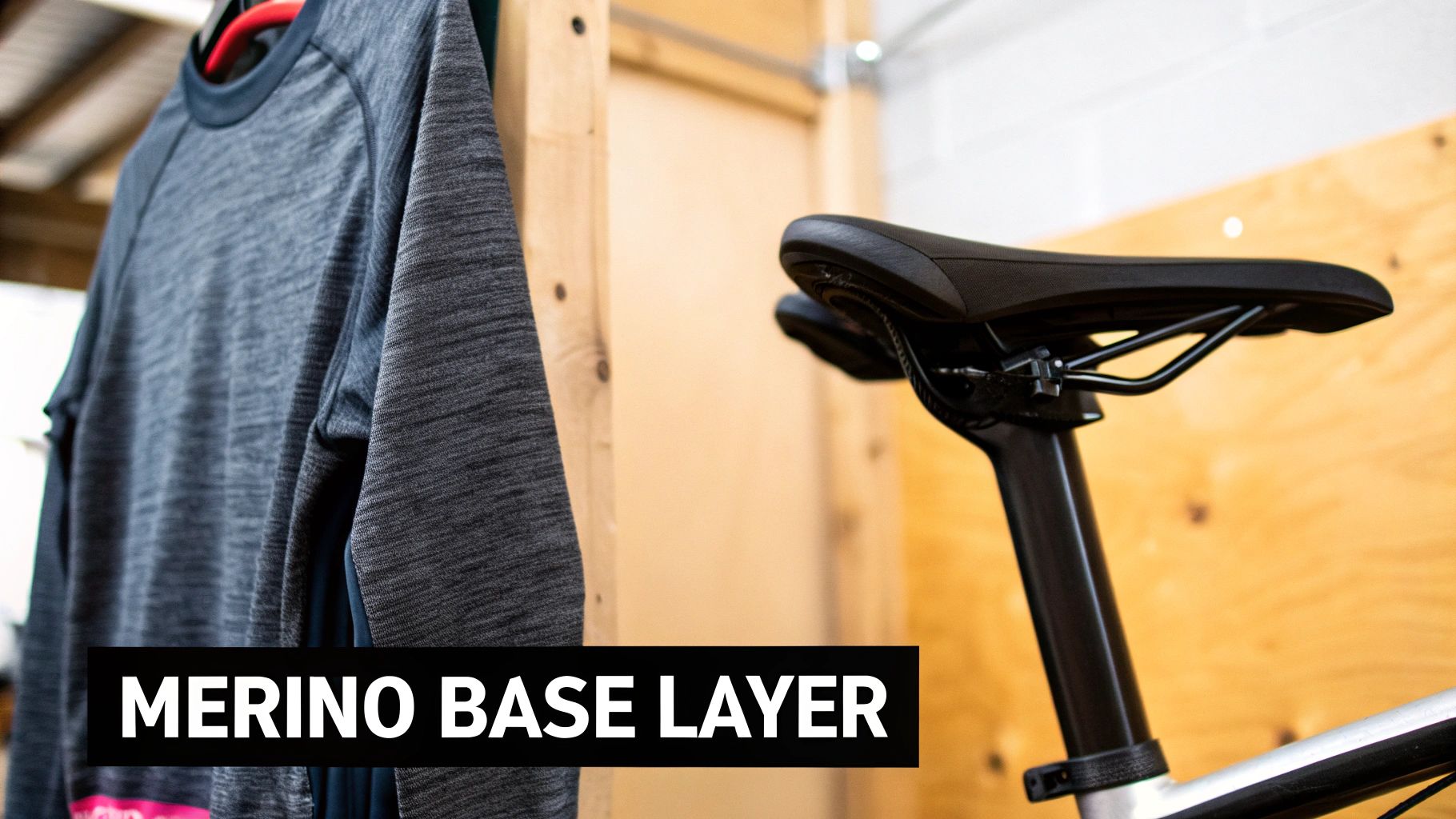
What makes merino wool uniquely suited for cycling is its thermal-regulating property; it provides warmth even when it gets damp. Unlike cotton which becomes cold and heavy when wet, or synthetics which can feel clammy, merino's complex fiber structure traps warm air while allowing moisture vapor to pass through. This prevents the rapid chill that can occur during a rest stop or on a long descent after a hard climb, making it a crucial component of the best winter cycling clothes.
Key Features and Implementation
When choosing a merino base layer, the fit is paramount. It must be snug against your skin, but not restrictive, to effectively wick moisture away. A loose base layer cannot do its job properly. Many cycling-specific designs feature a longer torso and sleeves to ensure full coverage in the aggressive riding position, preventing gaps where cold air can penetrate. The natural elasticity of the wool allows for a full range of motion without bunching or pulling.
Brands like Smartwool, with its PhD Seamless series, and Icebreaker, with its popular 200 Oasis line, have pioneered performance merino apparel. Cycling-centric companies like Rapha also offer highly regarded merino base layers tailored specifically for the demands of the sport, often blending merino with other fibers for enhanced durability and fit.
Actionable Tips for Selection
Mind the Weight: Merino wool is measured in grams per square meter (gsm). For most winter cycling, a weight between 150-200 gsm offers the ideal balance of warmth and wicking. Heavier weights (200+) are best reserved for deep-freeze conditions.
Care is Crucial: To preserve the natural properties of your merino wool, wash it in cold water using a wool-specific detergent. Avoid fabric softeners, as they can coat the fibers and reduce their moisture-wicking capabilities. Always air-dry.
Neckline Matters: Choose a crew neck for maximum layering versatility. A zip-neck (or quarter-zip) style offers an easy way to vent excess heat without adjusting your outer layers, providing an extra degree of temperature control during your ride.
3. Insulated Cycling Tights
While a jacket protects your core, neglecting your legs is a fast track to a miserable and shortened winter ride. Insulated cycling tights are a non-negotiable component of the best winter cycling clothes, engineered to keep your largest muscle groups warm and functioning efficiently. These are not simply thicker leggings; they are technical garments using advanced thermal fabrics, wind-blocking panels, and an ergonomic cut specifically for the pedaling motion, ensuring you stay warm without sacrificing performance.
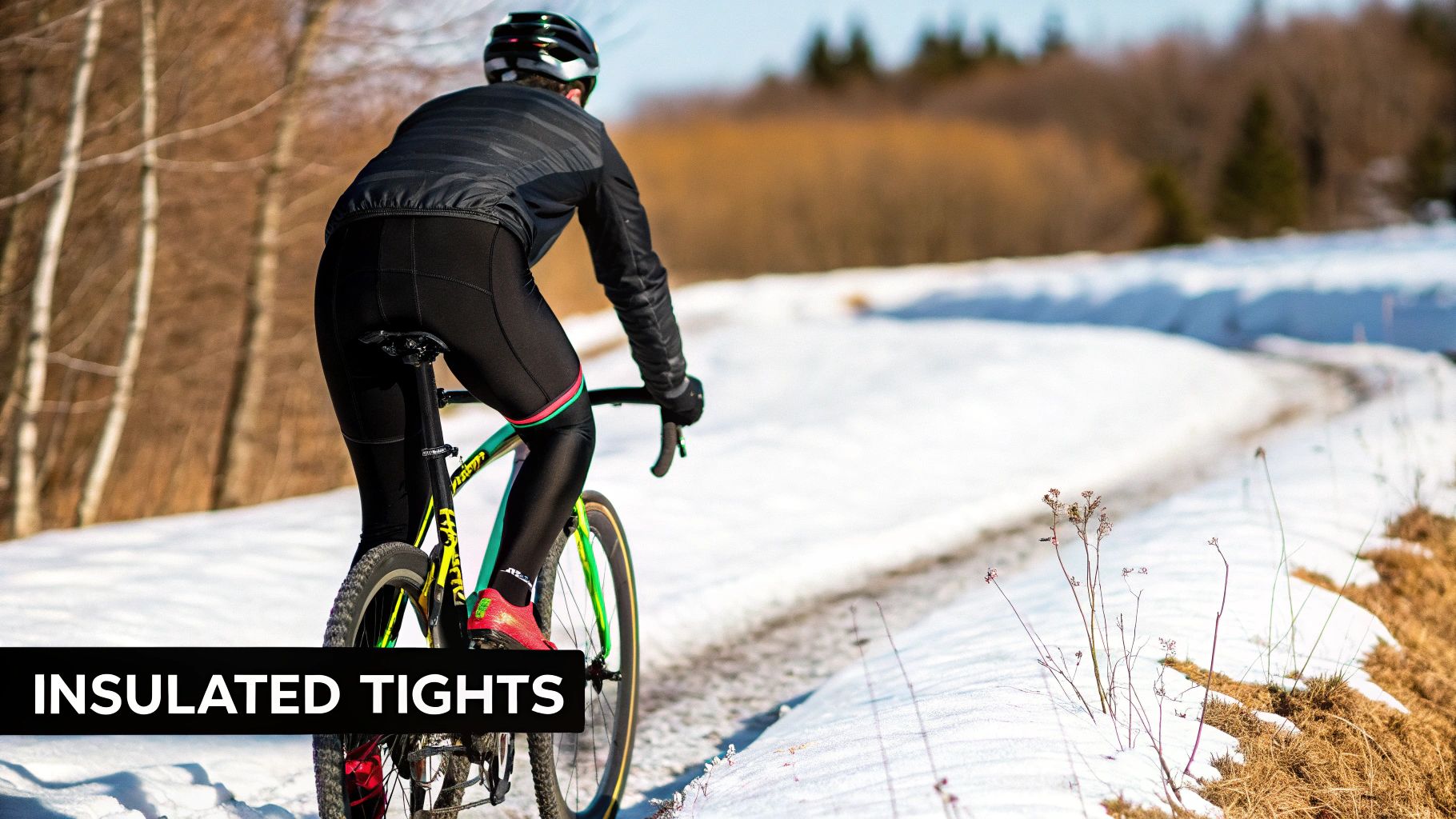
The primary function of these tights is to trap a layer of warm air against the skin while shielding the knees and quadriceps from the biting wind. Top-tier tights often use a multi-panel construction, placing heavier, windproof material on the front-facing surfaces and more breathable, stretchable fabric on the back of the legs. This strategic material placement provides protection where it is needed most and allows excess heat and moisture to escape, preventing overheating during hard efforts.
Key Features and Implementation
When choosing insulated tights, the most significant decision is between waist tights and bib tights. Bib tights, which extend up over the shoulders, are almost universally recommended by experienced cyclists. They eliminate the restrictive waistband, prevent the tights from slipping down and exposing your lower back, and add an extra layer of insulation to your core. The fit should be compressive but not restrictive, following the contours of your legs without bunching behind the knee.
Leading examples include the Castelli Nanoflex Pro 2 bibtights, which employ water-repellent fabrics and are a favorite among professional teams. For riders in very harsh climates, the Pearl Izumi AmFIB tights offer maximum wind and water protection, making them a staple for dedicated winter commuters. Meanwhile, the Assos Mille GT Winter tights are renowned among enthusiasts for their exceptional comfort and premium chamois.
Actionable Tips for Selection
Bibs Over Waists: Always opt for bib tights if your budget allows. The improved comfort, fit, and coverage are well worth the investment, completely preventing drafts on your lower back.
Assess Fabric Weight: Tights come in various thicknesses. Consider your local climate. A lightweight "Roubaix" fleece-backed tight is perfect for cool autumn days, while a multi-layer softshell tight is necessary for sub-freezing temperatures.
Check Ankle Zippers: Ensure the ankle design works with your winter cycling shoes or overshoes. A good zipper or cuff creates a tight seal that prevents cold air and spray from entering from below.
Chamois is Crucial: The pad (chamois) is your primary contact point with the saddle. Ensure it is a design you find comfortable for long rides. If you have bib shorts you love, consider non-padded thermal tights to wear over them for maximum versatility.
4. Winter Cycling Gloves
Your hands are often the first part of your body to suffer in the cold, acting as leading edges that cut through frigid air. Winter cycling gloves are therefore not just a comfort item; they are essential safety equipment. Standard winter gloves fail cyclists because they lack the specific features needed for controlling a bike. Specialized cycling gloves offer the critical balance of thermal insulation, wind resistance, and the dexterity required for precise braking and shifting, making them a non-negotiable part of the best winter cycling clothes.
This infographic summarizes the key considerations when choosing a pair.
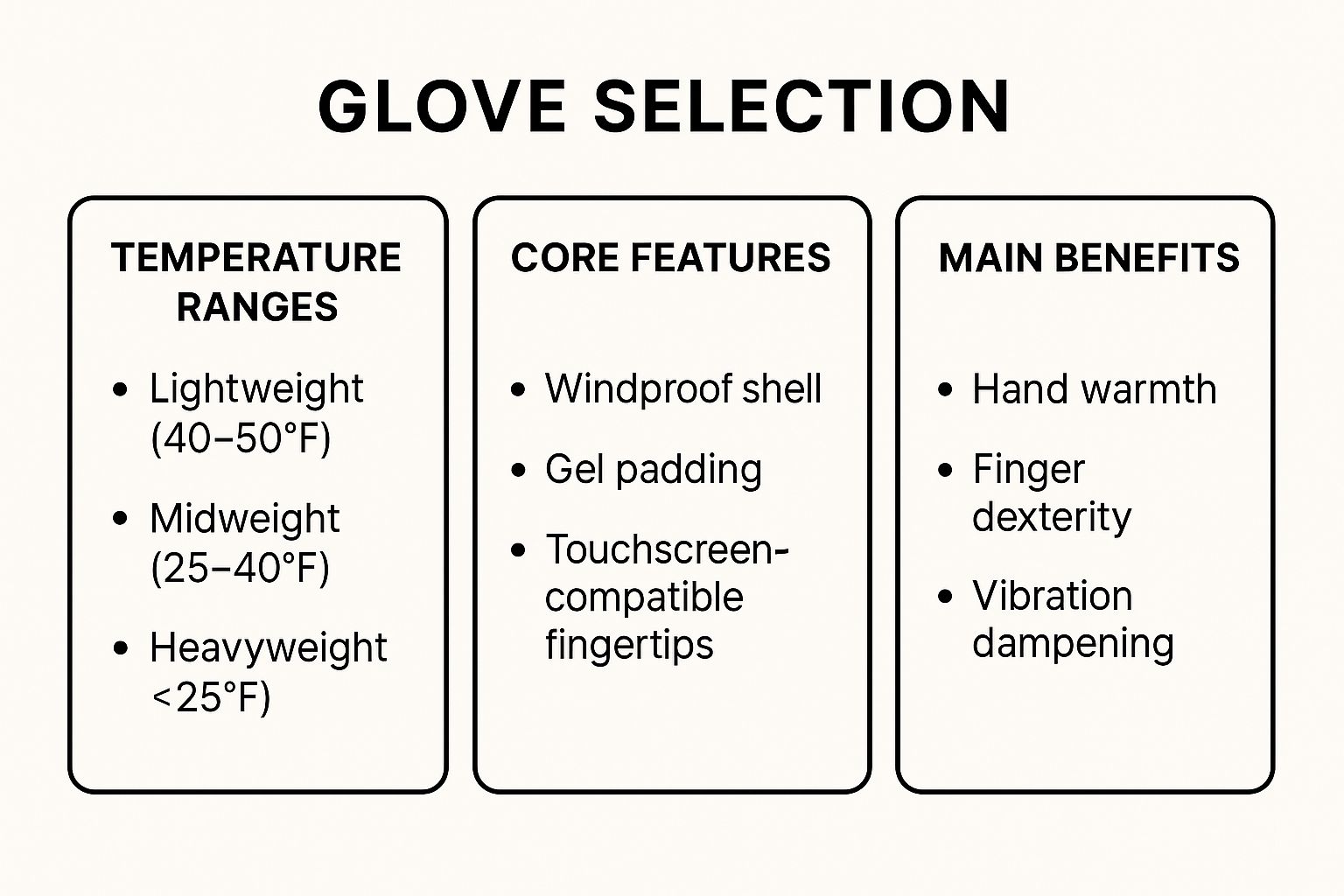
As the data shows, selecting the right glove involves matching its weight to the temperature while ensuring it has core cycling-specific features to maintain control and comfort. This combination prevents numb fingers, which can dangerously slow your reaction time on the brake levers.
Key Features and Implementation
The primary challenge in glove design is providing warmth without creating excessive bulk that hinders finger movement. Manufacturers achieve this with layered construction, using a windproof and water-resistant outer shell combined with a soft, insulating inner liner. Critically, cycling gloves incorporate strategically placed gel or foam padding on the palm to dampen road vibrations and prevent nerve compression, a feature absent in general-purpose gloves.
Top-tier examples include the Castelli Estremo gloves, which are favored by competitive cyclists for their deep-cold protection without sacrificing feel. The Pearl Izumi AmFIB Gel gloves are a go-to for commuters, offering a fantastic mix of warmth, gel padding, and touchscreen compatibility. For wet and miserable conditions, the waterproof and breathable membrane in the Specialized Deflect H2O gloves keeps hands dry and functional.
Actionable Tips for Selection
Prioritize Cuff Integration: Ensure the glove’s cuff is long enough to tuck under or pull over your jacket sleeve. This creates a seal that prevents cold air from shooting up your arms, a common and uncomfortable problem.
Consider a Glove System: For maximum versatility, use a modular approach. A thin merino wool or synthetic liner glove can be worn under your main gloves, adding a significant warmth boost for extreme cold without the bulk of a single massive glove.
Test Dexterity Before You Buy: Before committing, try to simulate braking and shifting motions while wearing the gloves. You must be able to confidently operate all your bike's controls. If you can’t, the gloves are too bulky, regardless of how warm they are.
5. Cycling Shoe Covers/Overshoes
Your extremities are the first to suffer in the cold, and your feet, stationary over ventilated shoes, are prime targets for heat loss. Cycling shoe covers, also known as overshoes, are protective coverings that fit snugly over your cycling shoes. They act as a critical barrier, providing essential wind and water protection while still allowing your cleats to function. This piece of the best winter cycling clothes is non-negotiable for preventing numb toes and protecting expensive cycling shoes from road salt, grime, and harsh winter conditions.
The effectiveness of overshoes lies in their ability to trap a layer of insulating air around your foot and block the chilling effect of wind. Cycling shoes are designed with vents for summer breathability, which become major liabilities in winter. Overshoes effectively seal these vents, transforming your summer footwear into a winter-ready system and preventing heat from escaping with every pedal stroke.
Key Features and Implementation
When selecting shoe covers, material and construction are paramount. For wet conditions, waterproof neoprene models like the Castelli Diluvio shoecovers are a favorite among professional teams. For cold, dry days, windproof and fleece-lined options like the Pearl Izumi AmFIB Road II covers offer excellent insulation and are popular with winter commuters. For the most extreme weather, heavy-duty options from SealSkinz provide maximum thermal and waterproof protection.
Crucially, good overshoes feature a durable, reinforced sole with precise cutouts for your heel and cleat. This ensures longevity against abrasion from walking and maintains a secure connection to your pedals. A robust rear zipper or Velcro closure is also essential for a secure fit and easy entry.
Actionable Tips for Selection
Reinforcement is a Must: Always inspect the area around the cleat cutout. Look for reinforced material (like Kevlar or heavy-duty nylon) to prevent the cover from tearing or fraying with repeated use and walking.
Practice Makes Perfect: Shoe covers can be notoriously difficult to put on, especially when cold. Practice putting them on and taking them off at home before your first frigid ride to avoid frustration at the roadside.
Size for Your System: If you wear thick winter socks, consider sizing up your overshoes. A cover that is too tight can restrict blood flow, making your feet colder, not warmer. Check the manufacturer's sizing guide against your shoe size and sock preference.
6. Balaclava/Face Mask
While a jacket and bibs protect your core, your exposed face and neck remain highly vulnerable to biting wind and frigid air. The balaclava or face mask is a crucial piece of the best winter cycling clothes, serving as a dedicated barrier against windburn and frostbite. This versatile headwear covers your head, ears, neck, and face, trapping a layer of warm air while shielding your skin from the direct assault of the cold. Its design is fundamental for comfort and safety on deeply cold rides.
The primary function is to prevent significant heat loss from your head and protect sensitive facial skin. A good cycling-specific balaclava accomplishes this without compromising safety. It uses technical fabrics that offer insulation while allowing moisture to escape, preventing the material from becoming a damp, cold layer against your skin. This is especially important around the mouth, where your breath can cause icing on lesser-quality materials.
Key Features and Implementation
For cycling, the fit and material are paramount. A cycling balaclava should be thin enough to fit comfortably under your helmet without creating pressure points or interfering with the helmet's retention system. Look for models with different material zones, such as a windproof panel over the forehead and nose, and a more breathable, perforated panel over the mouth to facilitate easy breathing and prevent moisture buildup.
Leading examples include the Pearl Izumi Barrier Balaclava, known for its P.R.O. Barrier fabric that provides excellent wind and water resistance. For those who prefer natural fibers, the Smartwool PhD Balaclava offers the temperature-regulating and odor-resistant properties of merino wool in a cycling-specific cut.
Actionable Tips for Selection
Practice Your Setup: Before your first cold ride, test the fit of the balaclava with your helmet and eyewear. Ensure it doesn't cause your glasses or goggles to fog up or obstruct your peripheral vision.
Prioritize Breathability: A key feature is a dedicated mouth port or a highly breathable mesh panel. This allows you to breathe heavily during climbs without feeling like you're suffocating or creating excessive condensation.
Consider Versatility: Some models have a hinged design that lets you easily pull down the face portion to eat, drink, or simply get some fresh air on a climb without removing your helmet. This adds a huge amount of practical convenience.
7. Thermal Cycling Socks
Cold feet can single-handedly ruin a winter ride, making thermal cycling socks a non-negotiable component of any rider's kit. Far superior to standard athletic socks, these are specifically engineered to provide maximum warmth without excessive bulk, a critical factor inside snug-fitting cycling shoes. They utilize advanced materials and construction to insulate against the cold while actively managing moisture, preventing sweat from chilling your feet. As a foundational layer, they are one of the most cost-effective pieces of the best winter cycling clothes for boosting comfort.
The primary function of a thermal sock is to trap a layer of warm air next to the skin. Materials like Merino wool are prized for their exceptional warmth-to-weight ratio and ability to insulate even when damp. This moisture management is crucial; it wicks sweat away from your skin, keeping your feet dry and warm, which is essential for preventing frostbite and discomfort on long, cold excursions.
Key Features and Implementation
Proper thermal socks for cycling feature a cycling-specific cut. This means they are often thinner over the top of the foot to prevent pressure points from shoe closures, while incorporating targeted cushioning at the heel and ball of the foot. A seamless toe box is also a common feature, eliminating bunching and chafing that can become agonizing over many miles. The cuff height is typically taller to bridge the gap between your bib tights and shoes, sealing out drafts.
Excellent examples include the iconic DeFeet Woolie Boolie, a long-time favorite for its durable Merino blend and plush feel. The Smartwool PhD Cycle Ultra Light offers a more technical, performance-oriented fit, while the Castelli Quindici Soft provides exceptional warmth and a classic look favored by professional riders.
Actionable Tips for Selection
Fit is Paramount: Your socks must fit without compressing your feet. Overly thick socks in tight shoes can restrict blood flow, paradoxically making your feet colder. Test them with your specific cycling shoes before a long ride.
Consider Cuff Height: Choose a sock with a crew height of at least 6 inches. This ensures it overlaps sufficiently with your tights or leg warmers, creating a complete seal against cold air, especially when paired with shoe covers.
Look for Reinforcement: Quality cycling socks have reinforced heel and toe areas. These high-wear zones break down quickly with the repetitive motion of pedaling, so reinforcement significantly extends the sock's lifespan.
8. Windproof Cycling Cap/Skull Cap
A surprisingly significant amount of body heat is lost through your head, making a proper head covering a non-negotiable piece of the best winter cycling clothes. The windproof cycling cap or skull cap is engineered specifically for this purpose. Designed to be worn comfortably under your helmet, this thin layer acts as a crucial thermal barrier, blocking cold air from chilling your scalp and ears without compromising the helmet's fit or safety features.
This accessory's effectiveness lies in its low-bulk, high-performance design. It provides targeted insulation and wind protection directly where it's needed most. Unlike a bulky beanie, a technical skull cap wicks moisture away, preventing the sweat buildup that can lead to a dangerous post-effort chill. It effectively closes the gap between your jacket collar and helmet, sealing in warmth for a more comfortable ride.
Key Features and Implementation
When choosing a skull cap, material and fit are paramount. Look for models made from thermal, wind-resistant fabrics like thermal fleece or a softshell membrane on the front panels, with more breathable materials on top for ventilation. Crucially, the cap must provide complete ear coverage, as exposed earlobes are highly susceptible to frostbite. The design should extend just below the bottom edge of your helmet straps.
Professional-grade options like the Castelli Pro Thermal Skullcap are prized for their raw-cut edges that sit flat under a helmet, while the Pearl Izumi Barrier Skull Cap is a commuter favorite for its excellent wind protection and ponytail compatibility. The Specialized Deflect UV Cycling Cap is another great choice, offering an integrated brim for shielding against low winter sun and drizzle.
Actionable Tips for Selection
Check Helmet Fit: Always try on a skull cap with your specific helmet. You may need to loosen the helmet's retention system slightly. The cap should fit snugly without bunching or creating pressure points from seams.
Prioritize Ear Coverage: Ensure the cap fully covers your ears and stays in place. The best designs have a contoured shape that dips lower over the ears for complete protection against wind chill.
Consider Temperature Ratings: Caps come in different weights. A lightweight thermal fleece is ideal for cool autumn days, while a multi-panel, wind-blocking version is better for deep winter conditions. Having a couple of options provides versatility.
Winter Cycling Gear Comparison Matrix
Item | Implementation Complexity 🔄 | Resource Requirements ⚡ | Expected Outcomes 📊 | Ideal Use Cases 💡 | Key Advantages ⭐ |
|---|---|---|---|---|---|
Softshell Cycling Jacket | Moderate complexity; combines multiple fabrics and features | Medium to high; premium materials and zippers | Windproof, breathable, temperature regulated | Dynamic winter cycling, variable weather | Excellent breathability and wind protection |
Thermal Base Layer (Merino Wool) | Low; simple garment construction but material-sensitive care | Medium to high; natural merino wool fibers | Insulation, odor resistance, moisture control | Foundational layer for cold rides | Natural odor resistance, moisture management |
Insulated Cycling Tights | Moderate; thermal lining plus padding integration | Medium to high; insulation and chamois padding | Lower body warmth, aerodynamic, muscle support | Cold-weather rides needing leg warmth | Superior warmth with pedaling efficiency |
Winter Cycling Gloves | Moderate complexity; multiple layers and features | Medium; insulated materials and touch compatibility | Hand warmth, dexterity, grip | Cold rides requiring control and protection | Maintains dexterity and warmth |
Cycling Shoe Covers/Overshoes | Low to moderate; simple waterproof layering | Low to medium; waterproof fabrics and reinforcements | Foot warmth and shoe protection | Winter riding with wet or cold conditions | Protects shoes, retains warmth |
Balaclava/Face Mask | Low; simple fabric construction with ergonomic design | Low; breathable, moisture-wicking fabrics | Full face and neck protection from wind chill | Extreme cold or windy conditions | Prevents frostbite, versatile wearing styles |
Thermal Cycling Socks | Low; specific knitting and cushioning | Low to medium; merino or synthetic fibers | Foot warmth, moisture control, comfort | Cold-weather cycling demanding foot insulation | Targeted cushioning, moisture-wicking |
Windproof Cycling Cap/Skull Cap | Low; simple form-fitting design | Low; lightweight windproof materials | Head and ear warmth, wind protection | Under-helmet use in cold, windy riding | Maintains helmet fit, lightweight warmth |
Assembling Your Winter Armor: Your Next Ride Awaits
Navigating the world of winter cycling gear can feel as complex as planning a multi-day expedition. However, by breaking it down into a strategic system of layers and protections, you transform a daunting task into an empowering process. We've explored the essential components, from the foundational thermal base layer to the weather-defying softshell jacket, each playing a critical role in your comfort and performance. The true takeaway isn't just a shopping list; it's the understanding that the best winter cycling clothes work together as a cohesive, adaptable system.
Your success on a cold ride isn't determined by a single, magical piece of equipment. Instead, it hinges on how well these individual elements integrate. Think of it as building your personal armor, customized for the specific challenges you face, whether that's biting wind, freezing rain, or deep-seated cold.
Key Principles for Your Winter Kit
Remember these core concepts as you build your winter cycling wardrobe:
Layering is a Science: The three-layer system (base, mid, outer) is your fundamental framework. Your Merino wool base layer wicks sweat, your optional mid-layer (like a fleece jersey) traps heat, and your softshell jacket blocks the elements. Mastering the interplay between these layers allows you to regulate your temperature precisely by adding or removing them as your effort level and the weather change.
Protect the Extremities: Your hands, feet, and head are the first to suffer from the cold. They have a high surface area-to-volume ratio and are often static. This is why high-quality, insulated cycling gloves, thermal socks paired with overshoes, and a protective balaclava are not just accessories; they are non-negotiable essentials for any ride below 40°F (4°C).
Material Matters Most: Pay close attention to fabric technology. Merino wool offers exceptional thermal regulation and odor resistance. Windproof membranes like Gore-Tex Infinium are crucial for jackets and caps, while materials with a Durable Water Repellent (DWR) coating on tights and overshoes will be your best defense against road spray and light precipitation.
Your Action Plan for Conquering the Cold
Armed with this knowledge, your next step is to perform a personal gear audit. Assess what you currently own and identify the critical gaps based on your local climate and typical riding intensity. Are your gloves sufficient for sub-freezing temperatures? Does your current jacket truly block wind, or does it just look the part?
Start with the piece that will make the most immediate impact. For many, this is a high-quality softshell jacket or a pair of insulated bib tights, as they protect the largest muscle groups and your core. From there, systematically upgrade your accessories. This methodical approach ensures you're making smart, impactful investments that will keep you riding comfortably and safely all season long. The quiet, crisp roads are no longer off-limits; they are your new training ground.
If you're looking to invest in gear that’s engineered from the ground up to function as a complete, high-performance system, explore the collection from [RealOminousAthlete](https://bearcapes.store). Their products embody the principles of superior material science and integrated design, providing the game-changing protection needed to turn the off-season into your peak season. Elevate your ride with gear built for the most demanding conditions.
Comments