
7 Proven Strategies for Motivating Athletes in 2025

In the competitive world of sports, physical talent is only half the equation. The other half, the critical element that transforms potential into victory, is motivation. For coaches, parents, and athletes themselves, understanding the science and art of motivating athletes is the key to unlocking sustained excellence. It's about more than just pre-game speeches; it's about building a psychological framework that fuels drive, resilience, and a relentless pursuit of improvement.
Generic advice often falls short because every athlete is different. True motivation is cultivated through specific, actionable strategies that address both internal drive and external factors. This guide moves beyond the clichés to provide a comprehensive roundup of seven proven, evidence-based frameworks. From the structured clarity of advanced goal setting to the psychological fortitude built through mental toughness training, these strategies offer a complete toolkit for coaches and mentors.
This article details the exact methods top coaches and sports psychologists use to consistently inspire greatness. Whether you're coaching a youth soccer team, a collegiate basketball squad, or a professional contender, these insights will equip you to foster an environment where motivation thrives, helping your athletes reach their ultimate potential. Let's explore the practical techniques that turn ambition into achievement.
Strategy 1: The SMART Goal Setting & Achievement Framework
One of the most powerful and reliable strategies for motivating athletes is the SMART Goal Setting & Achievement Framework. This is not about vague aspirations like "get better"; it is a systematic method for turning ambition into a concrete action plan. By defining goals that are Specific, Measurable, Achievable, Relevant, and Time-bound, coaches and athletes create a clear roadmap to success, breaking down monumental challenges into manageable steps.
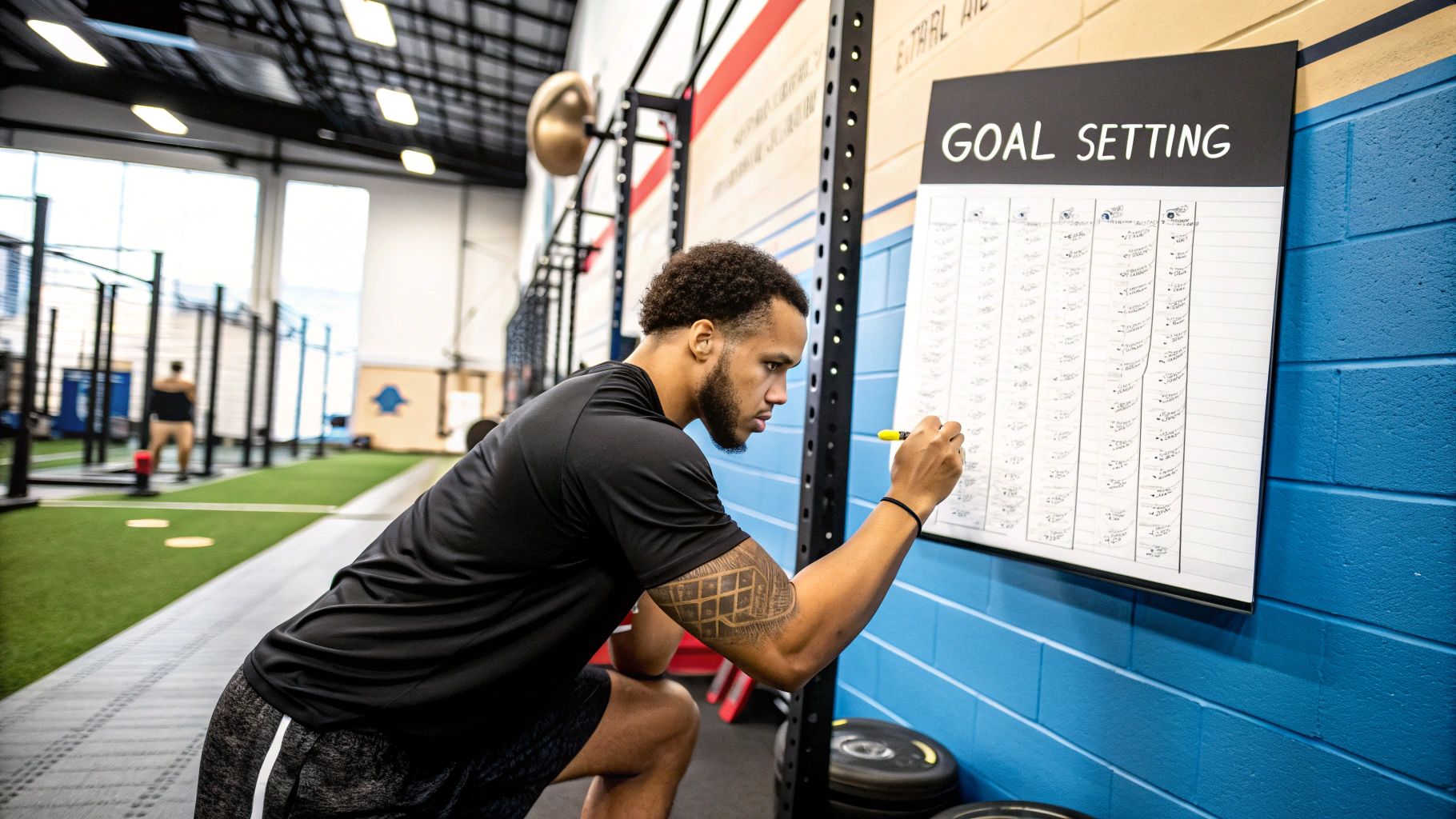
This structured approach demystifies the path to high performance. For example, legendary swimmer Michael Phelps didn't just aim to "win gold." He set precise time goals for every split of every race, creating measurable targets for each training session. This framework is essential for maintaining long-term focus, as it provides tangible checkpoints that fuel ongoing effort and build unshakable confidence.
How to Implement the SMART Framework
The key is to integrate different types of goals to build comprehensive motivation. This approach works best when you combine long-term ambitions with daily actions, ensuring every effort has a purpose.
Set Both Outcome and Process Goals: An outcome goal is the final result, like winning a championship. A process goal is a specific action you control, such as improving your free-throw shooting percentage by 10% or completing 10 minutes of visualization daily. Focusing on the process prevents athletes from feeling overwhelmed by the final outcome.
Make Goals Visible: Write down every goal and post it somewhere you'll see it every day, like a locker, training journal, or bedroom mirror. This constant visual reminder reinforces commitment.
Celebrate Milestones: Acknowledging and celebrating small wins, like hitting a new personal best in the gym or mastering a difficult technique, maintains momentum and makes the journey enjoyable.
Review and Adjust Regularly: Motivation is dynamic. Schedule quarterly or monthly reviews to assess progress. Adjust goals as needed to ensure they remain challenging yet realistic, adapting to performance improvements or unexpected setbacks. This keeps the framework relevant and effective.
By creating this structured system, you provide a clear answer to "What's next?" which is a cornerstone for motivating athletes to push their limits consistently.
Strategy 2: Positive Reinforcement and Reward Systems
Beyond goal setting, one of the most effective strategies for motivating athletes is leveraging positive reinforcement. Grounded in the principles of behavioral psychology, this approach uses positive consequences to strengthen desired behaviors like persistence, skill execution, and teamwork. It creates a powerful feedback loop where athletes associate effort and improvement with recognition and reward, fostering an environment of encouragement rather than fear.
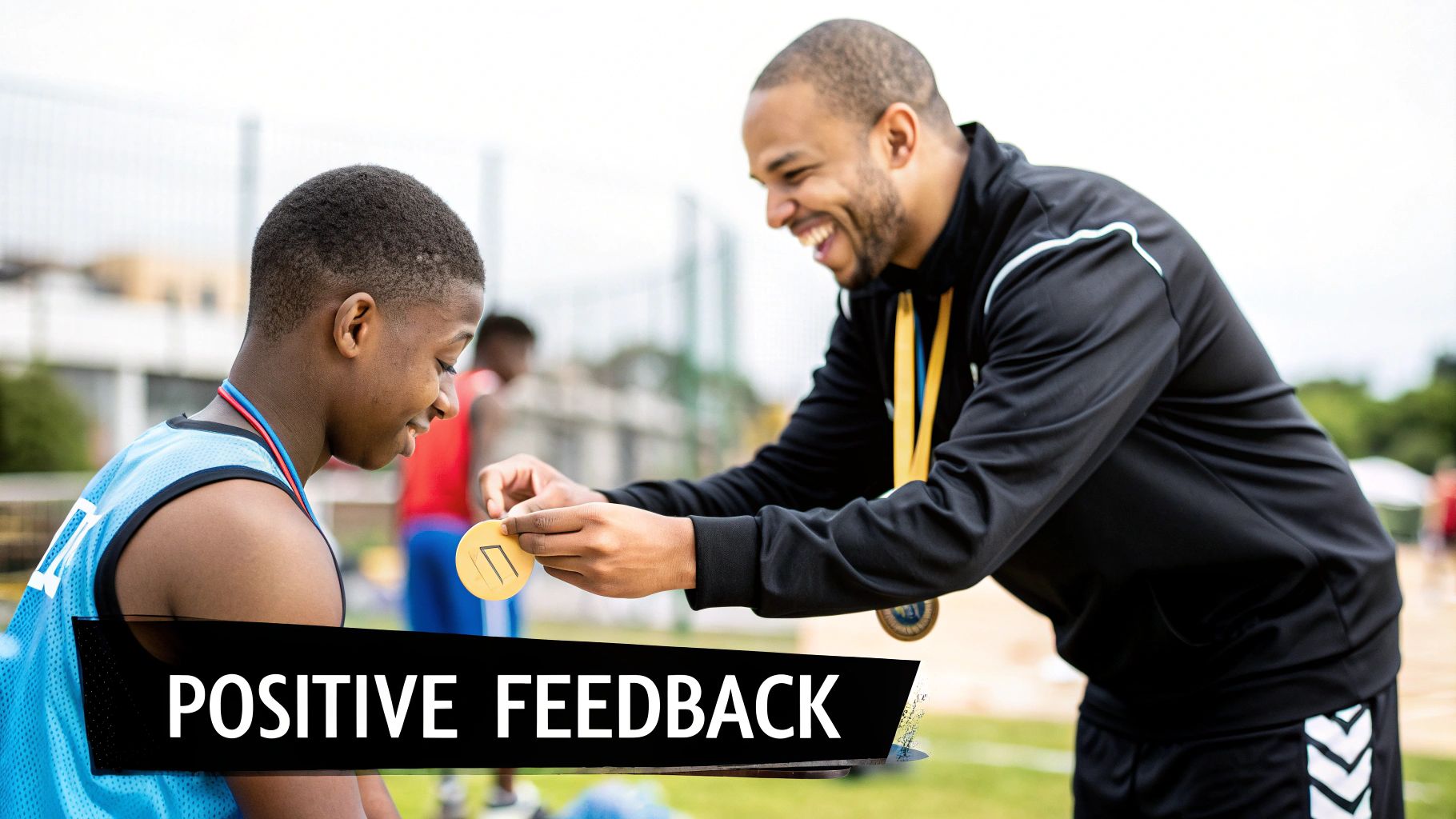
This method moves beyond just celebrating wins and focuses on the journey. For instance, legendary basketball coach Pat Summitt created a point system for her University of Tennessee team, rewarding players for specific actions like taking a charge or diving for a loose ball. This system reinforced the gritty, effort-based behaviors she wanted, proving that recognizing the process is a key component in motivating athletes for long-term success.
How to Implement Positive Reinforcement
Building an effective reinforcement system requires more than just handing out trophies. It is about creating a culture where effort is consistently seen and valued, which builds intrinsic drive over time.
Reward the Process, Not Just the Outcome: Instead of only praising a victory, specifically acknowledge the hard work that led to it. Commend a player for executing a new technique under pressure, improving their defensive footwork, or showing exceptional sportsmanship. This teaches athletes that their effort is what truly matters.
Vary Your Rewards: Rewards do not always have to be tangible. While a team award or a piece of gear can be effective, simple verbal praise, a helmet sticker, or letting an athlete choose the next drill can be just as powerful. The key is to keep the rewards fresh and meaningful to avoid them losing their impact.
Provide Immediate and Specific Feedback: For reinforcement to be effective, it must be timely. Offer praise or a reward as soon as possible after the desired behavior occurs. Be specific: instead of "Good job," say, "Great hustle getting back on defense; that fast transition saved a goal."
Shift Focus from External to Internal: The ultimate goal is to foster self-motivation. Use external rewards as a bridge to help athletes recognize their own feelings of pride and accomplishment. Ask them, "How did it feel to master that skill?" This helps them connect the reward to the internal satisfaction of achievement.
By systematically applying positive reinforcement, you can build a resilient and highly motivated team that thrives on continuous improvement and mutual support.
Strategy 3: Mental Imagery and Visualization Training
Beyond physical practice, one of the most transformative tools for motivating athletes lies within the mind. Mental Imagery and Visualization Training is a cognitive technique where athletes mentally rehearse successful performances, techniques, and outcomes in vivid detail. This powerful strategy conditions the brain for success, effectively bridging the gap between thought and action by creating a neural blueprint for peak performance.
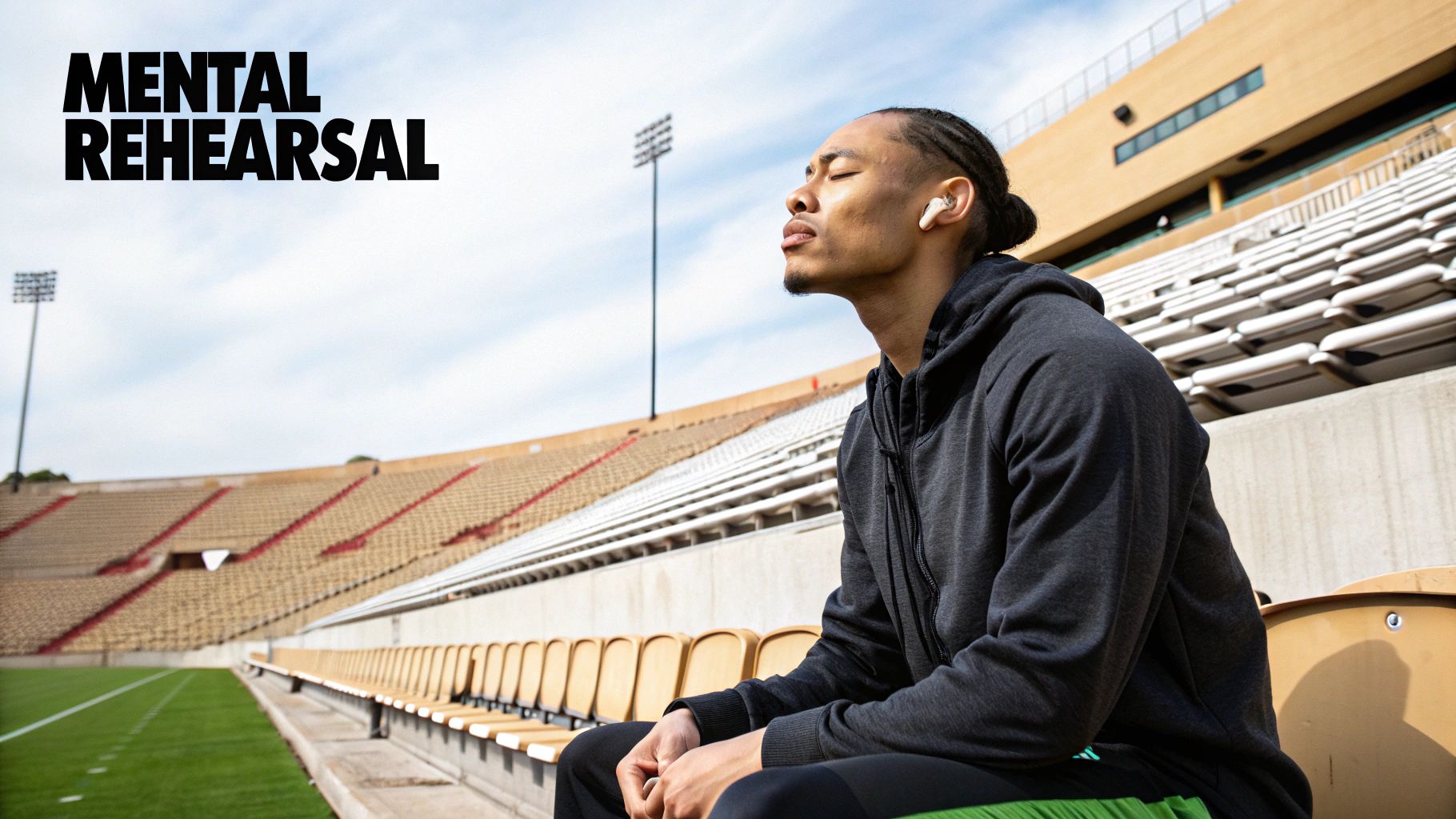
This method prepares athletes psychologically for the immense pressure of competition, building unshakeable confidence and sharpening focus. For instance, basketball legend Michael Jordan famously visualized making game-winning shots countless times before ever stepping on the court. Similarly, Olympic skier Lindsey Vonn mentally rehearsed every turn, jump, and nuance of a racecourse, allowing her to execute flawlessly at high speeds. This practice turns the "what if" of success into a familiar feeling.
How to Implement Mental Imagery and Visualization
Effective visualization is more than just daydreaming; it's a structured, multi-sensory practice. Integrating it into a training routine provides a significant competitive edge and is a cornerstone for motivating athletes to perform at their best when it matters most.
Engage All Senses: Don't just see the success; create a full sensory experience. Feel the grip of the basketball, hear the roar of the crowd, smell the freshly cut grass, and taste the sweat. The more vivid the mental rehearsal, the more effectively the brain codes it as a real experience.
Visualize Both Process and Outcome: Mentally rehearse not just the moment of victory, like crossing the finish line first, but also the perfect execution of the process. Visualize your precise running form, your flawless golf swing, or your perfect defensive stance. This builds muscle memory and technical proficiency.
Incorporate Problem-Solving: A powerful variation is to visualize overcoming potential obstacles. Mentally rehearse how you would respond to a mistake, a tough opponent, or unexpected conditions. This builds resilience and adaptability, ensuring you are prepared for anything.
Practice with Consistency: Make visualization a regular part of your routine, not just something you do before a big event. Dedicate 5-10 minutes daily in a quiet, comfortable space to this mental training. Consistency makes the practice second nature and amplifies its benefits.
By mastering the mental game, athletes can unlock new levels of performance and maintain motivation, knowing they have prepared for success both physically and psychologically.
4. Intrinisic Motivation Development
While external rewards like trophies and recognition have their place, the most sustainable and powerful drive comes from within. Intrinsic Motivation Development focuses on cultivating an athlete's internal desire to participate for the pure enjoyment, personal growth, and satisfaction derived from the sport itself. This strategy shifts the focus from external pressures to an internal love of the game, creating a foundation for long-term commitment and peak performance, especially when facing adversity.
This approach is embodied by figures like Kobe Bryant, whose legendary "Mamba Mentality" was fueled by an obsessive love for improvement, not just winning. Similarly, Roger Federer’s longevity was tied to his passion for the artistry of tennis. This internal fire is a key factor in motivating athletes to persist through grueling training and high-pressure situations, as their effort is tied to a profound sense of purpose and self-fulfillment.
How to Cultivate Intrinsic Motivation
Building this internal drive requires a deliberate focus on an athlete's autonomy, competence, and sense of purpose. The goal is to connect every action back to their personal values and love for the sport, making motivation self-renewing.
Discover Their "Why": Work with athletes to articulate why they chose their sport. Is it the challenge, the camaraderie, or the feeling of mastering a difficult skill? Helping them connect with this core reason reinforces their personal investment beyond external outcomes.
Prioritize Mastery Over Winning: Encourage mastery goals (e.g., perfecting a golf swing) over performance goals (e.g., winning a tournament). When athletes focus on improving their skills, they gain a sense of control and continuous progress, which is a powerful internal motivator.
Grant Autonomy and Choice: Whenever possible, give athletes a say in their training. This could be as simple as choosing between two different drills or helping design a new play. This ownership fosters a deeper sense of engagement and responsibility.
Connect Activities to Personal Values: Frame training and drills in a way that aligns with the athlete's interests and values. If an athlete values creativity, emphasize how they can creatively solve problems on the field or court. This makes even monotonous tasks feel meaningful.
By nurturing this internal engine, you are building resilient, self-driven individuals who are not only better athletes but are also more likely to enjoy a lifelong passion for their sport.
5. Team Cohesion and Social Support Systems
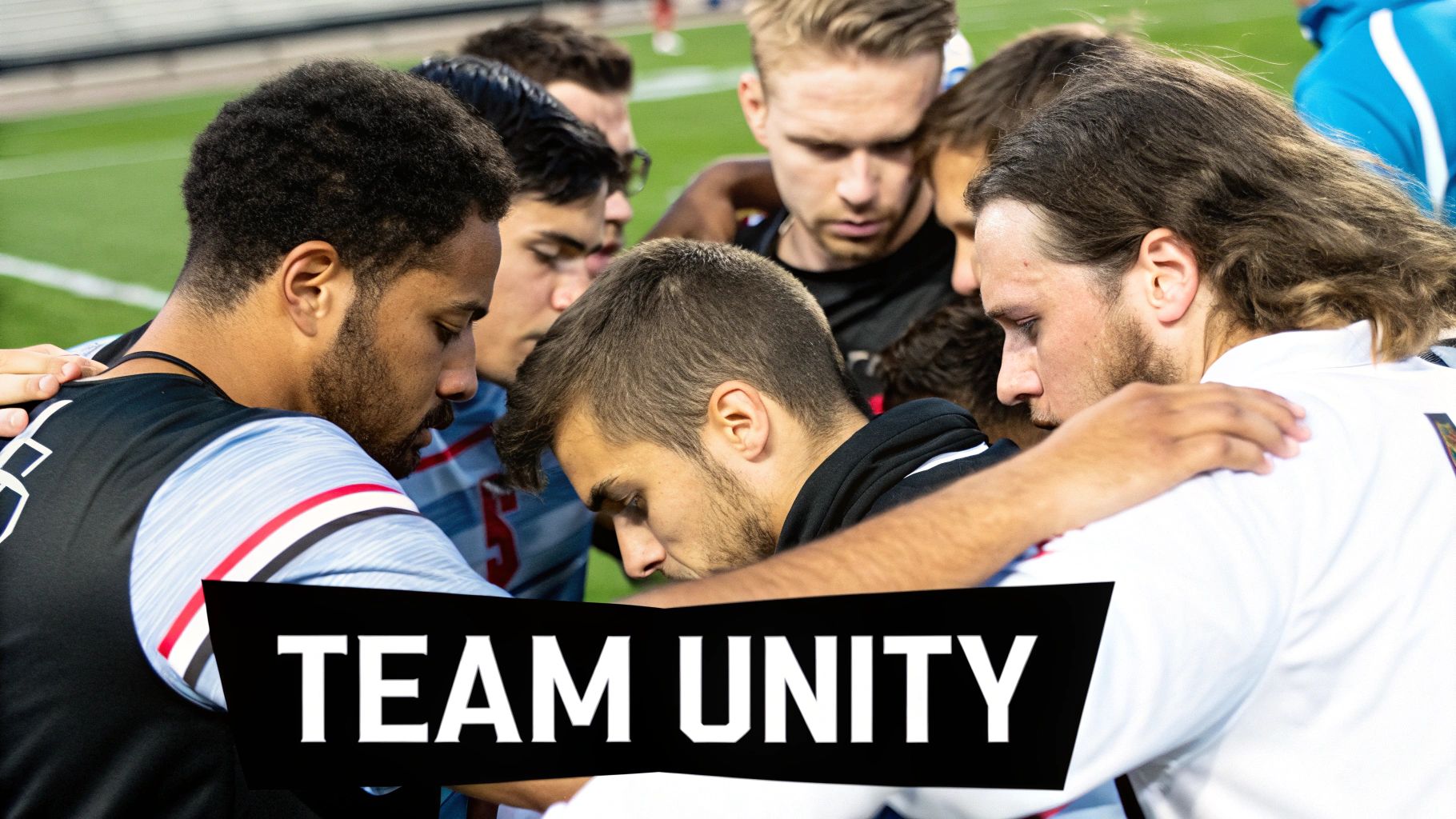
Beyond individual ambition, one of the most powerful forces for motivating athletes is the sense of belonging to a unified team. This strategy focuses on building strong relationships, trust, and mutual accountability among teammates, transforming a group of individuals into a cohesive unit. When athletes feel connected to a shared identity and purpose, their motivation extends beyond personal glory to include a desire to succeed for their peers.
This approach creates a built-in support system where teammates inspire, challenge, and lift each other up. The culture of the New Zealand All Blacks rugby team, with its famous "no dickheads" policy, exemplifies this principle. Their focus on team unity and mutual respect is a cornerstone of their sustained success. Similarly, the "Strength in Numbers" mantra of the Golden State Warriors under Steve Kerr highlights a team-first mentality that fueled multiple championships. This social bond is a key driver for resilience and peak performance.
How to Implement a Cohesive Team Culture
Fostering this environment requires deliberate, consistent effort from both coaches and team leaders. It’s about building a structure where support and accountability are woven into the team's daily fabric.
Establish Clear Team Values: Collaboratively define and agree upon a set of core values, such as respect, integrity, and relentless effort. These values should guide all team behaviors, from practice conduct to game-day decisions.
Create Opportunities for Bonding: Organize activities outside of regular training to strengthen personal relationships. These can range from team dinners and community service projects to dedicated team-building workshops. Strong off-field connections often translate to better on-field chemistry.
Encourage Peer-to-Peer Feedback: Foster an environment where athletes feel safe giving and receiving constructive feedback. This builds trust and empowers teammates to hold each other accountable to the team’s standards, taking some pressure off the coaching staff.
Celebrate Collective Success: While individual achievements are important, always make a point to celebrate team milestones and victories. This reinforces the idea that collective success is the ultimate goal and that every member's contribution was vital.
Strategy 6: Resilience and Mental Toughness Training
Beyond physical conditioning, one of the most critical factors in motivating athletes is building their psychological armor. Resilience and Mental Toughness Training is a systematic approach to developing the fortitude needed to persevere through pressure, adversity, and setbacks. This strategy goes beyond simple pep talks, equipping athletes with practical skills to manage emotions, maintain focus, and bounce back stronger from failure.
This training is what separates good athletes from great ones. Think of Serena Williams returning from career-threatening injuries to dominate tennis again, or Tom Brady leading last-minute, game-winning drives under immense pressure. Their success wasn't just physical; it was forged in mental resilience. By teaching athletes to treat challenges as opportunities for growth rather than threats, you cultivate a deep, intrinsic drive that withstands even the toughest circumstances.
How to Implement Resilience and Mental Toughness Training
Integrating mental conditioning into a regular training regimen ensures athletes are prepared for the psychological demands of competition. This involves a proactive, skill-based approach to building mental fortitude.
Practice Stress Inoculation: Intentionally introduce manageable levels of stress in training, such as high-pressure drills or simulations of game-day scenarios. This helps athletes adapt and develop effective coping mechanisms, much like a vaccine builds immunity.
Develop Pre-Performance Routines: Establish a consistent sequence of actions and thoughts an athlete performs before competing. This routine creates a sense of control and predictability, calming nerves and sharpening focus. It can include specific stretches, music, or visualization exercises.
Reframe Failure as Feedback: Teach athletes to analyze losses and mistakes objectively, extracting valuable lessons instead of dwelling on disappointment. Create a post-game ritual where the focus is on "What did we learn?" and "How can we improve?" This reframes setbacks as essential data for future success.
Cultivate Positive Self-Talk: Actively train athletes to replace negative, self-critical thoughts with constructive and affirming statements. For example, instead of thinking "I can't do this," they should practice saying, "I have trained for this moment and I am prepared." This internal dialogue is fundamental to motivating athletes when external encouragement is absent.
7. Performance Feedback and Progress Tracking
A powerful and systematic approach to motivating athletes is through data-driven performance feedback and meticulous progress tracking. This strategy moves beyond gut feelings and subjective assessments, using hard data to show athletes exactly where they are succeeding and where they need to improve. By collecting and analyzing key metrics, coaches provide objective, actionable feedback that makes the path to improvement tangible and clear.
This method, famously highlighted in sports by the Moneyball analytics revolution, provides undeniable proof of progress. For instance, professional cycling teams use power meters to track an athlete's real-time output, allowing for precise adjustments to training and race strategy. Similarly, NBA teams leverage advanced analytics for player development, pinpointing specific areas like shot selection or defensive efficiency to target for improvement. This data-centric approach turns abstract goals into concrete, measurable missions.
How to Implement Performance Feedback and Tracking
Integrating this strategy requires a commitment to collecting data and communicating its meaning effectively. The goal is to empower athletes with information, not overwhelm them with numbers.
Focus on Key Performance Indicators (KPIs): Instead of tracking everything, identify the 3-5 most critical metrics for an athlete’s role and sport. For a basketball player, this might be free-throw percentage and defensive rebounds. For a runner, it could be cadence and heart rate zones.
Provide Timely and Constructive Feedback: Don't wait weeks to review data. Share insights soon after a training session or competition when the experience is still fresh. Frame feedback constructively, focusing on what the data reveals about opportunities for growth.
Use Visuals to Show Progress: Charts and graphs are far more motivating than raw numbers. A simple line graph showing a sprinter's 100m time decreasing over a season provides a powerful visual testament to their hard work and is a great tool for motivating athletes.
Balance Quantitative and Qualitative Feedback: Data tells part of the story, but it doesn't capture an athlete's mindset or effort. Pair statistical feedback with qualitative observations about their technique, attitude, and decision-making to provide a complete picture.
Motivational Strategies Comparison Matrix
Motivation Strategy | Implementation Complexity 🔄 | Resource Requirements ⚡ | Expected Outcomes 📊 | Ideal Use Cases 💡 | Key Advantages ⭐ |
|---|---|---|---|---|---|
Goal Setting and Achievement Framework | Medium - requires consistent monitoring and adjustment | Moderate - tools for tracking progress | Clear direction, measurable progress, confidence building | Athletes needing structured progression and clear milestones | Enhances focus, breaks down objectives, builds confidence |
Positive Reinforcement and Reward Systems | Medium - customizable and ongoing | High - reward systems can be costly | Increased motivation and engagement, behavior reinforcement | Teams or individuals benefiting from immediate feedback | Boosts confidence, creates positive training environment |
Mental Imagery and Visualization Training | Low to Medium - requires practice consistency | Low - no special equipment needed | Improved focus, confidence, anxiety reduction | Athletes preparing psychologically or refining skills | Enhances confidence, practiced anytime, improves focus |
Intrinsic Motivation Development | Medium to High - individualized approach | Low - focus on mindset and autonomy | Sustainable motivation, enjoyment, performance consistency | Athletes seeking long-term engagement and personal growth | Builds resilience, reduces external dependency |
Team Cohesion and Social Support Systems | Medium - requires strong leadership and management | Moderate - time investment in relationship building | Enhanced motivation through belonging, improved team chemistry | Team sports or groups needing mutual accountability | Provides emotional support, accountability, improves chemistry |
Resilience and Mental Toughness Training | High - demands time and possibly expert guidance | Moderate to High - professional support recommended | Improved performance under pressure, psychological strength | Athletes facing adversity, high-pressure situations | Builds long-term mental strength, transferable life skills |
Performance Feedback and Progress Tracking | Medium to High - needs data collection and analysis | High - technology and analytics required | Objective insights, data-driven adjustments | Athletes and teams relying on measurable performance metrics | Provides clear progress visualization, enables precise adjustments |
Integrating Strategies for a Championship Mindset
The journey of motivating athletes is not about finding a single magic bullet. As we've explored through the seven core strategies, from structured Goal Setting to building Mental Toughness, true motivational mastery lies in the artful integration of these powerful techniques. A championship mindset is not built on one pillar alone; it is a carefully constructed edifice supported by a combination of clear direction, internal drive, and unwavering support.
Viewing these methods as isolated tools limits their potential. Instead, the most effective coaches, mentors, and athletes themselves understand that these strategies are interconnected. For instance, Performance Feedback and progress tracking directly fuel an athlete’s sense of achievement, which in turn nurtures their Intrinsic Motivation. Similarly, Mental Imagery becomes far more potent when an athlete has the resilience, developed through specific training, to push past visualization of setbacks and focus on success.
Weaving a Motivational Tapestry
Think of these frameworks as ingredients in a recipe for peak performance. Your role is to understand the unique needs of your athletes and blend the ingredients accordingly.
For the data-driven athlete: Combine the Goal Setting and Achievement Framework with rigorous Performance Feedback and Progress Tracking. The tangible numbers and clear targets will provide the fuel they need.
For the team-oriented player: Prioritize building Team Cohesion and Social Support Systems. Their motivation will soar when they feel connected to a cause greater than themselves.
For the introspective competitor: Focus on developing Intrinsic Motivation and leveraging Mental Imagery. Helping them connect with their "why" and visualize their path to victory will unlock their deepest reserves of determination.
The core takeaway is this: motivating athletes effectively requires a holistic and adaptable approach. It involves creating a dynamic ecosystem where external structures like reward systems and internal drivers like personal passion work in harmony. This synthesis is what transforms talent into consistent, high-level performance. By skillfully blending objective frameworks with the psychological nuances of your athletes, you are not just encouraging them for the next game; you are instilling a resilient, self-sustaining drive that will serve them throughout their entire athletic career and beyond. Ultimately, this integrated approach is the key to building a culture of excellence and a legacy of achievement.
Ready to equip your athletes with tools that amplify their mental game and physical recovery? The advanced apparel and gear from RealOminousAthlete are engineered to support the very principles of peak performance discussed here. Visit our store to discover how our products can help your athletes feel, train, and compete at their best: RealOminousAthlete.


Comments