
7 Essential Hiking Tips for Beginners (2025 Guide)

Stepping onto a hiking trail for the first time is an exhilarating experience, opening up a world of stunning landscapes, personal challenges, and peaceful solitude. However, a successful and enjoyable hike requires more than just a sense of adventure; it demands preparation, knowledge, and the right mindset. Many newcomers feel overwhelmed by the sheer volume of advice available, from complex gear lists to confusing trail jargon.
This guide is designed to cut through that noise. We provide clear, actionable, and essential hiking tips for beginners, focusing on the foundational skills and knowledge you need to hit the trail safely and confidently. You will learn how to choose your first trail, select the right footwear, dress for changing weather, and pack critical safety items. We will also cover vital topics like hydration, basic navigation, and how to protect the natural environments you explore.
These seven principles are your roadmap to a rewarding hiking journey. They transform initial uncertainty into confident exploration, ensuring your first adventures are both safe and memorable. Whether you're planning a short walk in a local park or dreaming of future mountain ascents, this guide will serve as your compass. Let's begin the journey.
1. Start with Easy, Well-Marked Trails
The single most important hiking tip for beginners is to build confidence and experience gradually. Before tackling a remote mountain peak, your journey should begin on trails that are forgiving, easy to navigate, and aligned with your current fitness level. This approach minimizes risk, prevents early burnout, and makes your first outings enjoyable rather than overwhelming.

A well-marked trail is maintained by a park service or conservation group, featuring clear signage, blazes (paint marks on trees), and an obvious, established path. Choosing these routes allows you to focus on the experience of hiking-your footing, your breathing, and the nature around you-instead of stressing about navigation.
How to Find Beginner-Friendly Trails
Identifying the right trail is your first step to a successful hike. Look for routes with minimal elevation gain (under 500 feet) and a total distance of under three miles. These parameters ensure the hike is physically manageable, allowing you to finish feeling accomplished, not exhausted.
Use Trail-Finder Apps: Platforms like AllTrails are invaluable. You can filter hikes by "Easy" difficulty, length, and user ratings. Pay close attention to recent reviews, as they provide real-time updates on trail conditions like mud, snow, or downed trees.
Consult Local Resources: Visit the website or visitor center for local, state, or national parks. Rangers and staff offer the most reliable recommendations and can provide physical maps.
Look for Loop Trails: A loop trail starts and ends at the same point without retracing your steps. This makes the scenery more engaging and navigation simpler than an "out-and-back" trail.
Consider "Rails-to-Trails": These are decommissioned railway lines converted into flat, wide, multi-use paths. They are exceptionally well-suited for a first hike due to their gentle grades and well-maintained surfaces.
By selecting an appropriate trail, you set yourself up for a positive introduction to hiking. This strategy, championed by organizations like the National Park Service and REI, builds a solid foundation of skill and enthusiasm for future adventures.
2. Invest in Proper Footwear
Of all the gear you will purchase, nothing impacts your comfort and safety on the trail more than your footwear. Your feet carry you over every rock, root, and stream, making the right pair of shoes or boots a non-negotiable investment. Proper hiking footwear provides essential traction, support, and protection, turning a potentially painful slog into a confident and enjoyable adventure.
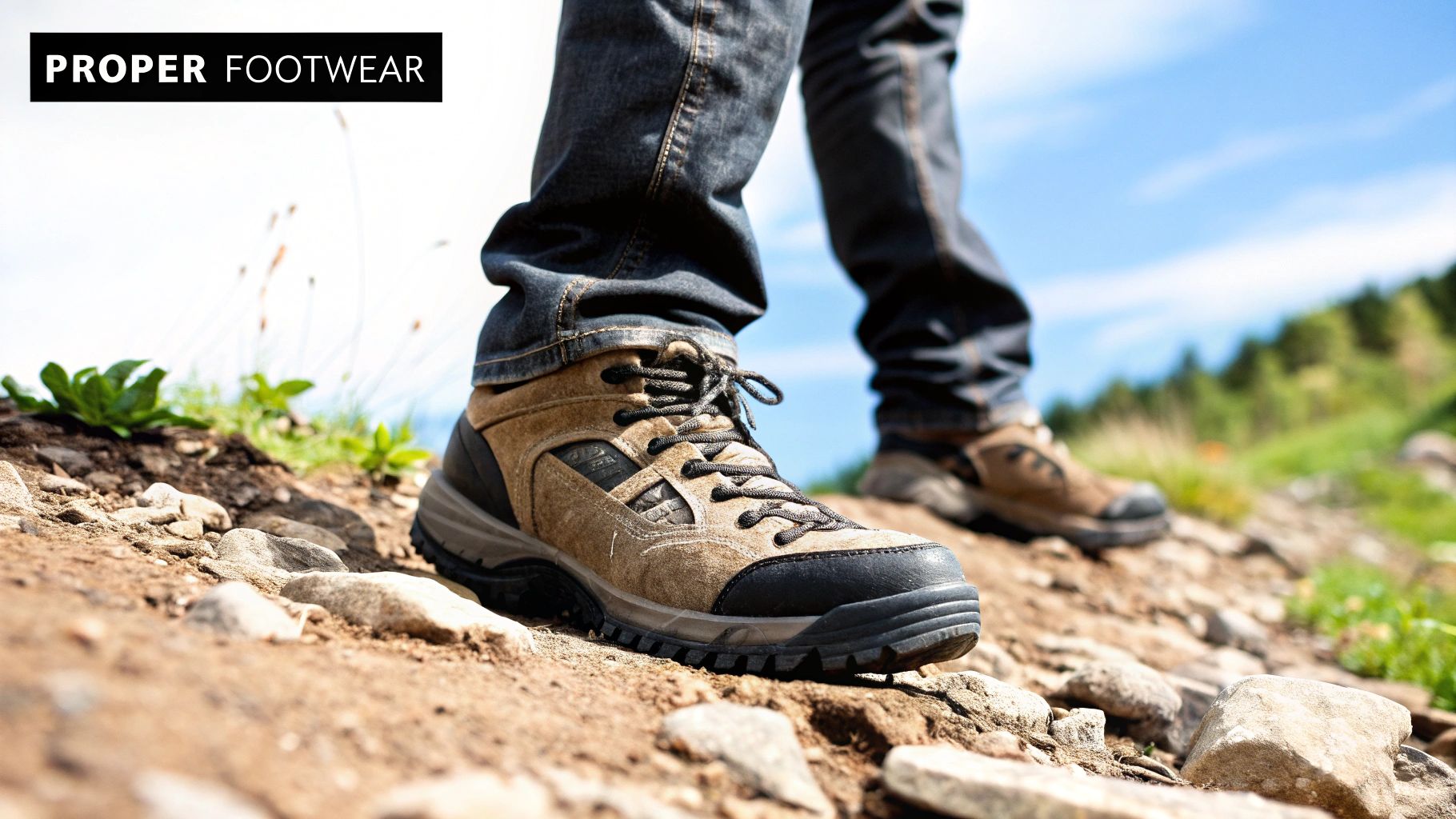
Unlike sneakers, hiking-specific footwear is engineered with stiff soles to protect you from sharp objects and rugged outsoles with deep lugs for superior grip. This specialized construction prevents blisters, reduces foot fatigue, and minimizes the risk of slips, falls, and ankle injuries, which is one of the most critical hiking tips for beginners to take seriously.
How to Choose the Right Hiking Footwear
Selecting the right shoe depends on the terrain and your personal preference. For most beginners on well-maintained trails, a low-cut hiking shoe or a supportive trail runner is an excellent starting point. They require less break-in time and are more lightweight than traditional boots.
Consider Your Terrain: For easy, dry trails, a lightweight trail running shoe like the Altra Lone Peak offers flexibility and comfort. For more varied or rocky paths, a dedicated hiking shoe like the Merrell Moab or Salomon X Ultra provides more stability and durability.
Get the Right Fit: Shop for shoes in the afternoon when your feet have naturally swollen. Wear the same type of hiking socks you plan to use on the trail. You should have about a thumb's width of space between your longest toe and the front of the shoe to prevent toe-jam on downhills.
Break Them In: Never wear brand-new boots on a long hike. Break them in by wearing them around your house, on short walks, and then on a short trail. This allows the shoes to mold to your feet and helps you identify any potential hot spots before they become painful blisters.
Prioritize Support and Traction: Look for shoes with a sturdy shank (the supportive structure between the insole and outsole) and an aggressive tread pattern. Brands like REI Co-op and experienced outdoor outfitters can provide expert fitting advice to ensure you get the right balance of features for your needs.
By investing in footwear designed for the demands of the trail, you are building a foundation for countless miles of comfortable and safe hiking. It is the single piece of gear where cutting corners is never worth the risk.
3. Master the Art of Layering
One of the most critical hiking tips for beginners is understanding that weather in the wild is unpredictable. Mastering the art of layering is a non-negotiable skill that allows you to adapt to changing temperatures and conditions, ensuring your comfort and safety. This system lets you regulate your body temperature by adding or removing clothing as your exertion level or the weather changes.
The layering system, championed by outdoor brands like Arc'teryx and Patagonia, is not about wearing bulky clothes. Instead, it involves combining three specific types of garments that work together to manage moisture, trap heat, and protect you from the elements. Getting this system right prevents you from getting dangerously cold from sweat or caught unprepared in a sudden storm.
How to Build Your Layering System
Your clothing system should be modular, allowing for quick adjustments on the trail. Each layer serves a distinct purpose, and choosing the right materials is essential for performance. The golden rule is to avoid cotton at all costs, as it absorbs moisture, loses its insulating properties when wet, and can lead to hypothermia.
Base Layer (Wicks Moisture): This is the layer directly against your skin. Its job is to pull sweat away from your body to keep you dry. Look for materials like merino wool (which is also naturally odor-resistant) or synthetics like polyester. A lightweight t-shirt or long-sleeve top is a perfect example.
Mid-Layer (Insulates): This layer traps your body heat to keep you warm. The key here is breathability. Popular options include a fleece jacket (like Polartec), a puffy vest filled with down, or a synthetic-fill jacket. The thickness depends on the expected temperature.
Outer Layer (Protects): Also known as the shell, this layer shields you from wind and rain. For most beginner hikes, a waterproof and breathable rain jacket (often made with materials like Gore-Tex) is sufficient. It should be lightweight and easy to pack.
A classic mistake is waiting until you are freezing or sweating heavily to make an adjustment. The best practice is to start your hike feeling slightly cool, as your body will warm up quickly. Proactively add or remove a layer before you become uncomfortable to maintain a stable core temperature throughout your adventure.
4. Pack the Ten Essentials
One of the most crucial hiking tips for beginners involves preparing for the unexpected, and the best framework for this is the Ten Essentials. This is not just a packing list; it is a time-tested safety system designed to help you survive a night outdoors or manage an emergency. Originally created by The Mountaineers club in the 1930s, this list has been adopted and promoted by experts like REI and the National Park Service as the gold standard for backcountry readiness.
The modern Ten Essentials are grouped into functional systems rather than ten specific items. This approach allows for flexibility based on your trip's length, location, and season. Even on a short day hike, a wrong turn or sudden weather change can create a serious situation, making these items non-negotiable.
How to Implement the Ten Essentials System
Packing the Ten Essentials means carrying gear to address navigation, sun protection, insulation, illumination, first aid, fire, repair, nutrition, hydration, and emergency shelter. You don't need the most expensive gear, just functional items you know how to use.
Navigation: While your phone's GPS is useful, always carry a backup. A physical map and a simple compass are essential, as batteries can die and electronics can fail. Learn basic map-reading skills before your hike.
Illumination: A headlamp is superior to a flashlight because it keeps your hands free. Always pack a reliable LED headlamp, like one from Black Diamond, and include extra batteries.
Emergency Shelter: This doesn't mean a full tent. A lightweight emergency bivy or a reflective space blanket can be a lifesaver, protecting you from wind and rain and preventing hypothermia if you're stranded overnight.
First-Aid: Carry a pre-made hiking first-aid kit, such as those from Adventure Medical Kits, and add personal items like blister treatment (moleskin) and any necessary medications.
Before you go, lay out your essentials to ensure nothing is forgotten. As stated by The Mountaineers, "The point of the Ten Essentials is to help you be prepared for an emergency." Knowing you have these items in your pack provides peace of mind, allowing you to focus on enjoying your hike.
5. Stay Hydrated and Fuel Your Body
Proper hydration and nutrition are non-negotiable for hiking performance and safety, acting as the fuel that keeps your body moving efficiently. Dehydration can quickly lead to fatigue, headaches, poor decision-making, and dangerous heat-related illnesses. Similarly, inadequate nutrition robs your muscles of the sustained energy required for physical activity, turning an enjoyable hike into a grueling ordeal.

This principle is a cornerstone of advice from sports nutrition researchers and the ultralight backpacking community alike. Treating your body like an engine that needs high-quality fuel and coolant ensures you have the stamina and mental clarity to complete your hike safely and enjoy the experience. This is one of the most fundamental hiking tips for beginners that, once mastered, becomes a lifelong habit.
How to Hydrate and Fuel Effectively on the Trail
The key is a proactive approach: start fueling and hydrating before you feel thirsty or hungry. By the time those signals arrive, your performance is already declining. A general rule is to drink about half a liter (16 ounces) of water per hour of moderate hiking in temperate conditions, and more in heat or at high altitudes.
Plan Your Water Supply: For a short hike (1-2 hours), a standard water bottle may suffice. For longer treks, a hydration reservoir like a CamelBak allows for easy, frequent sips. Always carry more water than you think you will need, or bring a trusted water filter like a Sawyer Squeeze or LifeStraw to replenish from natural sources.
Pack Smart, Energy-Dense Snacks: Your body needs carbohydrates for immediate energy and protein for muscle repair. Pack a mix of easy-to-eat foods you have tried before. Excellent options include trail mix, energy bars from brands like Clif Bar, dried fruit, or a simple wrap.
Replenish Electrolytes: When you sweat, you lose essential minerals (electrolytes) like sodium and potassium. On longer or hotter hikes, add electrolyte tablets or powders to your water to prevent muscle cramps and maintain proper fluid balance.
Eat Small and Often: Instead of one large meal, graze on snacks every 60 to 90 minutes. This provides a steady stream of energy, prevents "bonking" (a sudden crash in energy), and is easier on your digestive system during physical activity.
6. Learn Basic Navigation Skills
While GPS devices and smartphone apps are convenient, they are not foolproof. Batteries die, screens break, and satellites can be unreliable in deep canyons or dense forests. This is why learning basic navigation skills is one of the most empowering and crucial hiking tips for beginners, transforming you from a passive trail follower into a competent and self-reliant adventurer.
Fundamental navigation involves using a map and compass together to understand your location and plan your route. It is a timeless skill, championed by outdoor education leaders like the National Outdoor Leadership School (NOLS) and REI, that ensures you can find your way even when technology fails. These skills provide a vital safety net and deepen your connection with the landscape.
How to Build Your Navigation Skills
Start by learning to read a topographic map, which uses contour lines to show the shape and elevation of the land. Understanding how to interpret these lines allows you to visualize the terrain ahead, identifying hills, valleys, and steep slopes before you encounter them. Combine this with compass skills to orient your map to the real world.
The following infographic illustrates the three core components of effective outdoor navigation.
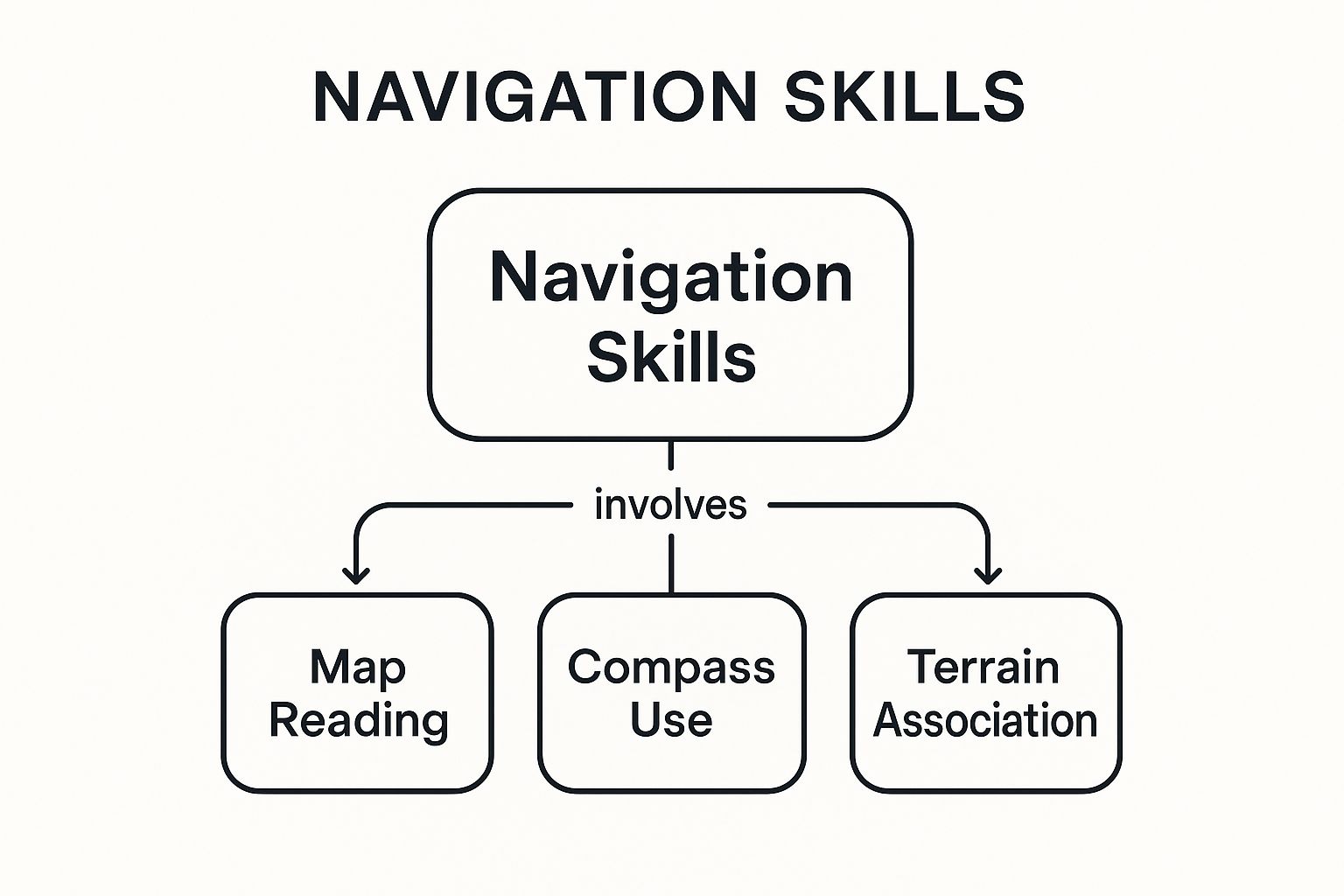
This visualization shows how true navigation competence is built by integrating map reading, compass use, and terrain association, not just relying on one skill.
Practice in a Familiar Place: Before heading into the backcountry, practice with your map and compass in a local park. Try to find specific features on the map, like a trail junction or a small hill, and navigate to them.
Take a Class: Many outdoor retailers like REI and local clubs offer introductory orienteering and navigation courses. These structured lessons provide hands-on training from experienced instructors.
Carry Redundant Systems: Always carry a physical map and compass as a backup, even when using a GPS app like Gaia GPS or AllTrails. Having offline maps downloaded on your phone is another layer of preparedness.
Learn Terrain Association: This is the skill of matching what you see around you (mountains, rivers, clearings) to what is on your map. It’s a powerful way to constantly confirm your position without stopping to take a compass bearing.
By investing time in these skills, you build the confidence to explore more remote areas safely, making you a more capable and resilient hiker.
7. Practice Leave No Trace Principles
A fundamental part of being a responsible hiker is ensuring that wild places remain wild for future generations. The Leave No Trace framework provides seven core principles that act as a universal guide for minimizing your environmental impact. Adhering to these ethics is a non-negotiable hiking tip for beginners and experts alike, preserving the beauty and health of the trails you love.
This philosophy goes beyond just "don't litter." It encompasses everything from how you walk on the trail to how you observe wildlife. By adopting these principles, you actively contribute to the conservation of natural landscapes, ensuring they remain pristine and accessible for everyone.
How to Practice Leave No Trace on the Trail
Integrating these principles into your hiking routine is simple and becomes second nature with practice. The goal is to leave the environment exactly as you found it, or even better.
Plan Ahead and Prepare: This first principle is a cornerstone. Know the regulations for the area you're visiting, check the weather, and carry the right gear to avoid situations that might force you to impact the environment, like building an emergency shelter.
Travel and Camp on Durable Surfaces: Always stay on the established trail. Cutting switchbacks (the zig-zagging parts of a trail on a steep incline) causes severe erosion and damages the landscape. If you must go off-trail, walk on durable surfaces like rock or dirt, not fragile vegetation.
Dispose of Waste Properly: This is the famous "pack it in, pack it out" rule. Bring a dedicated bag for all your trash, including food scraps like apple cores and banana peels. These items can take years to decompose and attract wildlife. For human waste, dig a "cathole" 6-8 inches deep and at least 200 feet from water, trails, and campsites.
Leave What You Find: Let others enjoy the beauty of the trail. Resist the urge to take rocks, flowers, or other natural objects as souvenirs. Take only pictures and leave only footprints.
Be Considerate of Other Visitors: Respect the experience of others by keeping noise levels down and yielding to other hikers on the trail. A quiet, peaceful hike is what most people are seeking.
The Leave No Trace Center for Outdoor Ethics offers extensive resources and is championed by organizations like the National Park Service. Following these guidelines is one of the most impactful hiking tips for beginners because it protects the very resource you are there to enjoy.
7 Essential Hiking Tips Comparison
Item | Implementation Complexity 🔄 | Resource Requirements ⚡ | Expected Outcomes 📊 | Ideal Use Cases 💡 | Key Advantages ⭐ |
|---|---|---|---|---|---|
Start with Easy, Well-Marked Trails | Low - simple trail selection | Low - minimal gear needed | Safe beginner experience, confidence building | New hikers, casual day hikes | Reduces getting lost, predictable timing |
Invest in Proper Footwear | Moderate - requires shoe fitting | Medium - investment in quality boots | Comfort, injury prevention, improved performance | All hiking levels, varied terrains | Prevents injuries, enhances traction |
Master the Art of Layering | Moderate - knowledge of layers needed | Medium - multiple clothing items | Temperature regulation, moisture management | Variable weather, multi-day hikes | Adapts to weather, prevents overheating/hypothermia |
Pack the Ten Essentials | Moderate - knowledge & preparation | Medium to High - multiple gear items | Improved safety, preparedness for emergencies | All hike types, especially longer or remote trips | Comprehensive safety, builds good habits |
Stay Hydrated and Fuel Your Body | Low to Moderate - planning hydration | Low to Medium - water + food | Sustained energy, mental clarity, health | All hikers, especially strenuous or long hikes | Prevents dehydration, improves performance |
Learn Basic Navigation Skills | High - skill development required | Low to Medium - tools + training | Prevents getting lost, enhances confidence | Backcountry, remote areas, tech-failure backups | Works without tech, essential for safety |
Practice Leave No Trace Principles | Moderate - behavioral changes | Low - planning and awareness | Preserved environment, reduced impact | All outdoor activities and camping | Protects nature, promotes sustainability |
Your Journey Starts Here: Putting Your Knowledge into Practice
You've just absorbed a comprehensive blueprint for starting your hiking journey.## Your Journey Starts Here: Putting Your Knowledge into Practice
You've just absorbed a comprehensive blueprint for starting your hiking journey. We've moved beyond generic advice and equipped you with a strategic framework covering everything from gear selection to environmental stewardship. Think of this guide not as a set of rigid rules, but as a foundational toolkit. You now have the knowledge to transform from a curious novice into a confident, prepared hiker.
Remember, the goal of your first few outings isn't to conquer a towering peak. It's to build a solid base of experience. The real victory lies in finishing your hike feeling energized and eager for the next one, not exhausted and discouraged. This practical guide full of hiking tips for beginners is designed to ensure just that.
From Theory to Trail: Your Actionable Next Steps
Knowledge is only powerful when applied. It's time to transition from reading about hiking to actually doing it. The key is to start intentionally and build momentum.
Your First Mission: This week, your task is to plan one specific, short hike. Use a trail-finding app or website, filter for "easy" and "under 3 miles," and read recent reviews. This isn't just a walk; it's a field test for your new skills.
Gear Audit: Go through your closet and gear. Do you have non-cotton layers? Do your shoes have adequate traction? Identify one critical piece of gear you're missing, like a good pair of wool socks or a dedicated water bottle, and make a plan to acquire it.
Practice Navigation at Home: Before you're on an unfamiliar trail, open a navigation app like AllTrails or Gaia GPS in your own neighborhood. Practice tracking your route and dropping waypoints. This simple five-minute exercise builds crucial muscle memory.
Embracing the Hiker's Mindset
The most valuable takeaway from this guide isn't about any single piece of gear or a specific technique. It's about adopting the mindset of a lifelong learner. Athletes across all disciplines, from runners to golfers, understand that mastery comes from consistent practice and learning from every experience. Hiking is no different.
Key Insight: Every hike is a data point. Pay attention to what works and what doesn’t. Did your feet get sore? Maybe it’s time to experiment with different socks. Did you run out of water? Pack more next time. This iterative process of refinement is what separates seasoned hikers from perpetual beginners.
You will make small mistakes, and that’s perfectly fine. Forgetting an extra snack or misjudging how long a trail will take are not failures; they are invaluable lessons that sharpen your judgment for future adventures. By embracing these moments as learning opportunities, you cultivate the resilience and awareness that define a true outdoorsperson. The journey of a thousand miles truly begins with a single, well-prepared step. You have the map, you have the knowledge, now go find your trail.
Ready to elevate your performance on and off the trail? The same principles of preparation and high-quality gear apply to your entire active lifestyle, which is why we created RealOminousAthlete. Explore our collection of premium athletic apparel designed to support your toughest workouts and boldest adventures at RealOminousAthlete.


Comments