
7 Best Foods for What to Eat Before Running in 2025

Every runner knows the feeling: the heavy legs, the early fatigue, the dreaded bonk. Often, the difference between a great run and a grueling one comes down to what you ate beforehand. Understanding what to eat before running is not just about avoiding hunger; it is a precise science of timing, macronutrients, and digestion. The right fuel provides sustained energy, prevents muscle cramps, and enhances performance, while the wrong choice can lead to digestive distress and derail your efforts entirely.
This guide moves beyond generic advice to provide a clear, actionable plan. We will break down seven of the best foods that deliver the ideal blend of quick-releasing and long-lasting energy. For each item on our list, you will learn exactly why it works from a nutritional standpoint and how to implement it effectively. We will cover specific portion sizes, optimal timing for consumption, and how to tailor your pre-run meal to the distance and intensity of your workout. Our goal is to ensure you start every run with your engine perfectly tuned and ready for peak performance.
1. Bananas
Often hailed as nature's power bar, bananas are a near-perfect pre-run food. They are the gold standard for a reason, providing a potent combination of easily digestible carbohydrates, natural sugars, and crucial electrolytes. This makes them an exceptional choice when considering what to eat before running for a quick and sustained energy boost without the risk of digestive issues.
The primary benefit of a banana is its carbohydrate composition. A medium banana packs a significant amount of carbs, primarily from fructose, glucose, and sucrose. These sugars are absorbed at different rates, providing both an immediate surge of energy and a more gradual release to fuel you through your miles.
Why Bananas are an Elite Choice
The effectiveness of bananas is well-documented in the running community. They are famously used by elite Kenyan and Ethiopian marathoners as their primary pre-race fuel source. You will almost always find them at aid stations during major marathons and endurance events worldwide. Ultramarathon legend Scott Jurek has also long championed bananas as a key part of his plant-based fueling strategy for conquering grueling 100-mile races.
Key Insight: The blend of fast-acting and slower-releasing sugars in bananas provides a dual benefit: instant energy to start strong and sustained fuel to prevent crashing mid-run.
Practical Tips for Pre-Run Fueling
To maximize the benefits, timing is crucial. Consume a banana 30 to 60 minutes before your run. This window gives your body enough time to digest the carbohydrates and make the energy available for your muscles.
For Shorter Runs: A single banana is typically sufficient.
For Longer Runs (90+ minutes): Pair your banana with a tablespoon of nut butter for added protein and healthy fats, which helps slow down digestion for more sustained energy.
Pro Tip: Choose a banana that is slightly green. Underripe bananas contain more resistant starch, which breaks down more slowly, leading to a more gradual release of sugar into your bloodstream.
This quick reference summary highlights the key nutritional data that makes a banana such a powerful pre-run option.
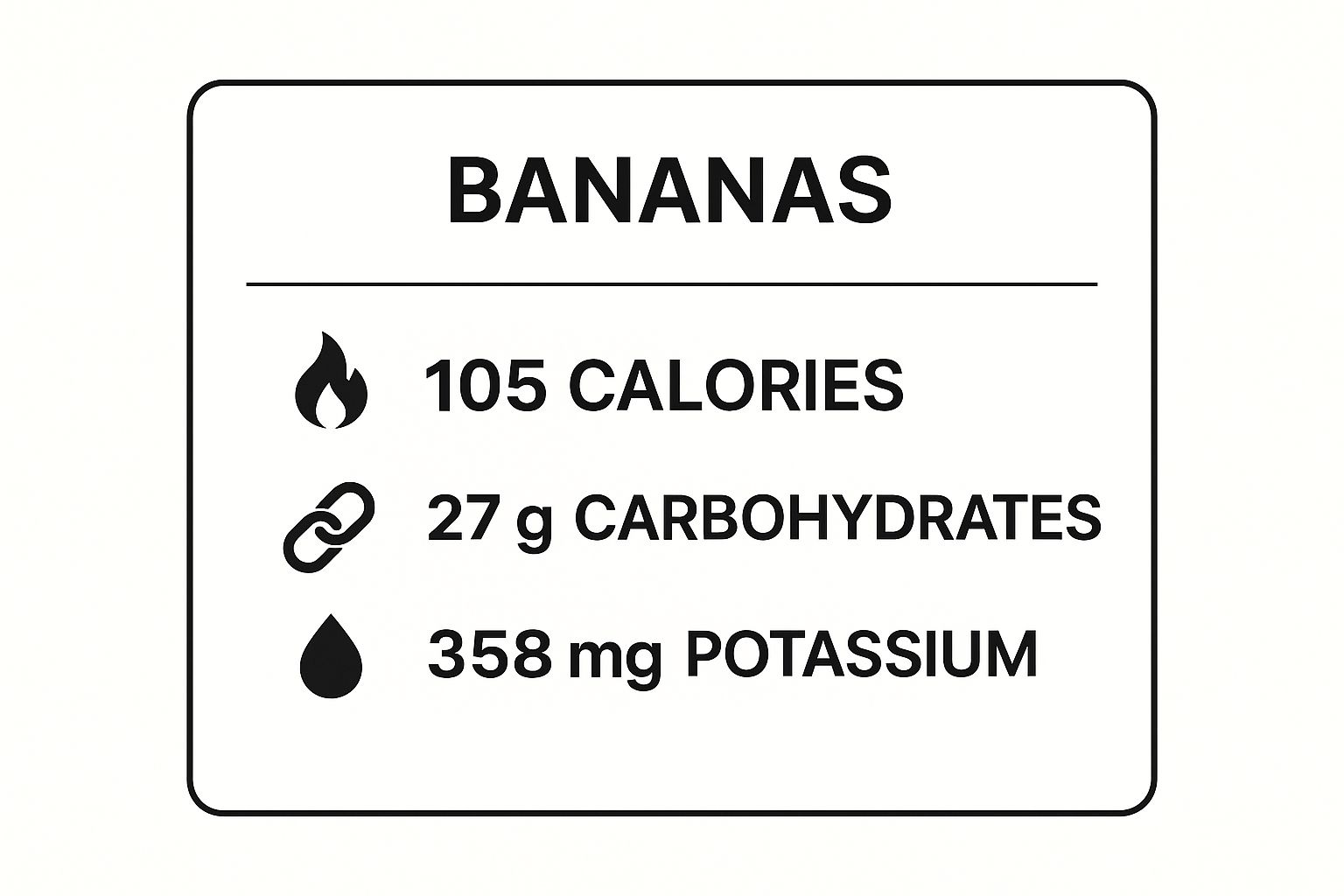
As the data shows, a single banana delivers a substantial 27 grams of carbohydrates for energy and a significant dose of potassium, an essential electrolyte that helps prevent muscle cramping.
2. Oatmeal
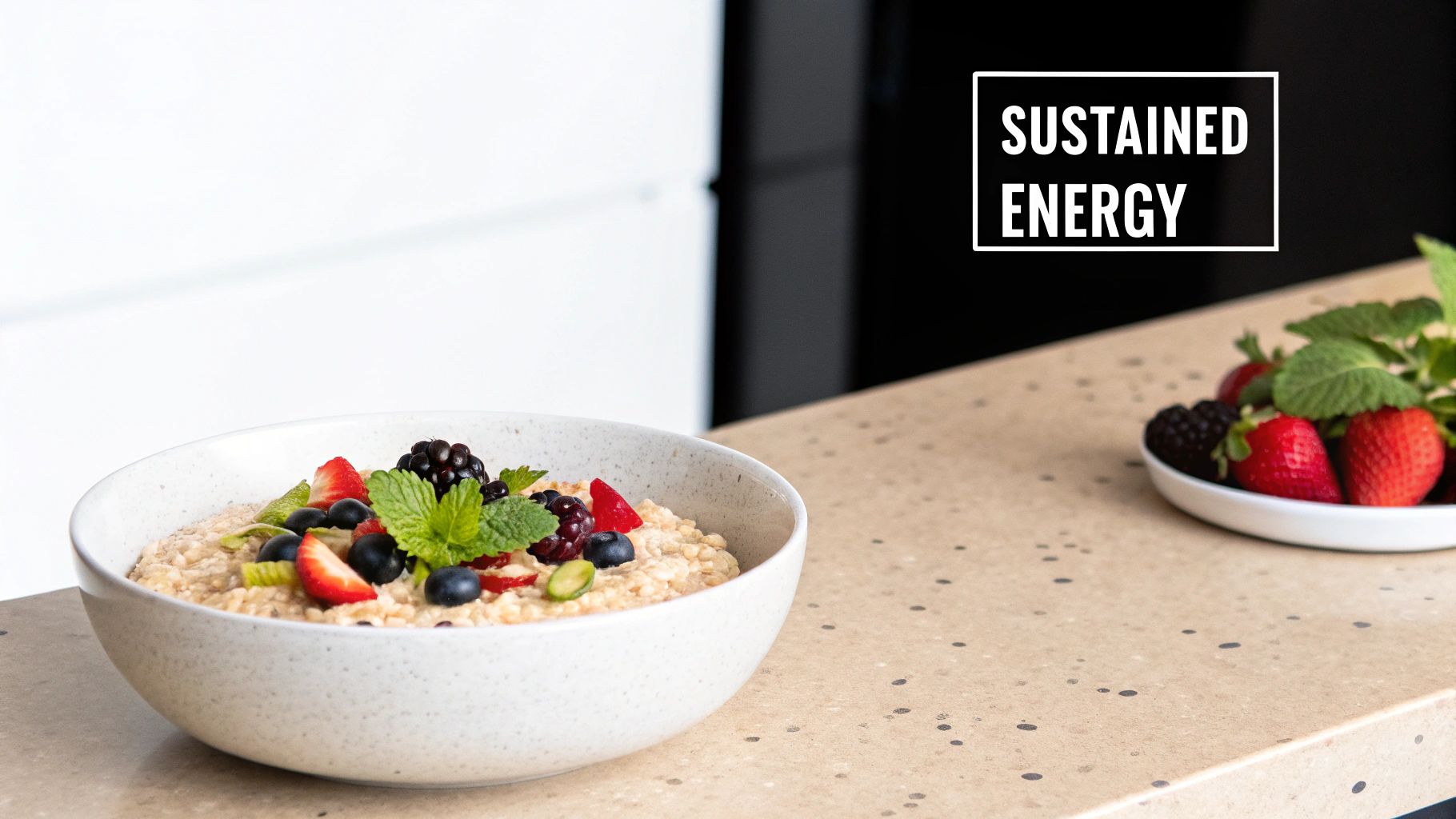
A classic breakfast staple, oatmeal is a powerhouse of complex carbohydrates, making it an ideal meal when considering what to eat before running, especially for longer distances. Its key strength lies in its low glycemic index, which ensures a slow and steady release of glucose into the bloodstream. This prevents the energy spikes and subsequent crashes that can derail a run, providing sustained fuel from start to finish.
The secret to oatmeal's endurance-boosting power is beta-glucan, a type of soluble fiber. This fiber forms a gel-like substance in the stomach, slowing down digestion and promoting a feeling of fullness and prolonged energy delivery. It is the go-to breakfast for athletes who need fuel that lasts for hours.
Why Oatmeal is an Elite Choice
The adoption of oatmeal by elite endurance athletes speaks volumes about its effectiveness. British marathon record holder Paula Radcliffe famously relied on oatmeal as her pre-race breakfast to fuel her championship performances. Similarly, many collegiate cross-country teams make it a standard pre-competition meal, and it’s a breakfast favorite among Tour de France cyclists who need steady energy for grueling mountain stages. Its reputation is built on proven, reliable performance.
Key Insight: The complex carbohydrates and beta-glucan fiber in oatmeal provide a slow-drip of energy, making it the perfect pre-run meal for preventing mid-run fatigue during long-distance efforts.
Practical Tips for Pre-Run Fueling
Because it's a more substantial meal, timing is critical. Aim to eat your oatmeal 2 to 3 hours before a run to give your body ample time for digestion. This prevents any feelings of heaviness or stomach discomfort.
Choose Wisely: Opt for rolled or steel-cut oats over instant varieties, which often contain added sugars and are more processed. Rolled oats offer a better nutritional profile and a slower energy release.
Boost Your Carbs: Add a sliced banana, a handful of berries, or a drizzle of maple syrup for an extra carbohydrate kick.
Convenience is Key: Prepare overnight oats the night before for a quick, no-fuss morning meal. Simply soak rolled oats in milk or a non-dairy alternative and refrigerate.
Keep Toppings Light: Avoid adding excessive amounts of nuts, seeds, or heavy fats right before a run, as they can slow digestion too much and cause GI distress.
This video guide provides a simple yet effective recipe for preparing the perfect pre-run oatmeal bowl.
Ultimately, oatmeal stands out as a top-tier choice for runners needing dependable, long-lasting energy to conquer their miles.
3. Toast with Honey
A classic for a reason, toast with honey is a simple yet highly effective pre-run meal. It’s a staple for many runners because it delivers a perfect blend of carbohydrates that are easy on the stomach. This combination is a fantastic answer to the question of what to eat before running, especially for those early morning sessions when you need reliable fuel without digestive distress.
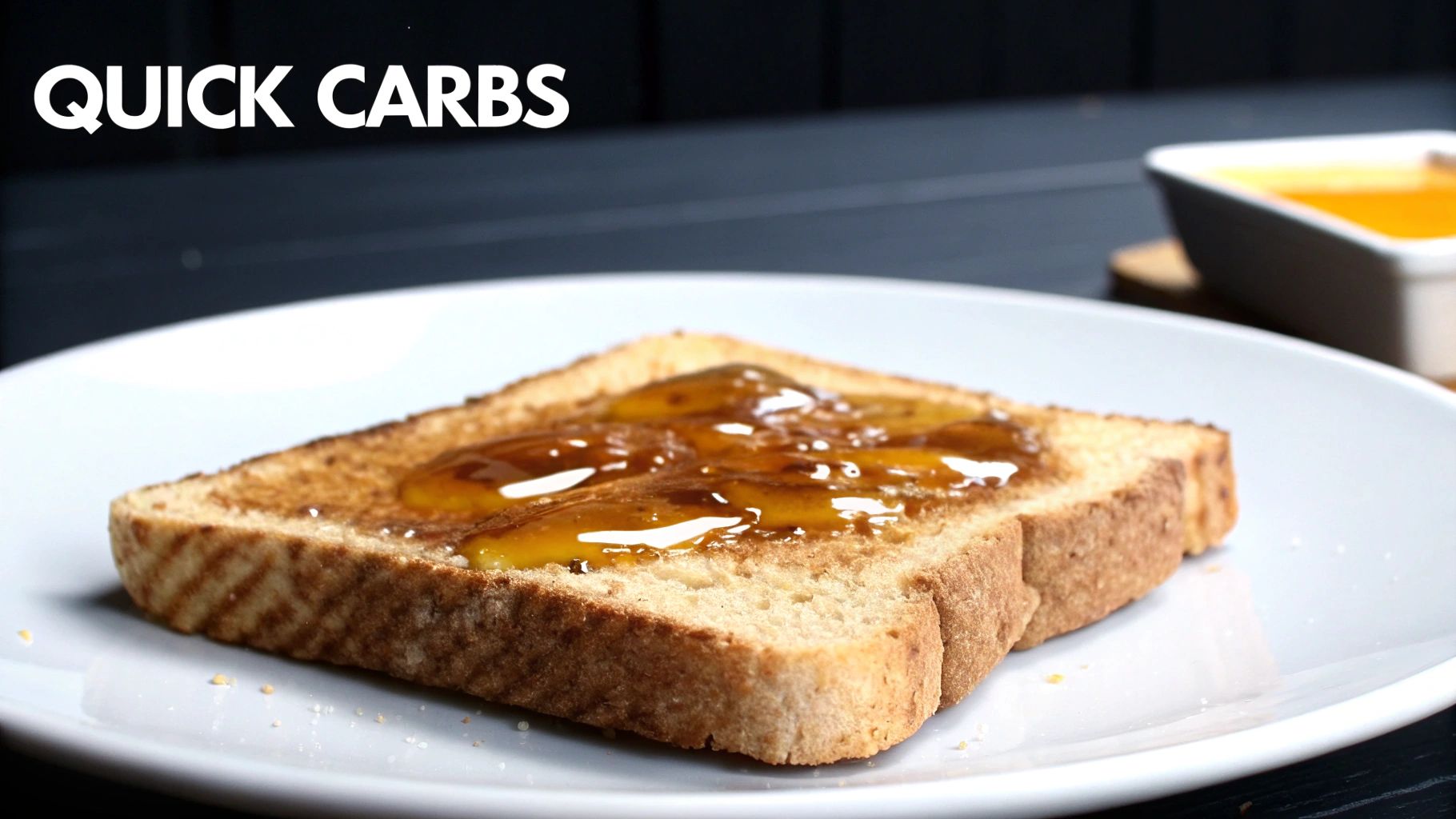
The primary advantage lies in its dual-sugar source. The toast provides complex carbohydrates that break down more slowly for sustained energy, while the honey offers simple sugars (fructose and glucose) for a quick initial boost. This powerful pairing helps you start strong and maintain your pace without the dreaded energy crash.
Why Toast with Honey is an Elite Choice
This humble meal has a long-standing tradition in the running world. It has been a go-to pre-race fuel for generations of British club runners and is a popular choice among recreational marathoners across Europe. You'll often find morning joggers in urban areas relying on this simple meal to power their daily miles because it's predictable, effective, and easy to prepare.
Key Insight: The combination of complex carbs from toast and simple sugars from honey creates a time-released energy system, fueling both the start and the middle of your run efficiently.
Practical Tips for Pre-Run Fueling
For optimal results, timing and ingredient choice are key. Consume your toast with honey 45 to 60 minutes before you head out the door. This allows sufficient time for digestion so the energy is readily available when you start your warm-up.
Bread Choice: Opt for a slice of whole-grain or whole-wheat bread. It offers more fiber and nutrients than white bread, contributing to a more gradual energy release.
Honey Type: If possible, choose raw, unprocessed honey. It often retains more of its natural enzymes and antioxidants compared to highly processed commercial varieties.
For Longer Runs (90+ minutes): Add a very thin layer of almond or peanut butter under the honey. This adds a small amount of protein and healthy fat to further slow digestion for more enduring energy.
Pro Tip: Avoid slathering your toast with butter or other heavy, fatty spreads. These can slow down digestion significantly and may lead to stomach discomfort during your run.
4. Dates
Often called nature's candy, dates are compact energy bombs, prized for their dense concentration of natural sugars and vital minerals. They offer an incredibly efficient and rapid source of fuel, making them a superb option when considering what to eat before running for a quick, powerful burst of energy without the bulk of a larger snack.
The primary advantage of dates lies in their high concentration of simple sugars, mainly fructose and glucose. These are absorbed very quickly by the body, providing almost immediate energy for your working muscles. This makes them ideal for a last-minute fuel top-off or when you need a fast-acting carbohydrate source to get you out the door.
Why Dates are an Elite Choice
Dates have been a staple fuel source for centuries, particularly for runners in the Middle East and North Africa. They are the traditional go-to for Moroccan Atlas Mountain runners and are heavily utilized by participants in grueling desert ultramarathons across the UAE, where their concentrated energy and natural packaging are invaluable. Modern ultrarunners also favor them for their calorie density, allowing them to carry significant fuel with minimal weight and space.
Key Insight: The high glycemic index of dates means their sugars are rapidly absorbed into the bloodstream, providing a near-instantaneous energy boost perfect for kick-starting a run or for a quick hit of fuel mid-race.
Practical Tips for Pre-Run Fueling
To harness their power effectively, timing and portioning are key. Consume 2-3 dates approximately 30-45 minutes before your run. This gives your system just enough time to process the sugars and make them available for use.
For Quick Energy: Eating a couple of Medjool dates is perfect for a short, intense session or if you're running on a tight schedule.
For Sustained Effort: While excellent for quick energy, their rapid absorption means they might not sustain you alone on very long runs. Consider them part of a broader fueling strategy.
Pro Tip: Always remove the pits thoroughly to prevent a choking hazard. For easier digestion, drink a small amount of water with them and consider cutting larger dates, like Medjools, into smaller, more manageable pieces.
5. Energy Bars
Engineered for performance, energy bars are a convenient, portable, and scientifically formulated solution for pre-run fuel. They are designed to deliver a specific blend of macronutrients in a shelf-stable format, offering controlled nutrition and consistent energy delivery. This makes them a highly reliable choice when deciding what to eat before running, especially when whole foods aren't practical.
The main advantage of an energy bar is its precision. Unlike whole foods where nutrient content can vary, a quality energy bar provides a predictable amount of carbohydrates, protein, and fats. This allows runners to dial in their fueling strategy with accuracy, ensuring they get the energy they need without the guesswork.
Why Energy Bars are an Elite Choice
The use of performance-focused bars is widespread in professional sports. PowerBars became iconic in the 1980s and 90s, fueling Tour de France cyclists to victory. Today, brands like Clif Bar are a staple for recreational and professional runners alike, while options like RXBAR are popular in high-intensity fitness communities like CrossFit for their simple, whole-food ingredients. This history of use in elite endurance sports validates their effectiveness for sustained energy output.
Key Insight: The engineered nature of energy bars allows for a precise carbohydrate-to-protein ratio, often around 3:1, which is optimized for energy utilization and muscle preparation before a workout.
Practical Tips for Pre-Run Fueling
To get the most out of an energy bar, careful selection and timing are essential. Consume a bar 30 to 60 minutes before your run to allow for proper digestion and energy conversion.
For General Runs: Look for a bar with a 2:1 or 3:1 carbohydrate-to-protein ratio. This balance provides quick and sustained energy without overburdening your digestive system.
For Sensitive Stomachs: Avoid bars that are high in fiber, sugar alcohols, or excessive fat, as these can cause gastrointestinal distress during a run.
Pro Tip: Always test a new energy bar during a training run, never on race day. This allows you to see how your body reacts to the specific ingredients and formulation without risking your performance. Read ingredient lists carefully to avoid potential allergens or irritants.
6. Greek Yogurt with Berries
Greek yogurt combined with berries offers a powerful, balanced pre-run meal. This combination is ideal for runners seeking both immediate and prolonged energy, thanks to its mix of fast-acting carbohydrates from the fruit and slower-digesting protein from the yogurt. This balanced macronutrient profile makes it a superb choice when considering what to eat before running for sustained performance.
The primary benefit lies in its dual-action fuel delivery. The natural sugars in berries provide a quick energy source, while the high protein content in Greek yogurt ensures a gradual release of amino acids. This helps maintain stable blood sugar levels, preventing the energy spikes and crashes that can derail a longer run.
Why Greek Yogurt with Berries is an Elite Choice
This pairing is a staple in the diets of many high-performing athletes. Scandinavian endurance athletes, particularly cross-country skiers, often rely on yogurt-based meals for their long, grueling training sessions. It is also a preferred breakfast for many American collegiate track and field athletes who need sustained fuel for morning practices and competitions. Its popularity in health-conscious running communities underscores its effectiveness.
Key Insight: The protein in Greek yogurt slows the absorption of carbohydrates from the berries, providing a steadier and more sustained energy supply compared to consuming carbohydrates alone.
Practical Tips for Pre-Run Fueling
Because of the protein content, timing this meal is more critical than with simple carbs. Aim to eat your Greek yogurt and berries 60 to 120 minutes before your run. This gives your digestive system enough time to process the protein without causing discomfort.
For Shorter Runs: A smaller portion, like a half-cup of plain Greek yogurt with a handful of berries, is sufficient.
For Longer Runs (90+ minutes): A full cup of yogurt provides more protein to support muscle function and delay fatigue.
Pro Tip: Always choose plain, unsweetened Greek yogurt to avoid processed sugars. The berries will provide all the natural sweetness and carbohydrates you need. If you are sensitive to lactose, non-dairy yogurt alternatives made from soy or almonds can provide a similar benefit.
7. Sweet Potatoes
Sweet potatoes are complex carbohydrate powerhouses, delivering a steady stream of energy perfect for endurance efforts. Unlike simple sugars that provide a quick spike, the complex carbs in sweet potatoes break down slowly, making them an ideal choice when considering what to eat before running for sustained fuel over many miles. Their low glycemic index ensures a gradual release of glucose into the bloodstream, preventing the dreaded energy crash.
The primary advantage of sweet potatoes is their nutrient density. They are packed with easily digestible carbohydrates for fuel, alongside essential vitamins like Vitamin A and C. This combination supports overall athletic performance and recovery, providing more than just empty calories.
Why Sweet Potatoes are an Elite Choice
The effectiveness of sweet potatoes is deeply rooted in endurance sports culture. They are a staple food for many elite Kenyan and Japanese marathon runners, who rely on them for consistent, long-lasting energy during high-mileage training. Their gentle nature on the digestive system also makes them a favorite among ultramarathoners and trail runners who need reliable fuel that won't cause issues during multi-hour events. This vegetable is a trusted fuel source in communities known for producing the world's best distance runners.
Key Insight: The slow-burning complex carbohydrates in sweet potatoes provide a prolonged, steady energy supply, making them ideal for long runs and preventing mid-run energy dips.
Practical Tips for Pre-Run Fueling
To get the most out of sweet potatoes, proper timing and preparation are key. Aim to consume them 2 to 3 hours before your run to allow ample time for digestion. This larger window is necessary due to their complex carbohydrate and fiber content.
For Long Runs (90+ minutes): A small to medium-sized sweet potato is an excellent base. For very long efforts, you can pair it with a small source of protein like a scoop of Greek yogurt.
Preparation is Key: Roasting, baking, or steaming are the best methods as they make the starches easier to digest. Avoid frying or loading them with butter and cream before a run.
Pro Tip: For maximum convenience, cook a few sweet potatoes at the beginning of the week. You can store them in the fridge and have a ready-to-go, top-tier pre-run meal by simply reheating one when needed. If you have a sensitive stomach, remove the skin, which contains most of the fiber.
Pre-Run Food Comparison Guide
Item | Implementation Complexity 🔄 | Resource Requirements ⚡ | Expected Outcomes 📊 | Ideal Use Cases 💡 | Key Advantages ⭐ |
|---|---|---|---|---|---|
Bananas | Low - ready to eat, minimal prep | Low - affordable, widely available | Quick energy release, prevents cramps | Short runs, immediate pre-run fuel (30-60 mins) | Easily digestible, natural electrolytes |
Oatmeal | Medium - requires cooking/prep | Moderate - needs cooking equipment, ingredients | Sustained energy, stable blood sugar | Longer runs, 2-3 hours pre-run | Sustained energy, customizable toppings |
Toast with Honey | Low - quick to prepare | Low - common ingredients | Mix of immediate and sustained energy | Morning runs, 45-60 minutes before running | Fast energy, easy digestion, natural antioxidants |
Dates | Low - minimal prep, pit removal needed | Low to Moderate - specialty item, slightly pricey | Very rapid energy absorption | Quick energy boost, ultrarunning, desert conditions | Concentrated energy, long shelf life |
Energy Bars | Low - ready to eat | Moderate to High - commercial product cost | Controlled, consistent energy delivery | Competitive events, training, portable nutrition | Balanced macros, formulated for athletics |
Greek Yogurt with Berries | Medium - needs refrigeration and assembly | Moderate - requires dairy and fruit | Balanced immediate and sustained energy | Longer runs needing protein, recovery support | High protein, probiotics, antioxidants |
Sweet Potatoes | High - requires cooking and prep | Moderate - cooking time and equipment needed | Long-lasting sustained energy | Endurance events, 2-3 hours pre-run | Nutrient-dense, high in antioxidants and potassium |
Creating Your Personal Pre-Run Fueling Strategy
We've explored a powerful lineup of foods, from the quick energy of bananas and dates to the sustained power of oatmeal and sweet potatoes. Each option offers a unique blend of carbohydrates, nutrients, and digestibility, providing a solid foundation for answering the critical question of what to eat before running. However, the most effective pre-run meal isn't found on a universal list; it's discovered through personal experience.
The ultimate goal is to move beyond general recommendations and build a fueling blueprint tailored specifically to your body and your running goals. Think of your training runs as your personal nutrition lab. The principles of timing, portion size, and macronutrient focus are your constants, while the foods themselves are the variables you test.
From Theory to Practice: Your Action Plan
Transforming these insights into a reliable strategy requires a systematic approach. Don't leave your performance to chance. Instead, become a student of your own physiology by actively tracking your fuel and its effects.
Here’s a practical framework for your experimentation:
Keep a Fueling Journal: This is non-negotiable for serious progress. Before each run, log exactly what you ate, the portion size, and the time you ate it relative to your run. A simple note on your phone or a dedicated notebook works perfectly.
Document Your Performance: During and after your run, add notes to your journal entry. How did your energy levels feel? Did you experience a mid-run boost or an unexpected dip? Note any digestive discomfort, side stitches, or feelings of sluggishness.
Isolate Variables: Test one new food or timing strategy at a time. If you try a sweet potato for the first time before a run, keep everything else about your routine the same. This helps you draw clear cause-and-effect conclusions.
Scale for Intensity and Duration: The fuel that powers a light 3-mile jog will differ from what’s needed for a 10-mile tempo run. Use your journal to identify which foods work best for different types of workouts, creating a versatile fueling toolkit.
Mastering your pre-run nutrition is one of the most significant performance enhancers available to you. It’s the invisible training that pays dividends on race day, turning good runs into great ones. The confidence you gain from knowing your fuel is perfectly dialed in allows you to focus solely on your pace, form, and the joy of the run. This thoughtful preparation is what separates casual joggers from dedicated athletes who consistently achieve their best.
Now that your nutrition is optimized, ensure your gear is up to the task. The right apparel from RealOminousAthlete provides the comfort and performance technology to match your peak physical condition. Shop our collection at RealOminousAthlete to find high-performance gear that works as hard as you do.


Comments